A cross-sectional survey on VEXAS syndrome: insights from a global expert panel
Syed B. Ali, Carmelo Gurnari

TL;DR
This study surveyed global experts on VEXAS syndrome to understand current diagnostic and treatment practices, revealing a lack of guidelines and highlighting unmet needs.
Contribution
The first global survey on VEXAS syndrome management, capturing real-world practices and identifying key gaps in diagnosis and treatment.
Findings
Most clinicians use UBA1 mutation testing and C-reactive protein to monitor VEXAS syndrome.
Treatment approaches are varied, with corticosteroids and JAK inhibitors commonly used.
Only a minority of clinicians have successfully performed allogeneic stem cell transplants for VEXAS.
Abstract
Vacuolization, E1 enzyme, X-linked, autoinflammatory, somatic (VEXAS) syndrome is recently described, for which the diagnosis and management lack official guidelines. To assess the diagnostic capabilities and disease management of VEXAS syndrome among physicians in the global context. An electronic survey was sent to clinicians with expertise in VEXAS syndrome between January and February 2025 to gather real-life data on the management of VEXAS. Seventy-four clinicians completed the survey from Europe (n = 51, 68.9%), North America (n = 9, 12.2%), Australasia (n = 6, 8.1%), Asia (n = 6, 8.1%), Africa (n = 1, 1.4%), and South America (n = 1, 1.4%), mostly being hematologists (n = 24, 32.4%) and rheumatologists (n = 24, 32.4%). Majority of the clinicians were managing between 1 and 4 (n = 40, 54.1%) and 5 and 9 patients (n = 17, 23%) with VEXAS syndrome, with regular clinic review,…
Genes, proteins, chemicals, diseases, species, mutations and cell lines named across the full text — each resolved to its canonical identifier and authoritative record.
Click any figure to enlarge with its caption.
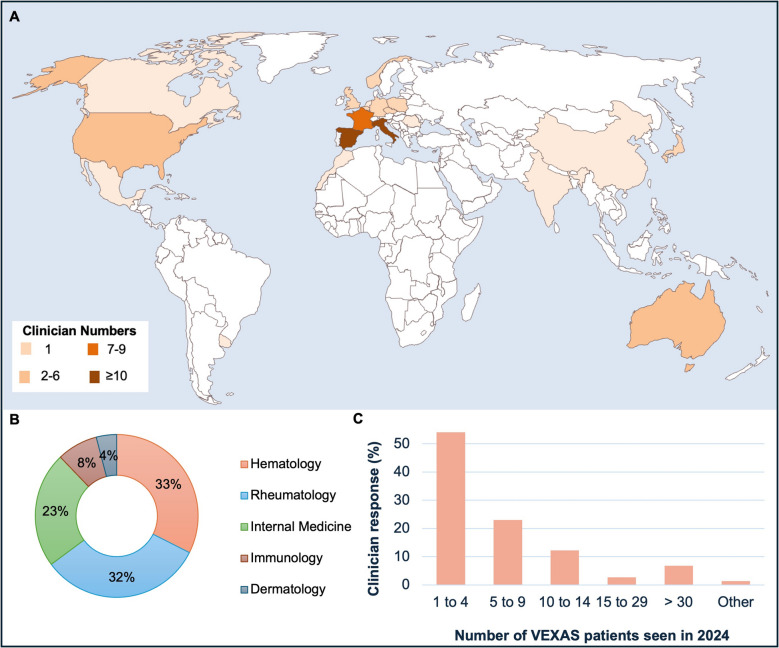 Figure 1
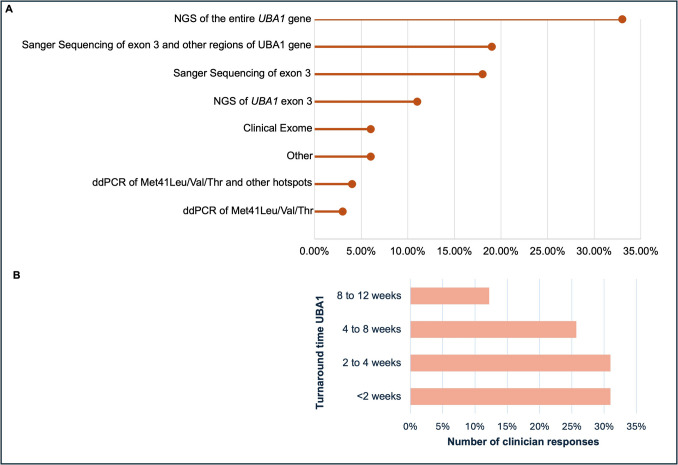 Figure 2
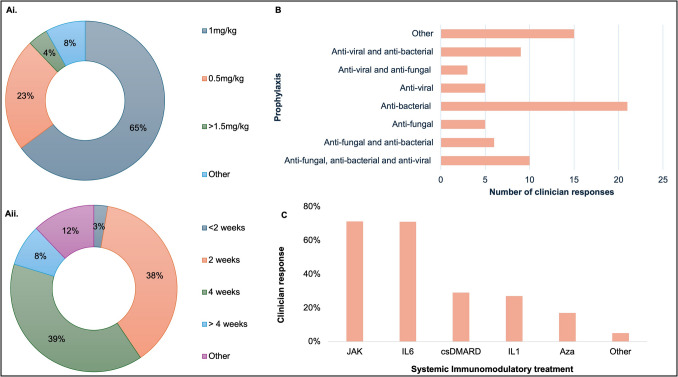 Figure 3
Peer Reviews
No public reviews on file for this paper yet. If you reviewed it on a platform where reviews are public (OpenReview, ICLR, NeurIPS, ICML), you can paste yours below so the community can read it here.
Videos
No videos yet. Explain this paper in a talk, walkthrough, or lecture? Add one.
Taxonomy
TopicsOtitis Media and Relapsing Polychondritis · Coagulation, Bradykinin, Polyphosphates, and Angioedema · Peptidase Inhibition and Analysis