Comprehensive molecular characterization of craniopharyngiomas using whole transcriptome and spatial transcriptomics approaches
Špela Kert, Alenka Matjašič, Jože Pižem, Jernej Mlakar, Matic Bošnjak, Miha Jerala, Primož Kotnik, Barbara Faganel Kotnik, Lidija Kitanovski, Andrej Zupan

TL;DR
This study uses advanced sequencing techniques to uncover molecular differences between two types of craniopharyngiomas, aiding in better diagnosis and treatment.
Contribution
The study provides a comprehensive molecular characterization of craniopharyngioma subtypes using whole transcriptome and spatial transcriptomics.
Findings
All PCP samples had BRAF p.V600E mutations, while all ACP samples had CTNNB1 mutations.
Differential gene expression analysis revealed distinct molecular profiles linked to Wnt and MAPK pathways.
Spatial profiling identified 41 differentially expressed genes between ACP and PCP.
Abstract
Craniopharyngiomas (CPs) are rare benign brain tumors that are classified as WHO grade I, with two subtypes: adamantinomatous craniopharyngioma (ACP) and papillary craniopharyngioma (PCP). ACP is caused by somatic mutations in exon 3 of the CTNNB1 gene activating the Wnt signaling pathway. PCP is associated with somatic BRAF p.V600E mutations activating the MAPK signaling pathway. Understanding their molecular differences is crucial for diagnosis and treatment. This study aimed to analyze common somatic alterations in ACP and PCP using bulk transcriptome sequencing and in situ spatial transcriptomics. RNA sequencing and high-resolution spatial profiling were used to detect mutations and examine gene expression differences among ACP, PCP, and healthy pituitary tissue. Whole transcriptome sequencing was performed on 24 tumor samples, with healthy pituitary data from the GTEx portal.…
Genes, proteins, chemicals, diseases, species, mutations and cell lines named across the full text — each resolved to its canonical identifier and authoritative record.
Click any figure to enlarge with its caption.
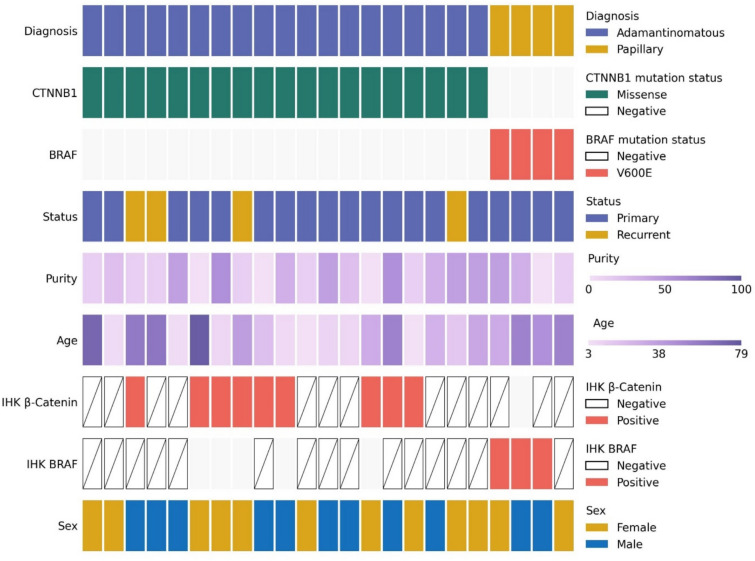 Figure 1
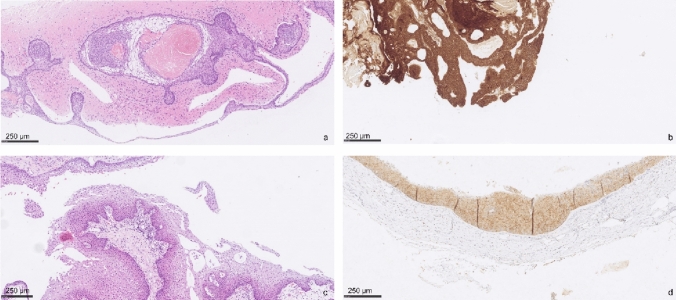 Figure 2
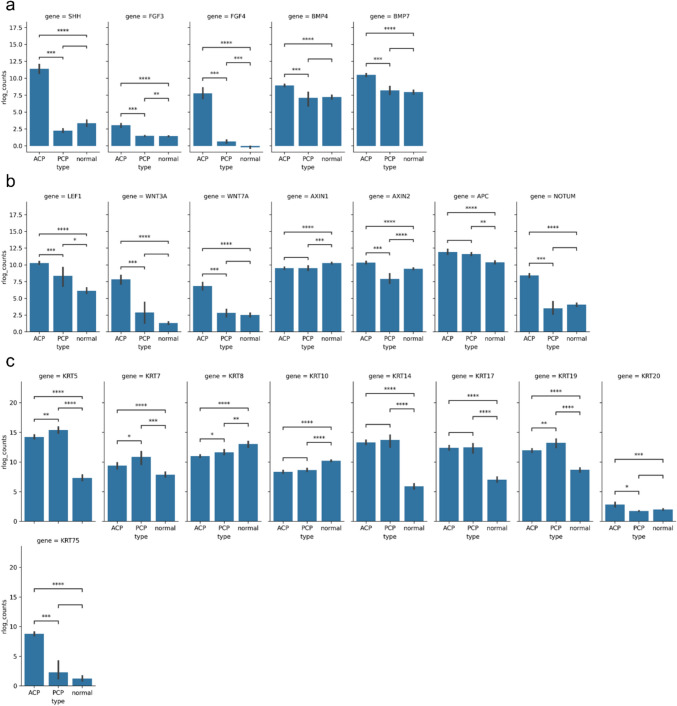 Figure 3
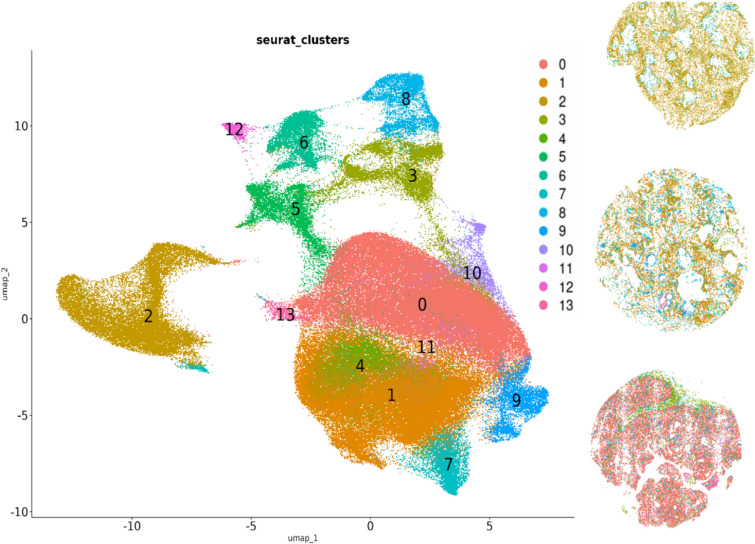 Figure 4
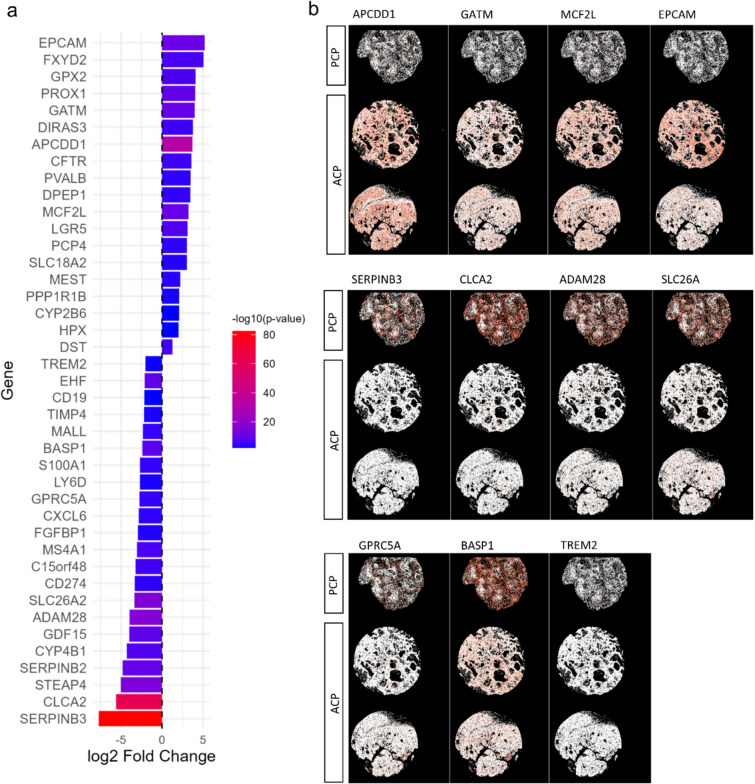 Figure 5
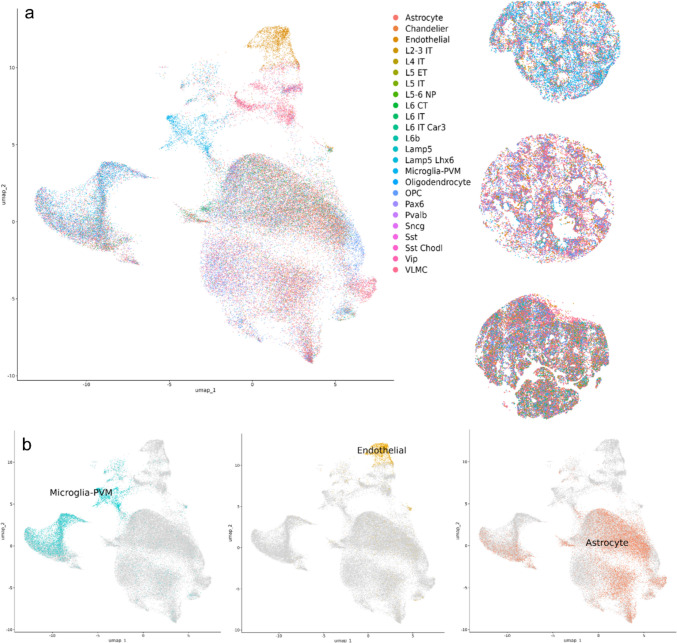 Figure 6
Peer Reviews
No public reviews on file for this paper yet. If you reviewed it on a platform where reviews are public (OpenReview, ICLR, NeurIPS, ICML), you can paste yours below so the community can read it here.
Videos
No videos yet. Explain this paper in a talk, walkthrough, or lecture? Add one.
Taxonomy
TopicsPituitary Gland Disorders and Treatments · Genetic Syndromes and Imprinting · Hedgehog Signaling Pathway Studies