Analysis of clinical and imaging features and prognosis of patients positive for Tropheryma whipplei detected by nanopore sequencing of bronchoalveolar lavage fluid
Chang Song, Chun-Yan Zhao, Mei Yu, Chang-Yue Jiang, Hang-Biao Qiang, Ren-Hao Liu, Xiao-Mei Yang, Zhou-Hua Xie, Qing-Dong Zhu

TL;DR
This study explores how nanopore sequencing can detect Tropheryma whipplei in lung fluid, revealing clinical features, imaging patterns, and treatment outcomes for better diagnosis and management of Whipple’s disease.
Contribution
The study introduces nanopore sequencing as a novel diagnostic tool for Tropheryma whipplei and identifies specific clinical and imaging patterns associated with the disease.
Findings
High TW sequence counts correlate with elevated CRP and LDH levels.
TW pneumonia imaging overlaps with tuberculosis and interstitial pneumonia.
Fluoroquinolones and combination therapies show efficacy, but severe cases require longer treatment.
Abstract
To probe into the application value of nanopore sequencing in patients suffering from positive Tropheryma whipplei (TW), analyze their clinical features, imaging manifestations, and treatment prognosis, and provide new evidence for the diagnosis and treatment of Whipple’s disease. This study retrospectively analyzed 2,137 samples subjected to nanopore sequencing at the Fourth People’s Hospital of Nanning. Among them, 14 bronchoalveolar lavage fluid (BALF) samples were positive for TW. Patients were divided into a high-sequence group (100) and a low-sequence group (≤100) in accordance with the TW sequence counts. The clinical features, laboratory indicators, imaging manifestations, and treatment prognosis of these two groups were compared and analyzed in an all-round manner. The levels of C-reactive protein (CRP) and lactate dehydrogenase (LDH) in the high-sequence group were…
Genes, proteins, chemicals, diseases, species, mutations and cell lines named across the full text — each resolved to its canonical identifier and authoritative record.
Click any figure to enlarge with its caption.
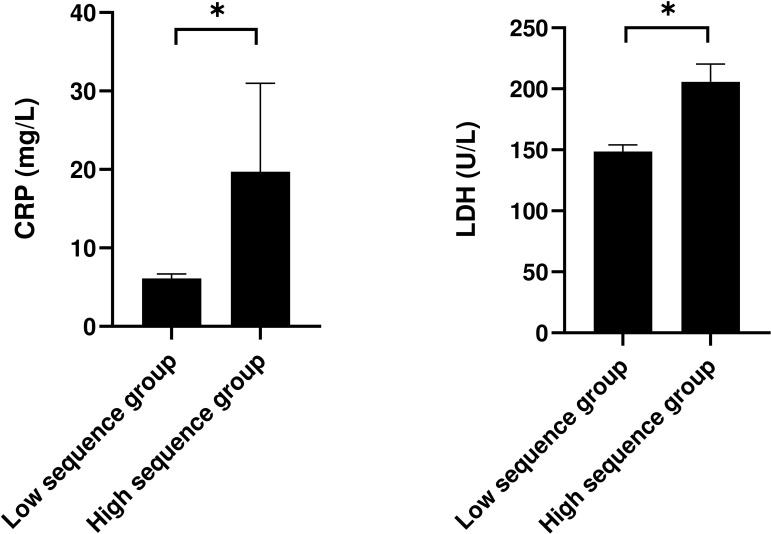 Figure 1
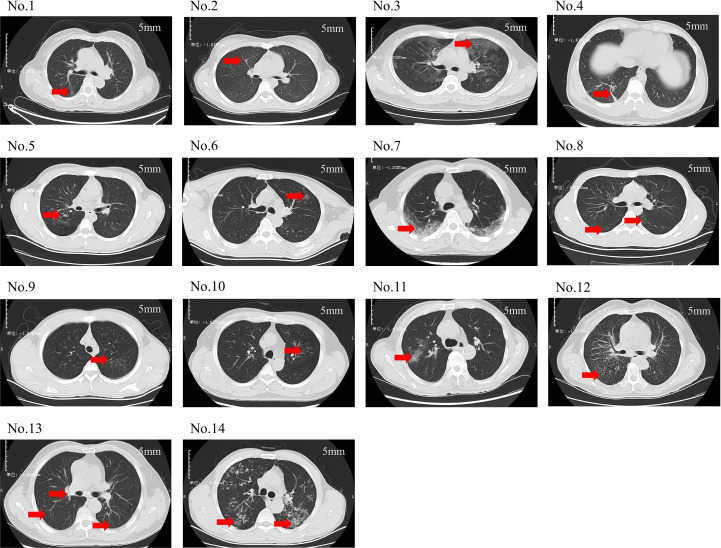 Figure 2
Peer Reviews
No public reviews on file for this paper yet. If you reviewed it on a platform where reviews are public (OpenReview, ICLR, NeurIPS, ICML), you can paste yours below so the community can read it here.
Videos
No videos yet. Explain this paper in a talk, walkthrough, or lecture? Add one.
Taxonomy
TopicsWhipple's Disease and Interleukins · Mycobacterium research and diagnosis · Neurogenetic and Muscular Disorders Research