Low-frequency pitch sensitivity and speech perception performance in adult cochlear implant users fitted with fine structure strategies
Patrizia Mancini, Yılmaz Odabaşı, Ginevra Portanova, Francesca Yoshie Russo, Giannicola Iannella, Hilal Dincer D’Alessandro

TL;DR
This study shows that cochlear implant users using fine structure strategies can better detect low-frequency pitch changes and perform better in speech recognition, especially in noisy environments.
Contribution
The study demonstrates that fine structure strategies improve low-frequency pitch sensitivity and speech perception in cochlear implant users.
Findings
CI users with fine structure strategies showed significantly better low-frequency pitch discrimination via repetition rate.
RP performers had better speech recognition in noise compared to PP performers.
Bilateral CI users showed significant benefits in word recognition and matrix test performance.
Abstract
Cochlear implant (CI) users may perceive pitch changes via repetition rate (RP) and place-of-stimulation (PP) coding mechanisms. This study investigated whether CI users fitted with fine structure (FS) strategies can discriminate low-frequency (LF) pitch changes via RP and whether RP performers show better speech recognition than PP performers. Thirty postlingually deafened adult CI users (15 unilateral, 15 bilateral) participated in this study. LF pitch discrimination linked to temporal fine structure (TFS) sensitivity was assessed with the Disharmonic Intonation test (A§E psychoacoustic test suite), while speech perception was evaluated with phonetically balanced words and everyday sentences (both in quiet and noise), and the Italian Matrix test (in adaptive mode). Just noticeable differences (JNDs) in RP performers were significantly better compared to PP JNDs (p < 0.001, r =…
Genes, proteins, chemicals, diseases, species, mutations and cell lines named across the full text — each resolved to its canonical identifier and authoritative record.
Click any figure to enlarge with its caption.
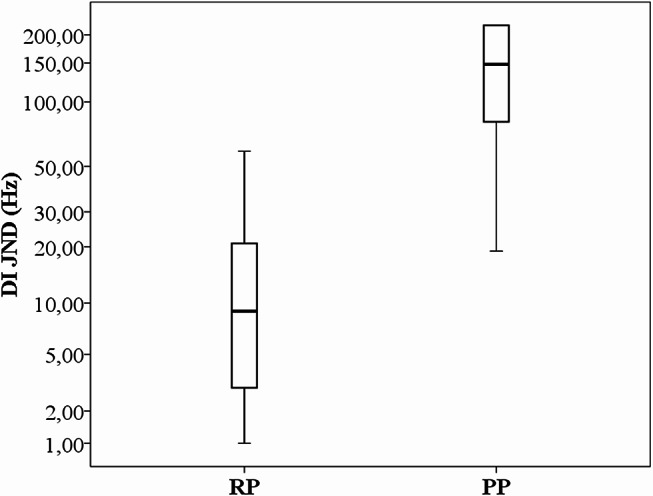 Figure 1
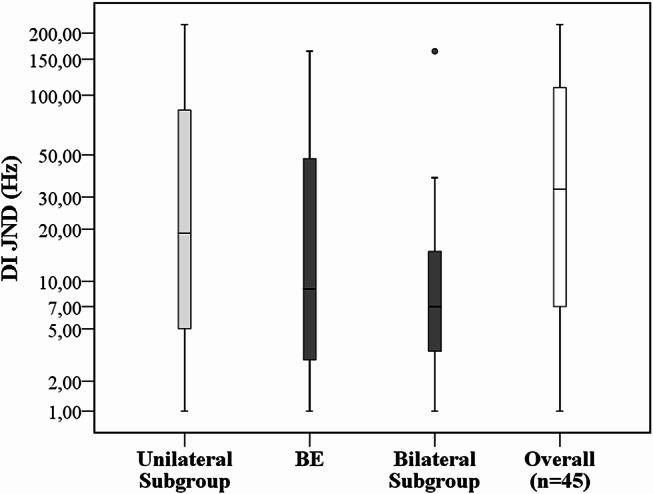 Figure 2
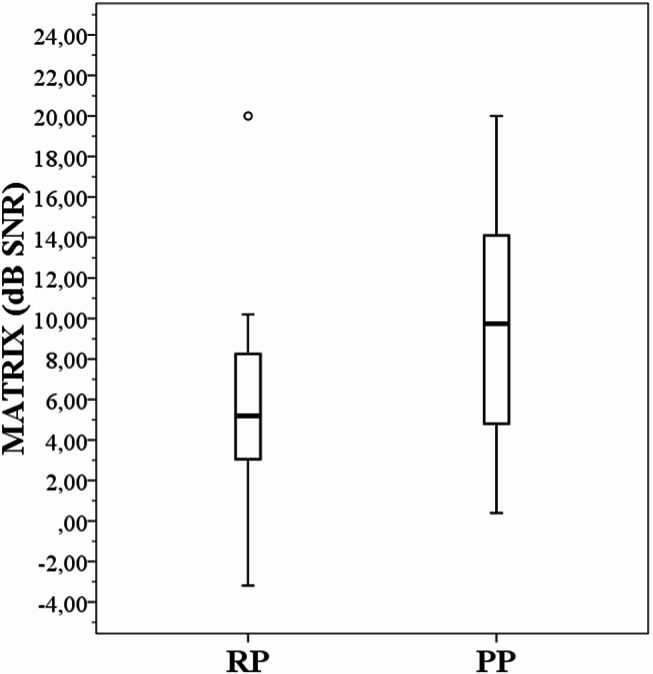 Figure 3
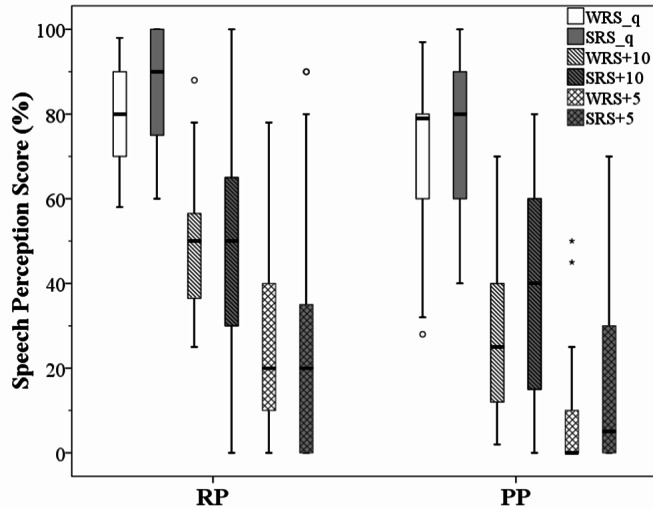 Figure 4
Peer Reviews
No public reviews on file for this paper yet. If you reviewed it on a platform where reviews are public (OpenReview, ICLR, NeurIPS, ICML), you can paste yours below so the community can read it here.
Videos
No videos yet. Explain this paper in a talk, walkthrough, or lecture? Add one.
Taxonomy
TopicsHearing Loss and Rehabilitation · Noise Effects and Management · Hearing, Cochlea, Tinnitus, Genetics