Engineered Lactiplantibacillus plantarum and Levilactobacillus brevis utilizing ribonucleoprotein-mediated editing for inactivation of hemolysin gene
Hea Joon Kim, Min Young Kwon, Seongbong Song, Seong Won Cheon, Hyo Jin Kim

TL;DR
Researchers developed a new genome editing method to inactivate a hemolysin gene in two probiotic bacteria, reducing their hemolytic activity.
Contribution
A novel ribonucleoprotein-mediated editing system was developed for Lactiplantibacillus plantarum and Levilactobacillus brevis with reduced reliance on plasmids and antibiotics.
Findings
The hlyIII gene was successfully edited with a 50 bp deletion and a stop codon in all tested strains.
Hemolytic activity was reduced in ΔhlyIII mutants compared to wild-type strains.
Strain-dependent differences in hemolytic activity were observed, suggesting functional variability.
Abstract
Lactiplantibacillus plantarum and Levilactobacillus brevis are widely used probiotics with significant potential as chassis organisms for probiotic engineering. However, their bioengineering remains underdeveloped compared to that of other probiotic bacteria due to the limited availability of genetic tools. Although CRISPR-Cas systems have shown promise for genome editing in Lactobacillus species, strain- or site-specific targeting challenges must be overcome to enhance their broader applicability. This study aimed to develop a novel editing system with reduced dependency on plasmids and antibiotics in L. plantarum WCFS1, L. plantarum SPC 72 − 1 and L. brevis SPC-SNU 70 − 2 using a Cas9-gRNA ribonucleoprotein (RNP) complex. Although the hlyIII gene has been annotated as a hemolysin-related gene in several Lactobacillus genomes, no functional hemolytic activity has been definitively…
Genes, proteins, chemicals, diseases, species, mutations and cell lines named across the full text — each resolved to its canonical identifier and authoritative record.
Click any figure to enlarge with its caption.
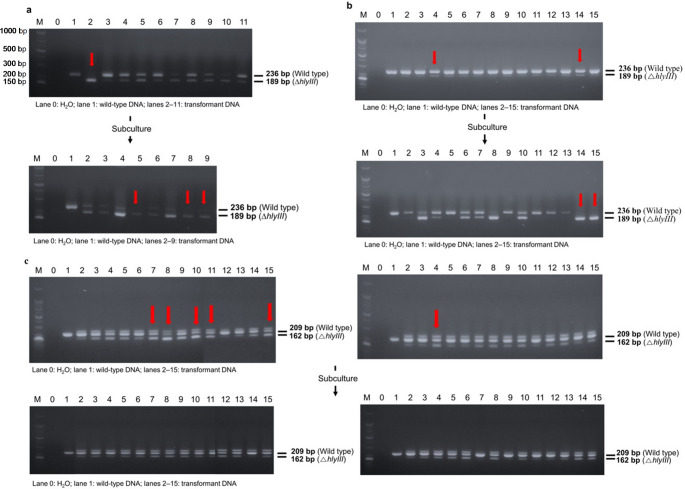 Figure 1
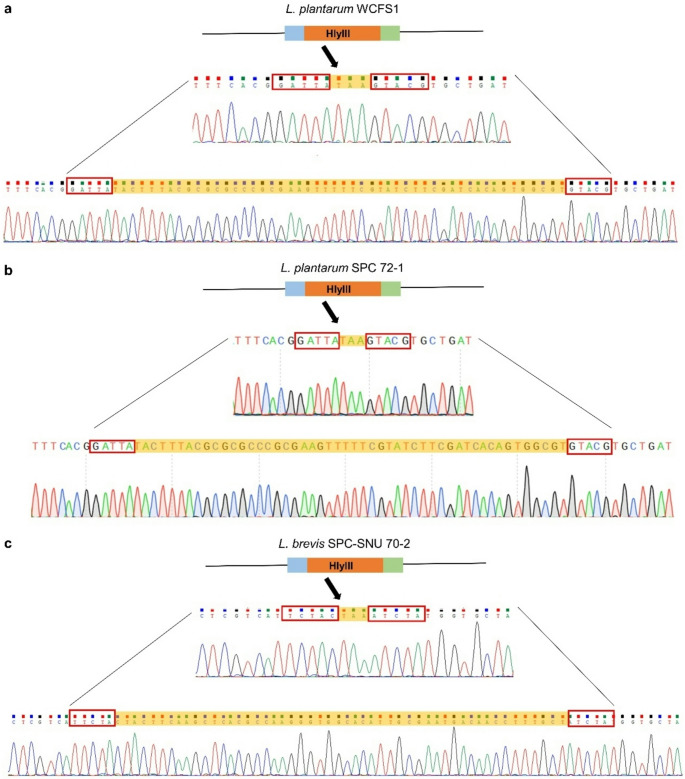 Figure 2
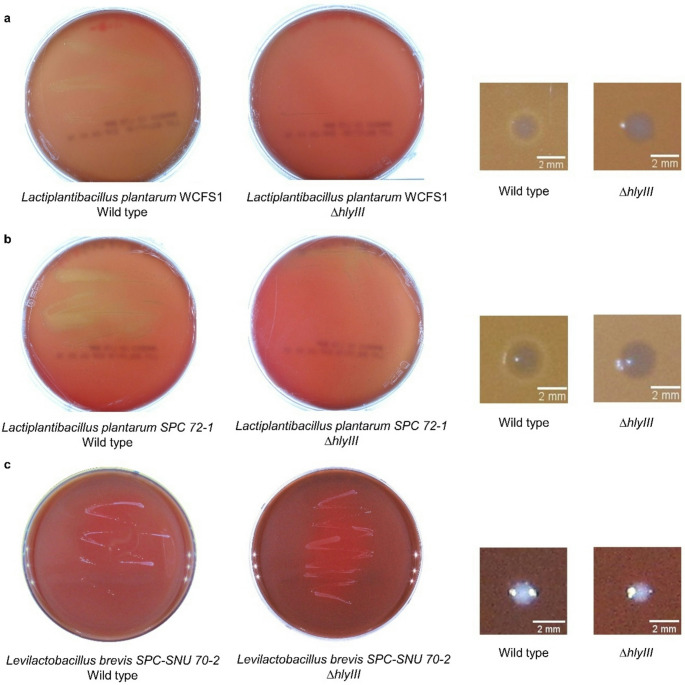 Figure 3
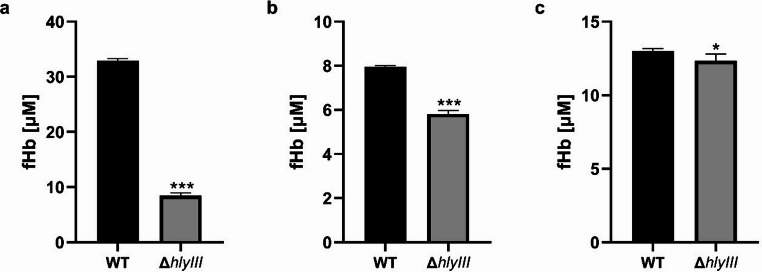 Figure 4
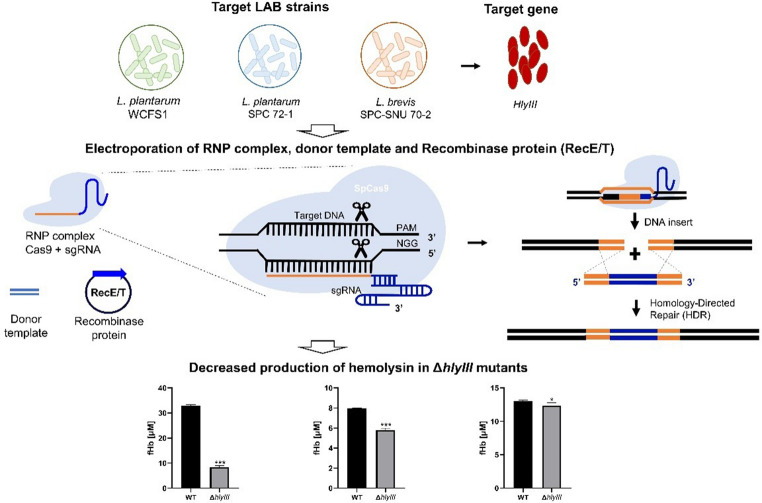 Figure 5
Peer Reviews
No public reviews on file for this paper yet. If you reviewed it on a platform where reviews are public (OpenReview, ICLR, NeurIPS, ICML), you can paste yours below so the community can read it here.
Videos
No videos yet. Explain this paper in a talk, walkthrough, or lecture? Add one.
Taxonomy
TopicsBacteriophages and microbial interactions · CRISPR and Genetic Engineering · RNA and protein synthesis mechanisms