Molecular epidemiology and antimicrobial resistance profiles of Pseudomonas aeruginosa causing bloodstream infections in neutropenic cancer patients
Irene Cadenas-Jiménez, Ana María Badía-Tejero, Carla López-Causapé, María-Isabel Morosini, Inés Portillo-Calderón, Marina Machado, Nieves Larrosa, Piluca Martín Dávila, Zaira Palacios-Baena, Adaia Puig-Albasanz, Fe Tubau, Antonio Oliver, Enric Sastre, Sara Martí, Carlota Gudiol

TL;DR
This study examines Pseudomonas aeruginosa bloodstream infections in cancer patients with weakened immune systems, focusing on genetic diversity, drug resistance, and factors affecting mortality.
Contribution
The study identifies ST175 as a dominant high-risk Pseudomonas aeruginosa clone and links specific clinical factors to early mortality in neutropenic cancer patients.
Findings
ST175 was the most prevalent Pseudomonas aeruginosa clone, associated with antimicrobial resistance.
ExoU toxin was present in 24.4% of strains, linked to serotype O11 and ST253.
Inadequate antibiotic therapy and septic shock significantly increased 7-day mortality.
Abstract
Bloodstream infections (BSI) in neutropenic cancer patients, particularly those caused by Pseudomonas aeruginosa (PA), are associated with high morbidity and mortality. The increasing prevalence of multidrug-resistant (MDR) and extensively drug-resistant (XDR) PA strains complicates clinical management. This study aimed to characterise PA strains causing BSI in neutropenic cancer patients and assess the association between microbiological features and clinical outcomes. We analysed PA strains from 94 BSI episodes in neutropenic cancer patients across five Spanish hospitals (2006–2018). Antimicrobial resistance, alginate and pigment production were assessed. Whole-genome sequencing was performed to identify resistance mutations and virulence genes. PA strains exhibited high genetic diversity, with ST175 as the most prevalent clone (28.7%). MDR non-XDR and XDR strains accounted for…
Genes, proteins, chemicals, diseases, species, mutations and cell lines named across the full text — each resolved to its canonical identifier and authoritative record.
Click any figure to enlarge with its caption.
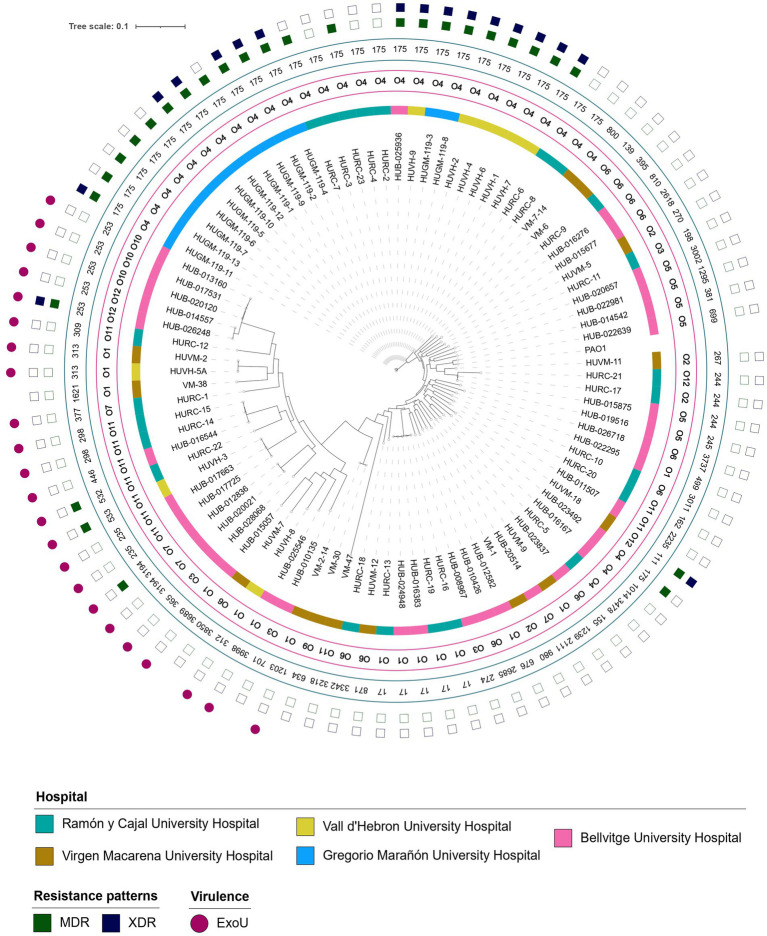 Figure 1
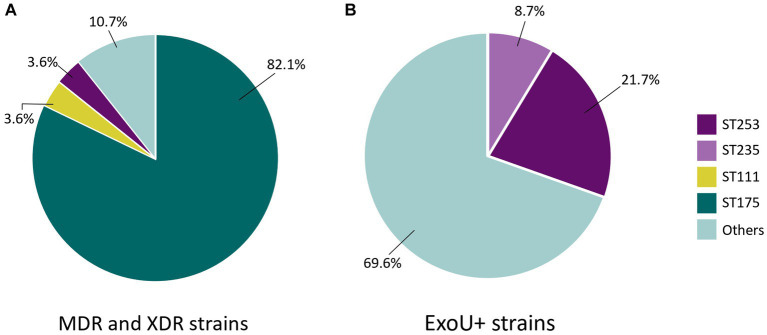 Figure 2
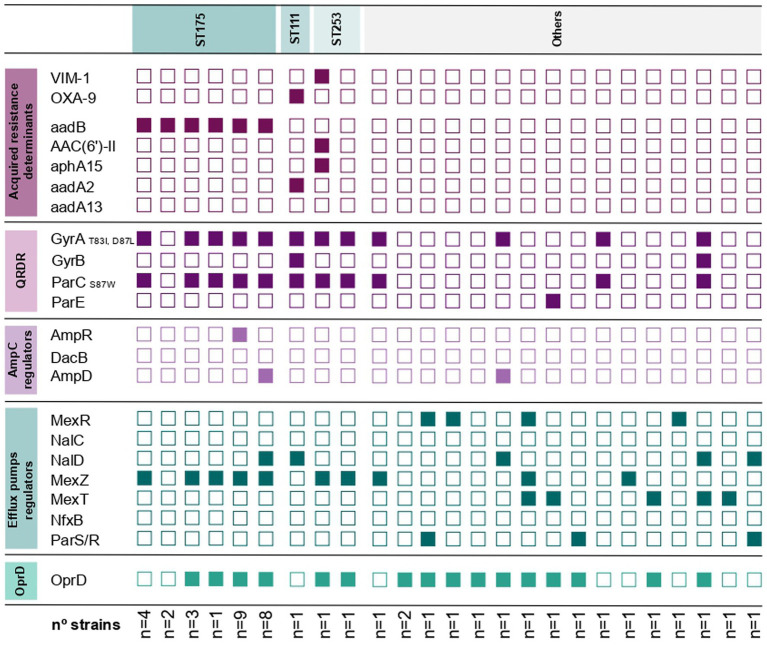 Figure 3
Peer Reviews
No public reviews on file for this paper yet. If you reviewed it on a platform where reviews are public (OpenReview, ICLR, NeurIPS, ICML), you can paste yours below so the community can read it here.
Videos
No videos yet. Explain this paper in a talk, walkthrough, or lecture? Add one.
Taxonomy
TopicsAntibiotic Resistance in Bacteria · Bacterial Identification and Susceptibility Testing · Neutropenia and Cancer Infections