Speckle tracking technology and investigation of risk factors for premature ventricular contraction-induced cardiomyopathy
Qiao Ma, Beibei Zou, Yangkai Shi, Qianqian He, Muhua Zhang, Chao Feng

TL;DR
This study shows that speckle tracking echocardiography can detect early heart damage from frequent premature ventricular contractions, which may help identify patients at risk before symptoms appear.
Contribution
The study demonstrates that strain parameters from speckle tracking are more sensitive than LVEF for detecting early myocardial dysfunction in PVC patients.
Findings
GLS and GCS were significantly reduced in PVC patients despite normal LVEF.
Asymptomatic PVCs, wide QRS duration, and higher PVC burden were linked to decreased strain parameters.
Strain parameters showed strong inverse correlations with LVEF in patients with hypertension or prolonged QRS.
Abstract
Premature ventricular contractions (PVCs) are increasingly recognized as a potentially reversible cause of cardiomyopathy, termed PVC-induced cardiomyopathy (PVCCM). Left ventricular ejection fraction (LVEF) is commonly used for diagnosis, but it lacks sensitivity for detecting early myocardial dysfunction. This study aimed to evaluate the diagnostic utility of speckle tracking echocardiography (STE)-derived strain parameters in patients with frequent PVCs and to identify associated risk factors for early myocardial impairment. A total of 258 patients with monomorphic PVCs and a PVC burden >5% on 24 h Holter monitoring were enrolled, along with 80 age- and sex-matched healthy controls. Conventional echocardiographic parameters, global longitudinal strain (GLS), and global circumferential strain (GCS) were measured. Linear regression analyses were performed to identify independent…
Genes, proteins, chemicals, diseases, species, mutations and cell lines named across the full text — each resolved to its canonical identifier and authoritative record.
Click any figure to enlarge with its caption.
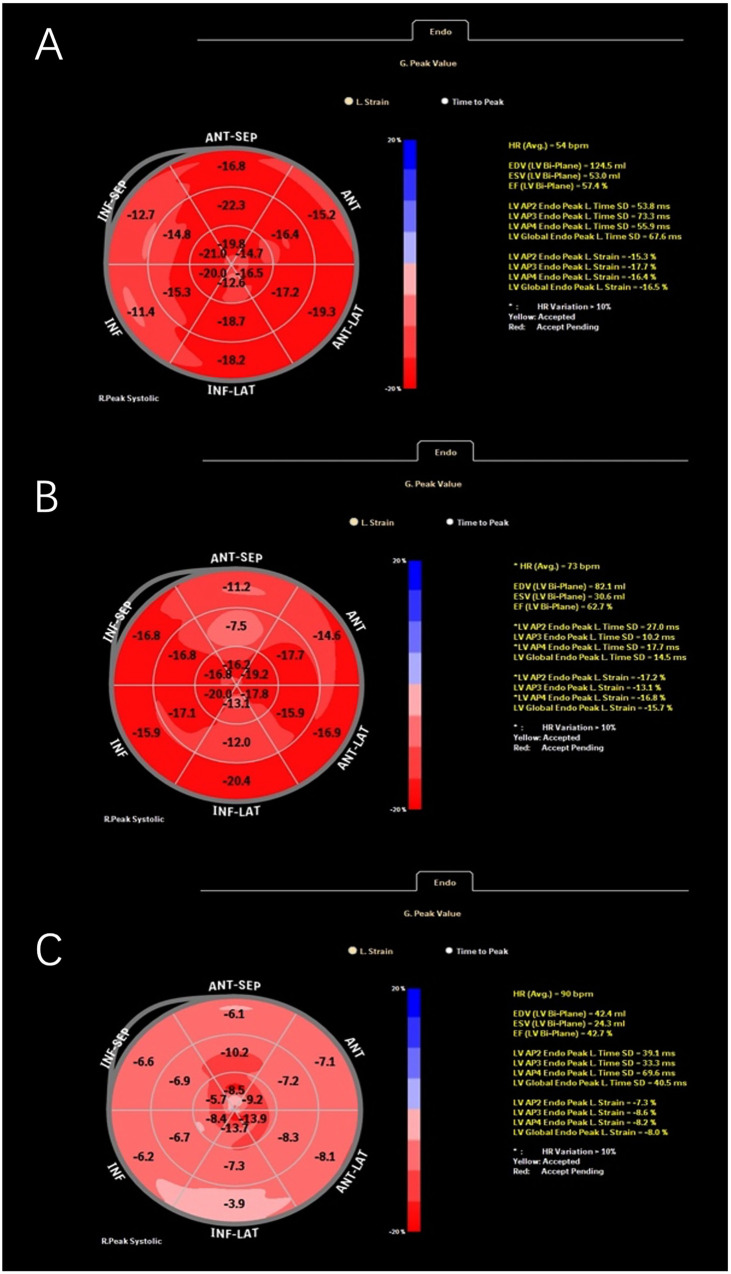 Figure 1
Peer Reviews
No public reviews on file for this paper yet. If you reviewed it on a platform where reviews are public (OpenReview, ICLR, NeurIPS, ICML), you can paste yours below so the community can read it here.
Videos
No videos yet. Explain this paper in a talk, walkthrough, or lecture? Add one.
Taxonomy
TopicsCardiac Arrhythmias and Treatments · Cardiovascular Function and Risk Factors · Cardiac pacing and defibrillation studies