Glioma neuron symbiosis: a hypothesis
Avital Schurr

TL;DR
This paper proposes that glioma cells and neurons share a symbiotic relationship by exchanging glucose and lactate for energy.
Contribution
The novel hypothesis suggests glioma-produced lactate is used by neurons, creating a metabolic symbiosis that benefits cancer cells.
Findings
Glioma cells use glycolysis inefficiently, producing lactate.
Neurons preferentially use glioma-derived lactate for efficient energy production.
Glutamate secretion by gliomas may enhance neuronal lactate consumption.
Abstract
Glioma cells, just like all cancerous cells, consume substantial amounts of glucose for their energy needs, using glycolysis, an inefficient metabolic pathway (Warburg effect) to produce only two moles of adenosine triphosphate and two moles of lactate for each mole of glucose consumed. By contrast, neurons consume glucose via glycolysis and utilize its end-product lactate as the substrate of the mitochondrial tricarboxylic acid cycle and its coupled oxidative phosphorylation, a process eighteen times more efficient at adenosine triphosphate than glycolysis alone. It hypothesizes here that glioma-produced lactate is the preferred oxidative energy substrate of their surrounding neurons. Consequently, by using lactate, neurons bypass glycolysis, sparing their glucose and making it readily available for the glucose-craving cancer cells. Moreover, glioma cells’ ability to secrete glutamate,…
Genes, proteins, chemicals, diseases, species, mutations and cell lines named across the full text — each resolved to its canonical identifier and authoritative record.
Click any figure to enlarge with its caption.
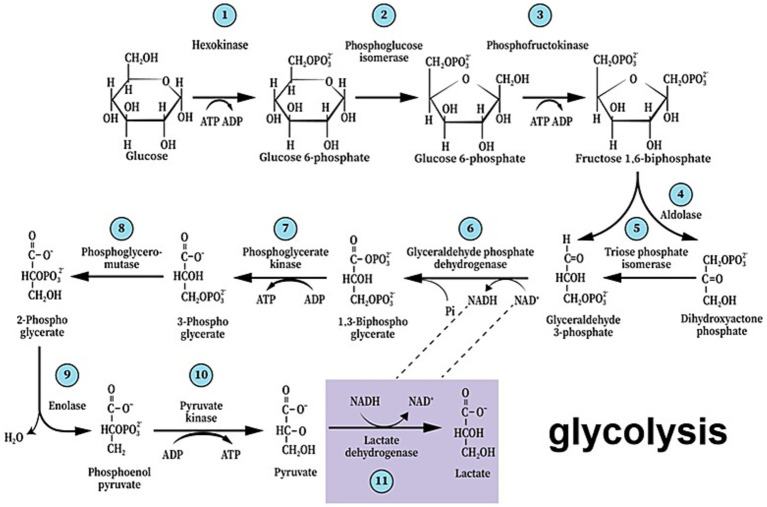 Figure 1
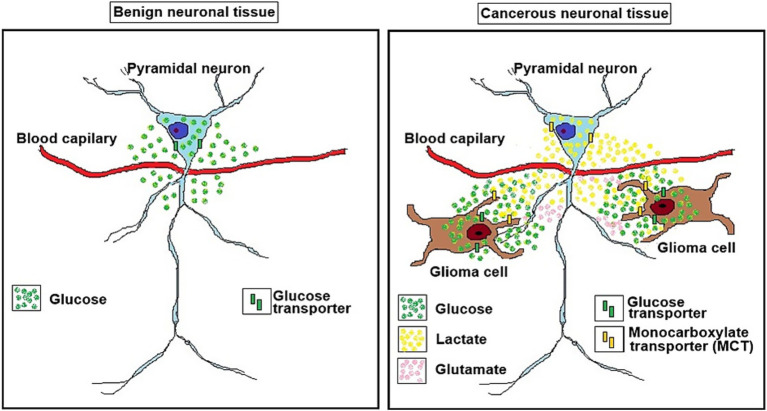 Figure 2
 Figure 3
Peer Reviews
No public reviews on file for this paper yet. If you reviewed it on a platform where reviews are public (OpenReview, ICLR, NeurIPS, ICML), you can paste yours below so the community can read it here.
Videos
No videos yet. Explain this paper in a talk, walkthrough, or lecture? Add one.
Taxonomy
TopicsNeuroscience and Neuropharmacology Research · Mitochondrial Function and Pathology · Neurogenesis and neuroplasticity mechanisms