Global trajectory and spatiotemporal epidemiological landscape of multidrug-resistant tuberculosis of spanning 46 years (1990–2035): implications for achieving global end TB goals
Yunbin Yang, Aoran Yang, Renzhong Li, Wei Su, Jiawen Jiang, Liangli Liu, Yunzhou Ruan, Lin Xu

TL;DR
This study maps the global rise and spread of drug-resistant tuberculosis from 1990 to 2035, showing it remains a major public health threat, especially in sub-Saharan Africa and among vulnerable groups.
Contribution
The paper provides the first 46-year spatiotemporal analysis of MDR-TB, projecting future trends and identifying persistent hotspots and demographic patterns.
Findings
MDR-TB incidence peaked in 2000 and has since declined, but absolute cases are projected to rise to 480,000 by 2035 due to population growth.
Sub-Saharan Africa remains a hyperendemic region with high MDR-TB rates, particularly in Somalia.
Males and older adults are disproportionately affected, with males showing a sharper incidence increase and slower decline.
Abstract
Although MDR-TB is recognized as a significant threat, systematic descriptions of its long-term (>30 years) global spatiotemporal evolution patterns are still limited. This study conducted a 46-year spatiotemporal analysis of global MDR-TB (1990–2035) to provide key evidence for evaluating and refining the WHO End TB Strategy. We used Global Burden of Disease data to identify identified temporal inflection points in ASIR, ASDR, and DALYs using Joinpoint regression. Spatial clustering was quantified using Moran’s I and Getis-Ord hotspot analysis. A Bayesian age-period-cohort model projected MDR-TB incidence from 2022 to 2035. The male-to-female ratio was approximately 1.5:1. Incidence was highest at 30–60 years, deaths at 60+, DALYs peak at 45–60; children under 14 years of age significantly affected. ASIR rose from 0.97/100 k (1990) to 6.39/100 k (2000), then declined (APC: −3.15%)…
Genes, proteins, chemicals, diseases, species, mutations and cell lines named across the full text — each resolved to its canonical identifier and authoritative record.
Click any figure to enlarge with its caption.
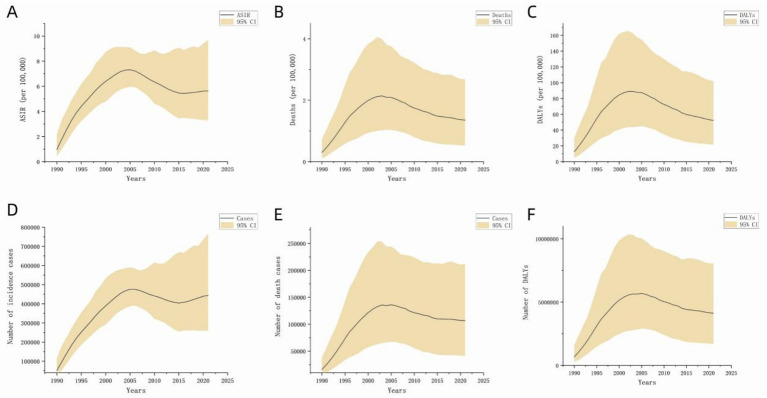 Figure 1
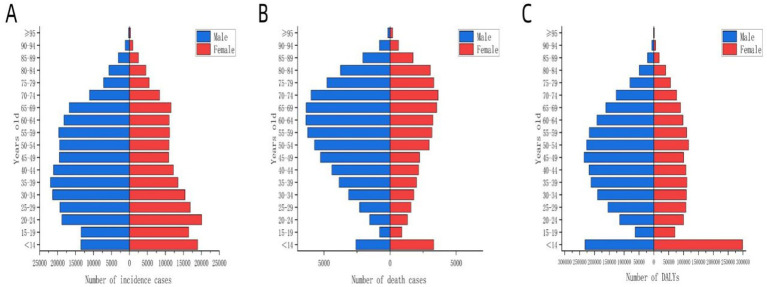 Figure 2
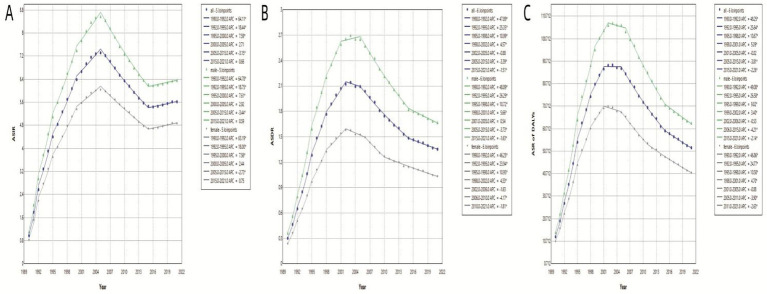 Figure 3
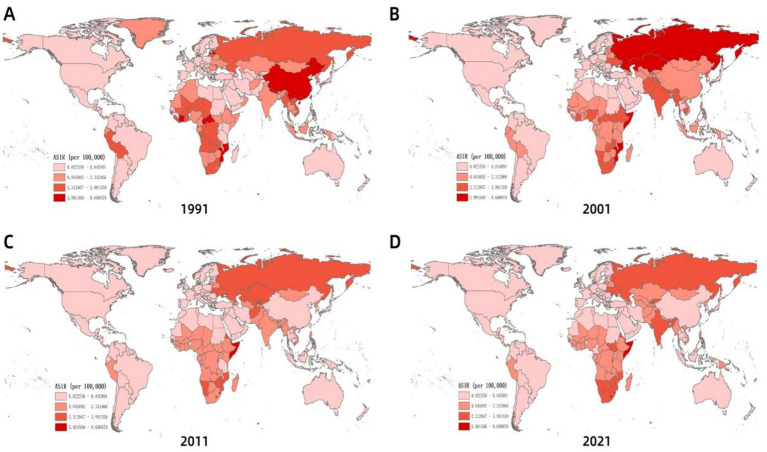 Figure 4
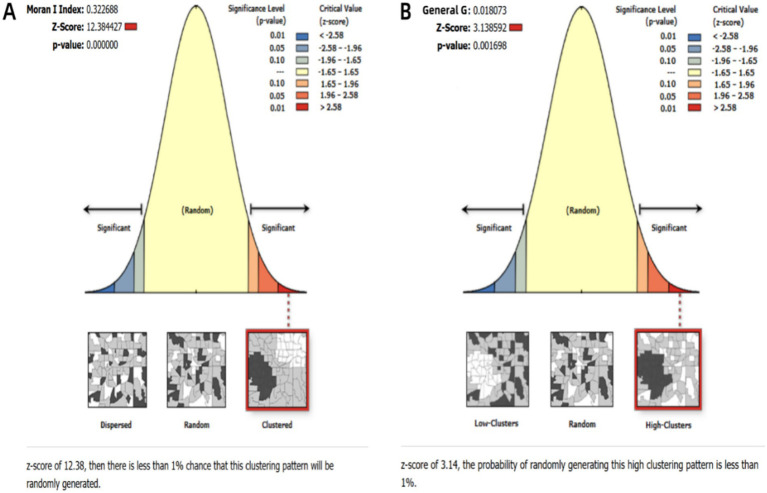 Figure 5
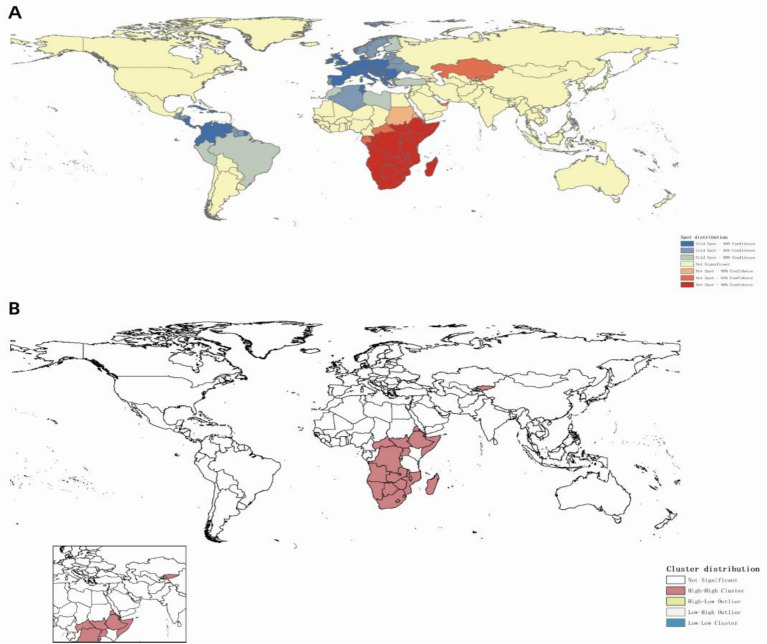 Figure 6
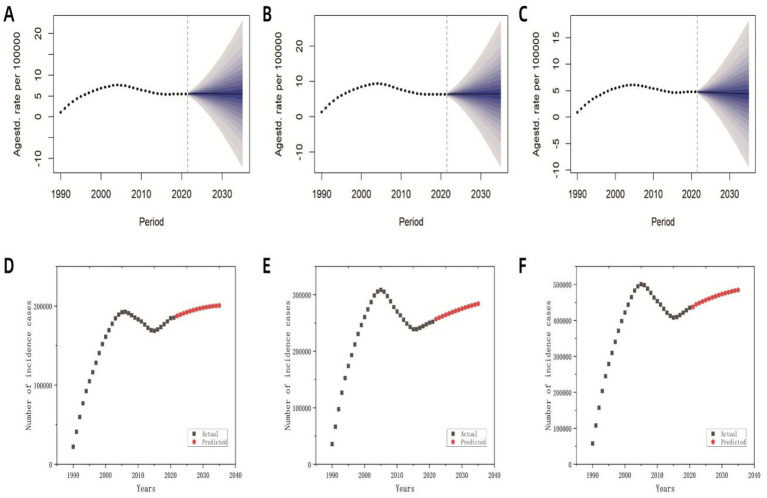 Figure 7
Peer Reviews
No public reviews on file for this paper yet. If you reviewed it on a platform where reviews are public (OpenReview, ICLR, NeurIPS, ICML), you can paste yours below so the community can read it here.
Videos
No videos yet. Explain this paper in a talk, walkthrough, or lecture? Add one.
Taxonomy
TopicsTuberculosis Research and Epidemiology · Diagnosis and treatment of tuberculosis · Pneumonia and Respiratory Infections