Kidney Transplant Outcomes With Non-Depleting Antibody Induction Therapy in Human Leucocyte Antigen Sensitised Recipients
Ria Nagpal, Katie Butler, Nicola Thal, Abigail Hobill, Alice Gage, Maryam Javed, Felix Karst, Azhar Ali Khan, Amy Needleman, Graham Shirling, Henry Stephens, Sharon Vivers, Franco Tavarozzi, Neema Mayor, Sandra Frater, Alan Salama, Mark Harber, Gareth Jones, Raymond Fernando

TL;DR
The study shows non-depleting antibody therapy works well for kidney transplants in patients with HLA sensitization, with good survival and graft outcomes.
Contribution
Demonstrates non-depleting induction therapy is effective for sensitized kidney transplant recipients, challenging traditional depleting approaches.
Findings
Non-depleting induction therapy achieved 94% allograft survival at 1 year in sensitized recipients.
T cell epitope mismatch scores predicted early rejection risk in transplanted patients.
Highly sensitized patients had lower graft survival compared to unsensitized and sensitized groups.
Abstract
Lymphocyte depleting induction is recommended for kidney transplant recipients (KTRs) at high immunological risk, which traditionally includes those with detectable anti-human leucocyte antigen antibodies. Data to support this approach in the modern era of histocompatibility testing are limited. We investigated outcomes in KTRs who underwent Basiliximab induction between 2012–2023 in the UK. We stratified outcomes by levels of sensitisation and T cell epitope mismatch (PIRCHE-II) scores. 1348 KTRs were included; 859 (63.7%) were unsensitised, 351 (26.0%) sensitised (calculated reaction frequency [cRF] 1%–84%), and 138 (10.3%) highly sensitised (cRF 85%–100%). Patient survival, allograft survival, and death-censored graft survival (DCGS) were 97%, 94%, and 97% at 1 year, and 88%, 78%, and 84% at 5 years respectively. There were no differences in outcomes between unsensitised and…
Genes, proteins, chemicals, diseases, species, mutations and cell lines named across the full text — each resolved to its canonical identifier and authoritative record.
Click any figure to enlarge with its caption.
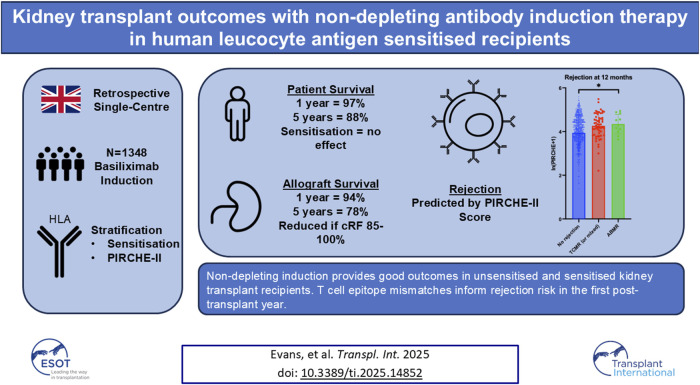 Figure 1
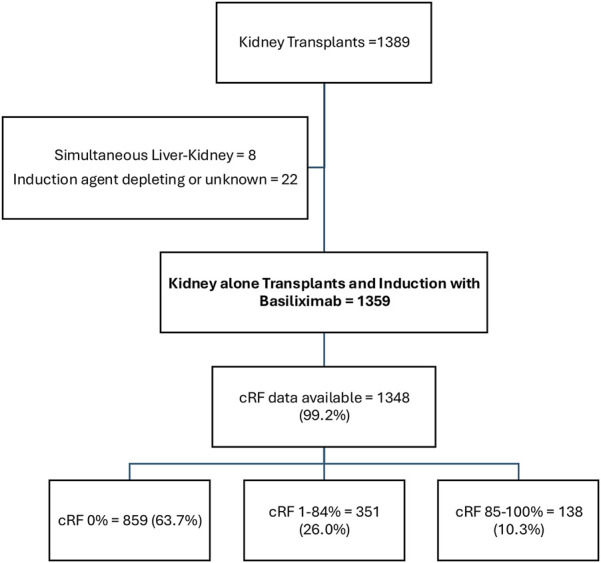 Figure 2
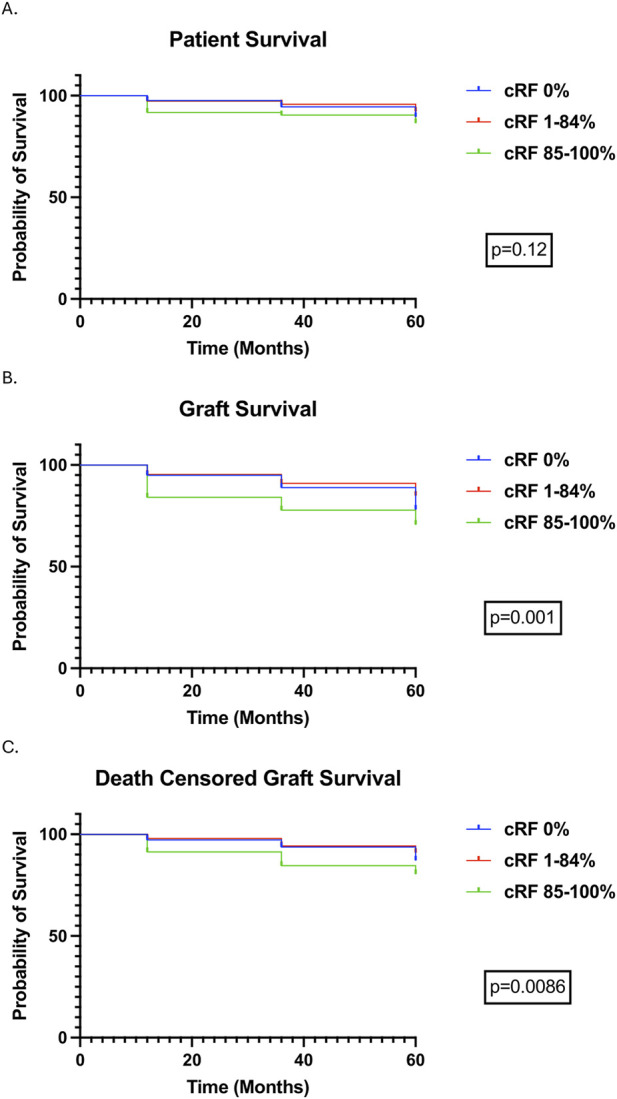 Figure 3
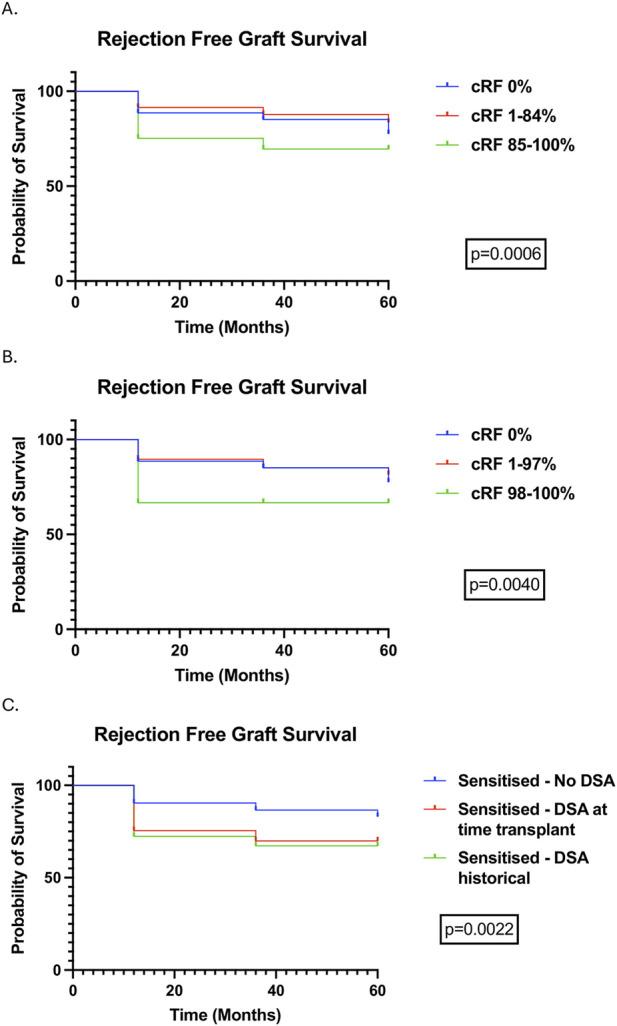 Figure 4
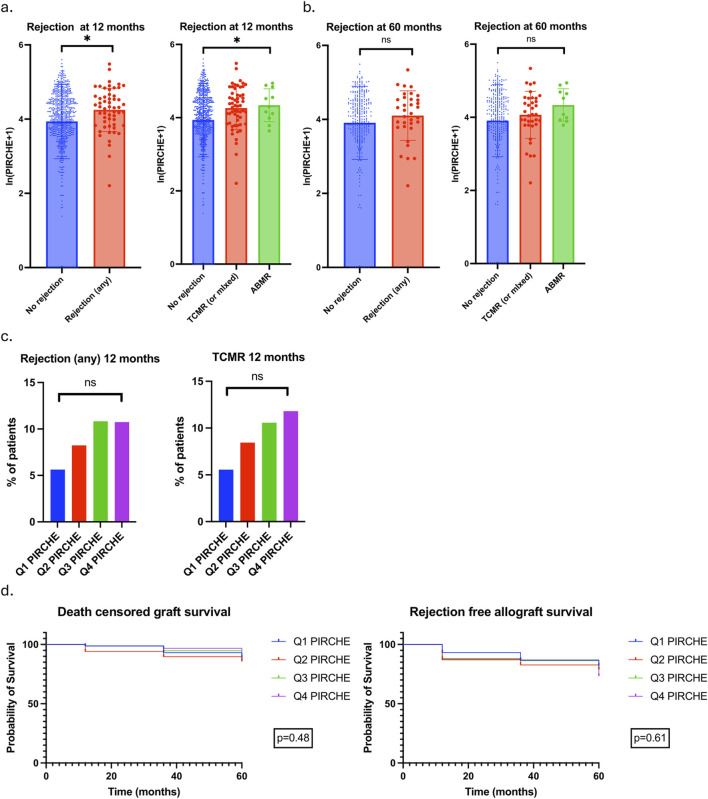 Figure 5
Peer Reviews
No public reviews on file for this paper yet. If you reviewed it on a platform where reviews are public (OpenReview, ICLR, NeurIPS, ICML), you can paste yours below so the community can read it here.
Videos
No videos yet. Explain this paper in a talk, walkthrough, or lecture? Add one.
Taxonomy
TopicsRenal Transplantation Outcomes and Treatments · Cytomegalovirus and herpesvirus research · Transplantation: Methods and Outcomes