Comprehensive Analysis of the Impact of Climate Change and Human Activities on the Distribution of Five Fritillaria Species Using the Optimized Maxent Model
Yuanyuan Li, Qinghe Wang, Rong Ding, Xiaofen Liu, Sijing Liu, Jing Bai, Shuqi Niu, Jinlin Guo

TL;DR
This study uses a model to predict how climate change and human activities will affect the future distribution of five rare Fritillaria plant species.
Contribution
The study applies an optimized Maxent model to project species distribution shifts under climate change scenarios for five Fritillaria species.
Findings
F. przewalskii and F. delavayi are likely to migrate to higher elevations, while F. taipaiensis is expected to move to lower elevations.
Under the SSP585 climate scenario, suitable areas for F. cirrhosa, F. przewalskii, and F. taipaiensis are contracting, while those for F. unibracteata and F. delavayi are expanding.
Abstract
With climate change and the influence of human activities, species are likely to migrate or even go extinct. Five Fritillaria species, a well‐known traditional Chinese medicinal plant, are rarer due to overharvesting. This study employed the Maxent model to identify suitable areas for the plant, determine key environmental factors, and project future shifts under three climate change scenarios. The analysis showed F. przewalskii and F. delavayi might migrate to higher elevations, while F. taipaiensis was expected to move to lower elevations. There were differences in the dominant environmental factors among different origins: F. cirrhosa (elevation, bio7, bio9, bio12, hfp); F. unibracteata (elevation, bio4, bio15, bio19, hfp); F. przewalskii (elevation, bio4, bio11, bio15, hfp); F. delavayi (elevation, bio3, bio18, hfp); F. taipaiensis (bio2, bio3, bio4, bio11, hfp). Under the SSP585…
Genes, proteins, chemicals, diseases, species, mutations and cell lines named across the full text — each resolved to its canonical identifier and authoritative record.
Click any figure to enlarge with its caption.
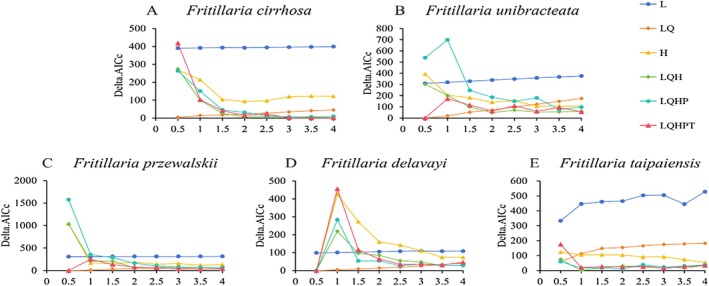 Figure 1
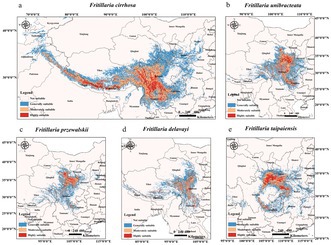 Figure 2
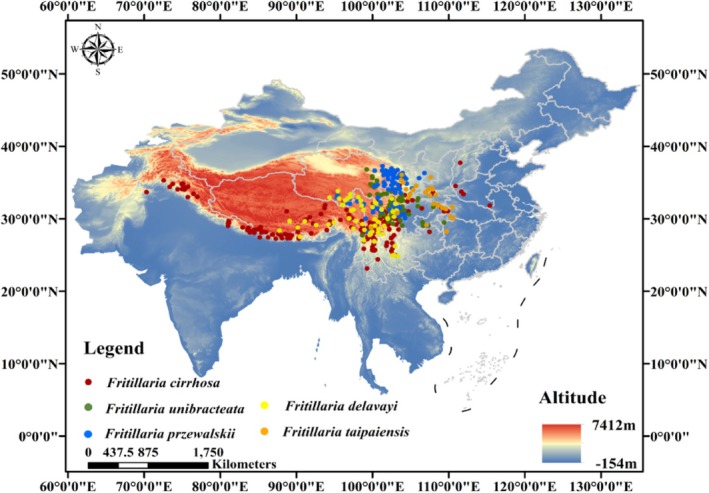 Figure 3
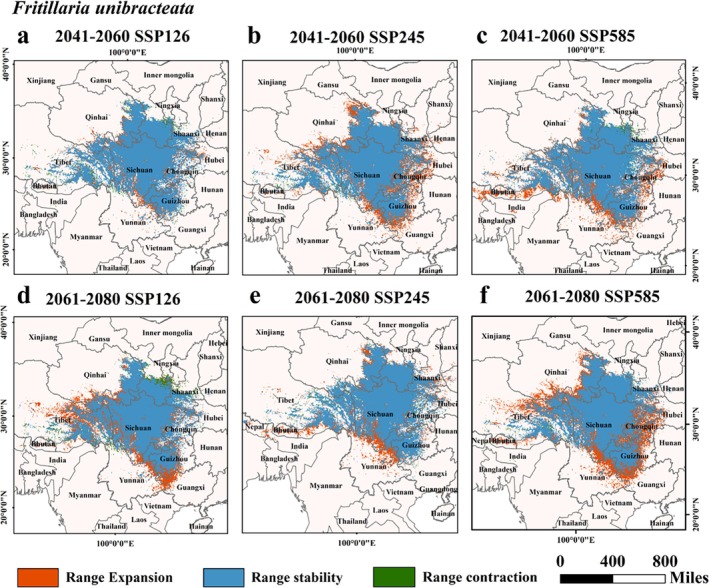 Figure 4
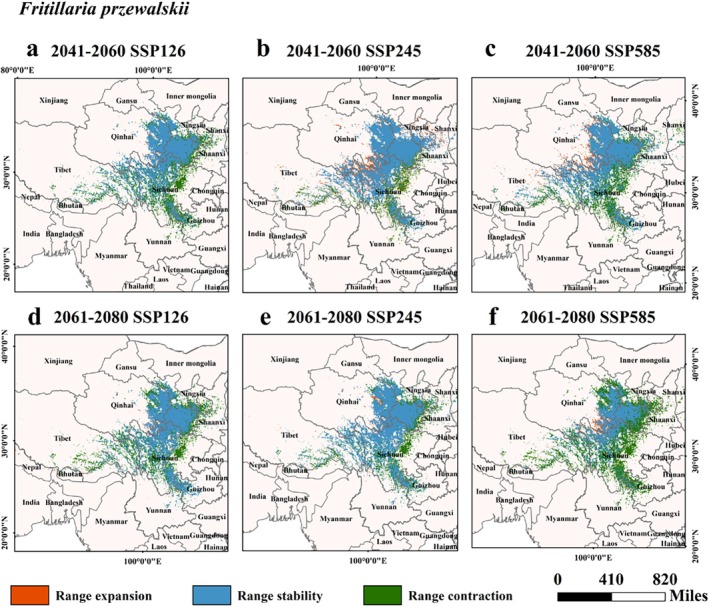 Figure 5
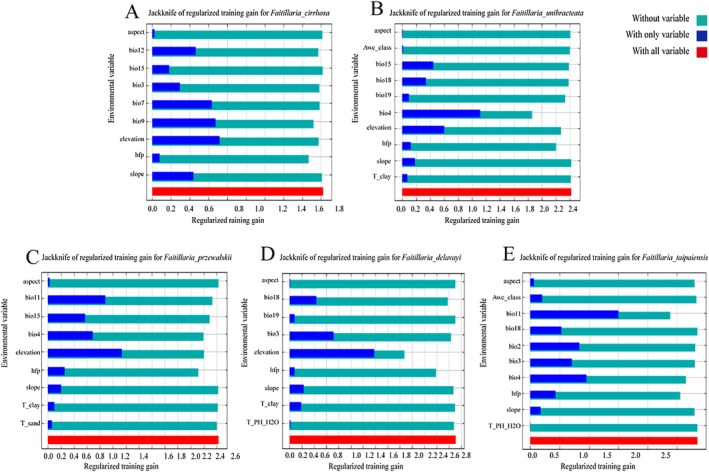 Figure 6
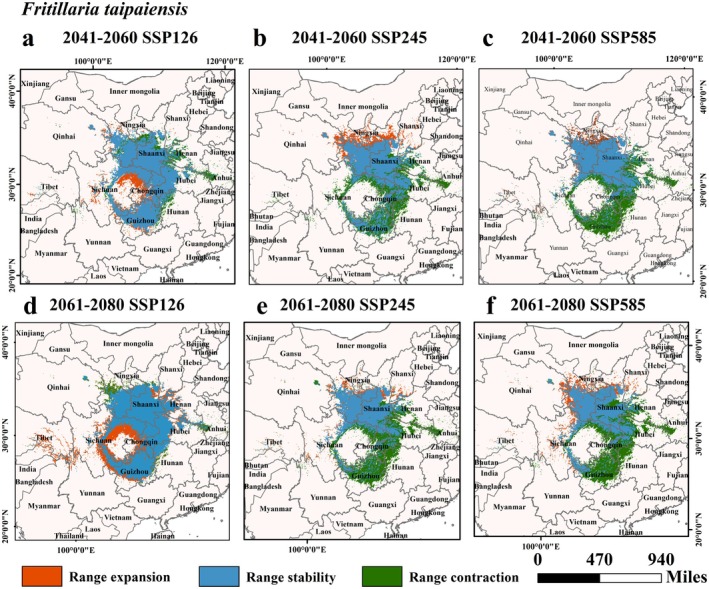 Figure 7
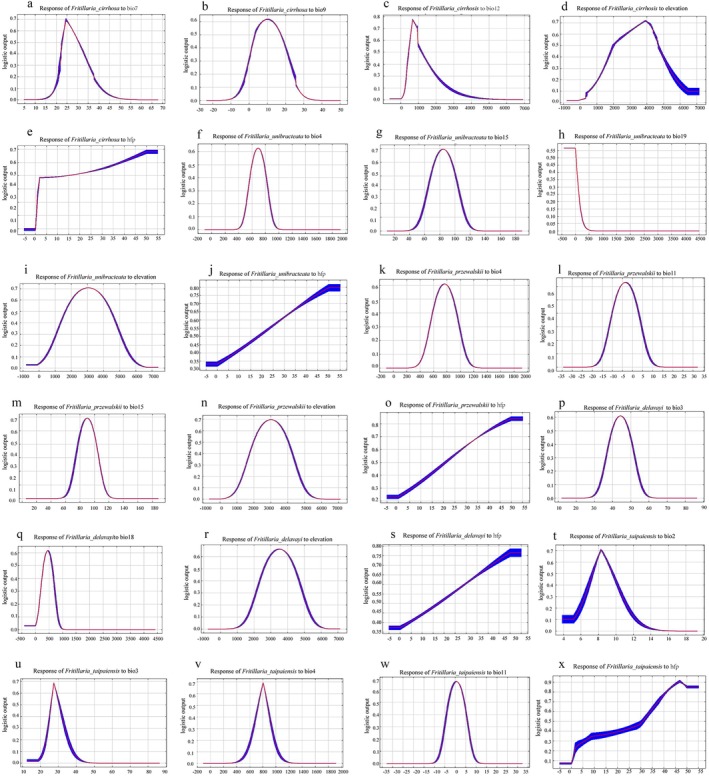 Figure 8
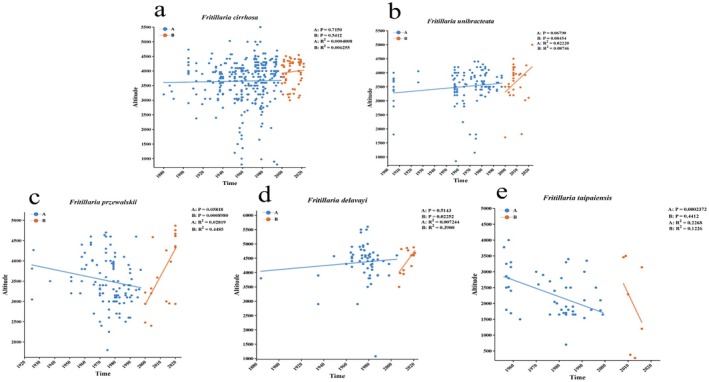 Figure 9
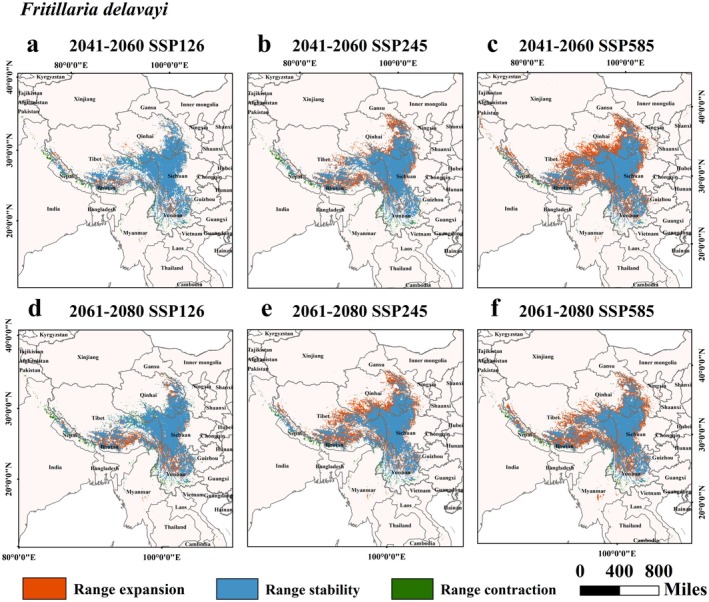 Figure 10
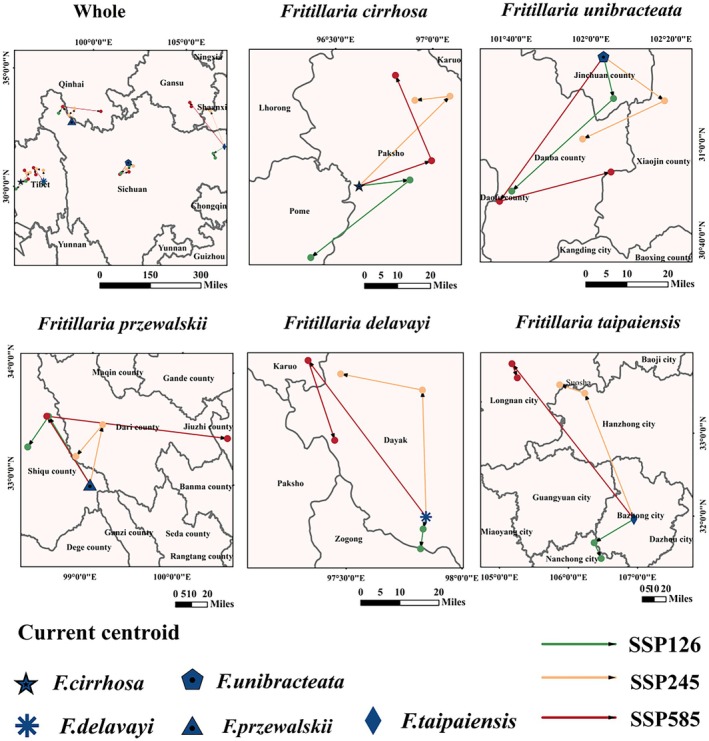 Figure 11
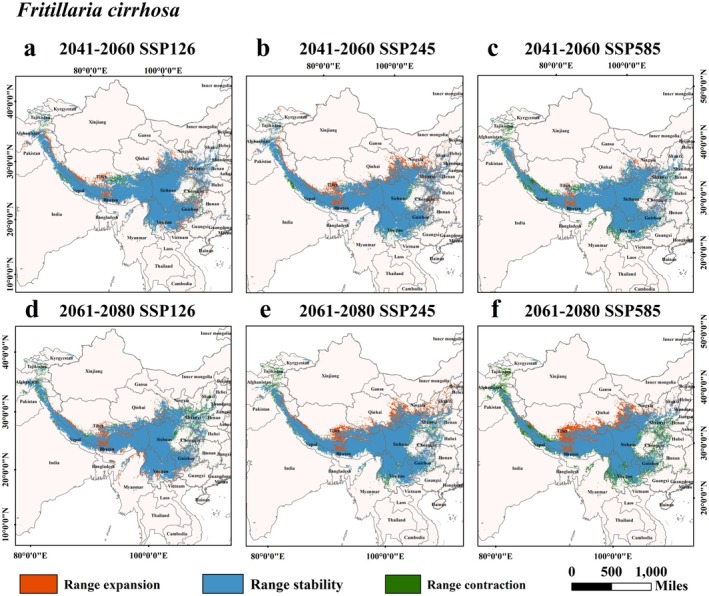 Figure 12
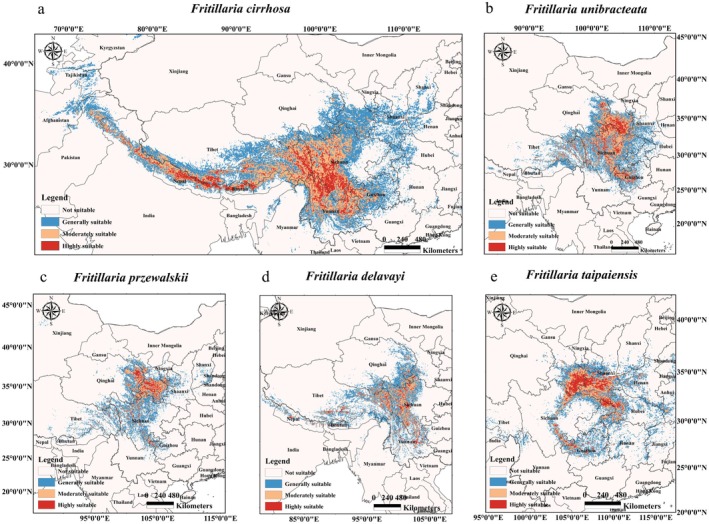 Figure 13
Peer Reviews
No public reviews on file for this paper yet. If you reviewed it on a platform where reviews are public (OpenReview, ICLR, NeurIPS, ICML), you can paste yours below so the community can read it here.
Videos
No videos yet. Explain this paper in a talk, walkthrough, or lecture? Add one.
Taxonomy
TopicsRemote Sensing in Agriculture · Species Distribution and Climate Change · Land Use and Ecosystem Services