Gene editing for Spinocerebellar ataxia type 3 taking advantage of the human ATXN3L paralog as replacement gene
Margareta Rybarikova, Maria Rey, Ed Hasanovic, Mélanie Sipion, Lukas Rambousek, Nicole Déglon

TL;DR
Researchers explored gene editing strategies for Spinocerebellar ataxia type 3 (SCA3) using a self-inactivating system and a human ATXN3L paralog as a replacement gene.
Contribution
The study introduces a novel ablate-and-replace gene editing strategy using the ATXN3L paralog for potential SCA3 treatment.
Findings
Ablate experiments achieved 55 ± 18% cerebellar editing of the ATXN3 gene in mice.
The ablate-and-replace strategy showed similar editing efficiency to ablation alone in SCA3 transgenic mice.
Immunofluorescence and RT-qPCR analyses supported the potential of the strategy for SCA3 treatment.
Abstract
Spinocerebellar ataxia type 3 (SCA3) is a rare neurodegenerative disease caused by a CAG expansion of the ataxin-3 gene (ATXN3). SCA3 patients suffer from ataxia, spasticity and dystonia in mid-adulthood, with spinocerebellar dysfunction and degeneration. As a monogenic disease for which only symptomatic treatment is available, ATXN3 is an attractive target for gene editing. We used the KamiCas9, a self-inactivating gene editing system, to explore gene editing strategies suitable for all SCA3 patients. We first tested the deletion of exon 10 or the introduction of a premature stop codon into exon 9. High editing events were observed in vitro, but efficiency was very low in SCA3 transgenic mice. We then evaluated an ablate-and-replace strategy. The ablate experiments resulted in 55 ± 18% cerebellar editing of the ATXN3 gene. A human ATXN3L paralog, expressed in the brains of SCA3…
Genes, proteins, chemicals, diseases, species, mutations and cell lines named across the full text — each resolved to its canonical identifier and authoritative record.
Click any figure to enlarge with its caption.
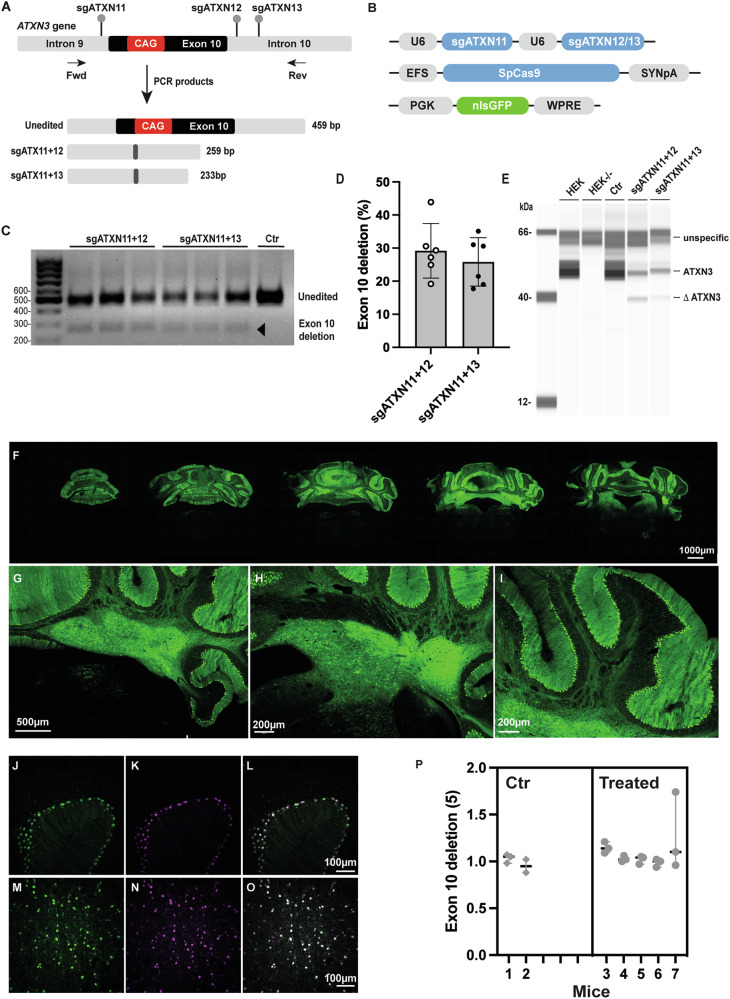 Figure 1
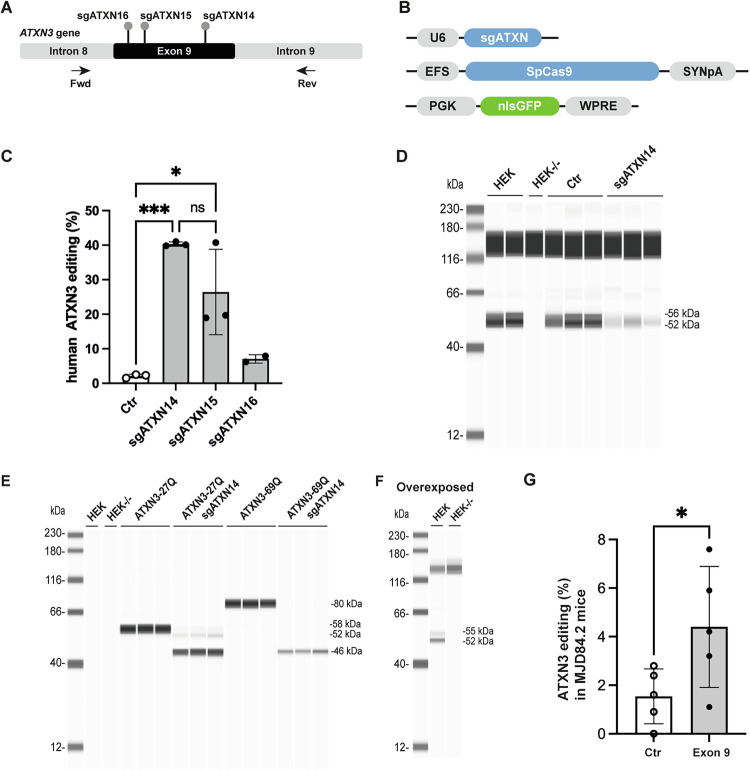 Figure 2
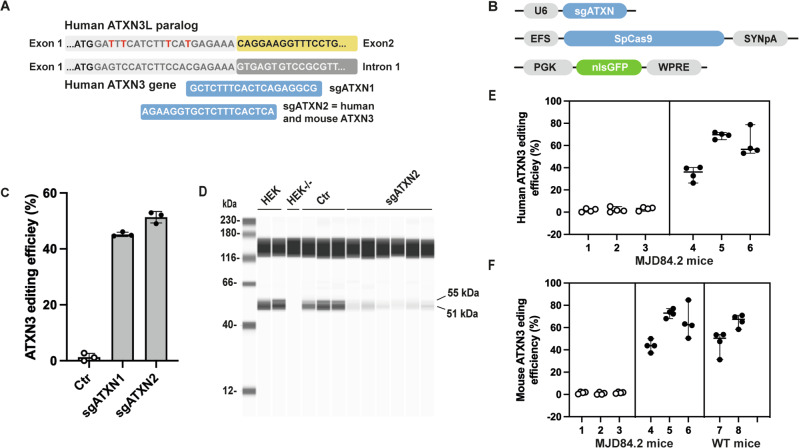 Figure 3
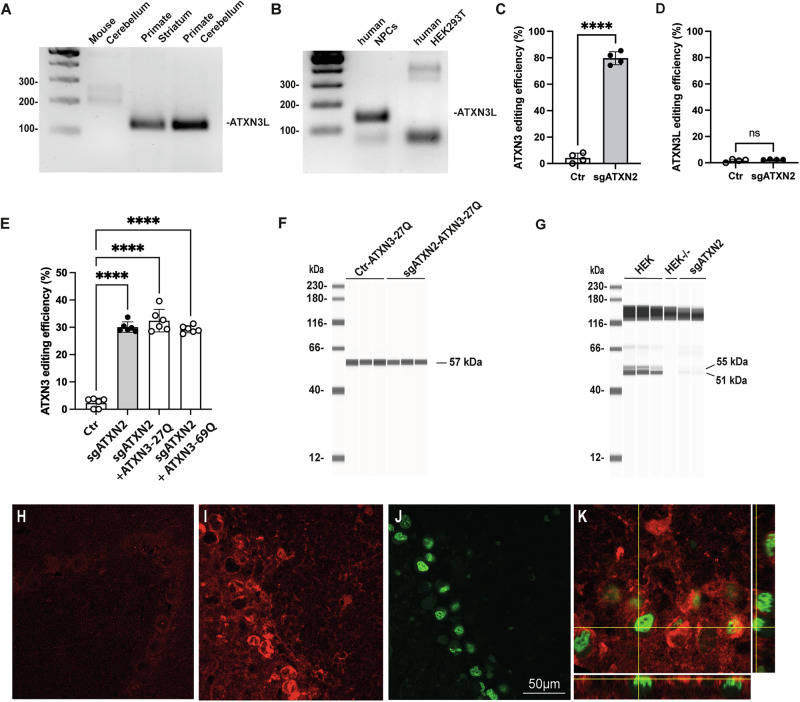 Figure 4
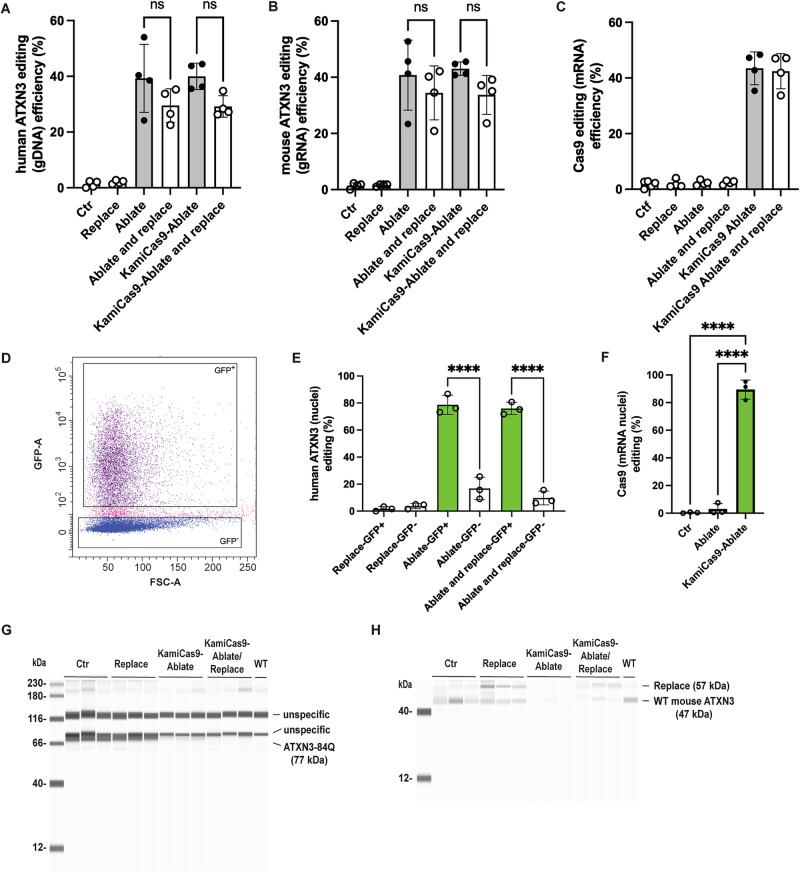 Figure 5
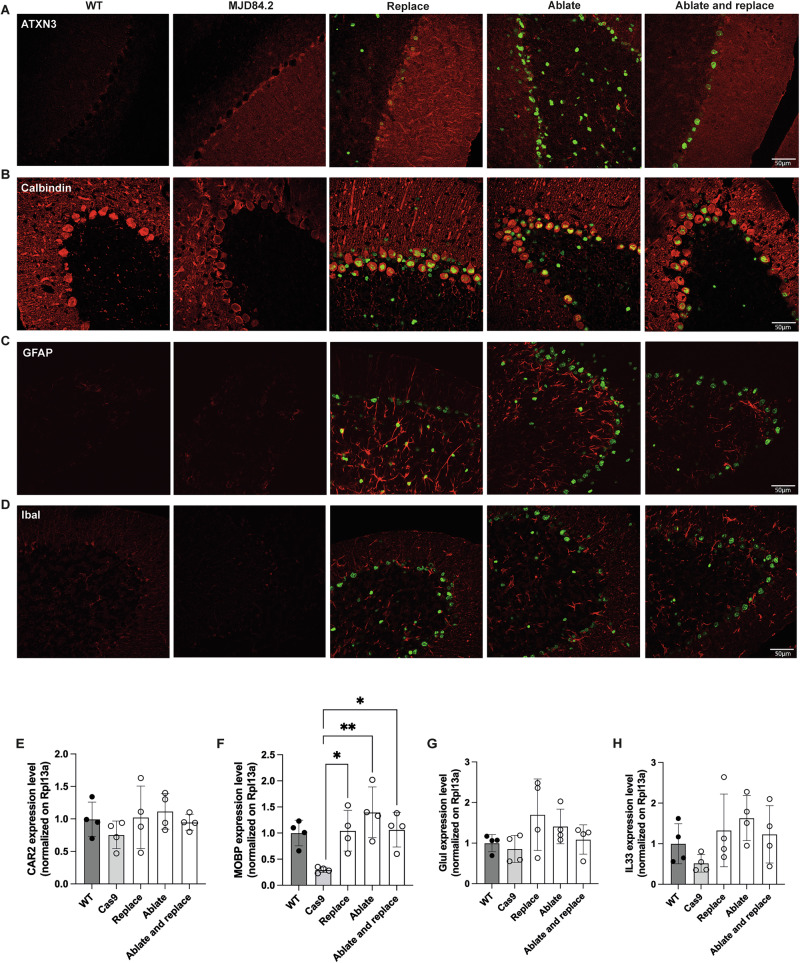 Figure 6
Peer Reviews
No public reviews on file for this paper yet. If you reviewed it on a platform where reviews are public (OpenReview, ICLR, NeurIPS, ICML), you can paste yours below so the community can read it here.
Videos
No videos yet. Explain this paper in a talk, walkthrough, or lecture? Add one.
Taxonomy
TopicsGenetic Neurodegenerative Diseases · Mitochondrial Function and Pathology · Genetics and Neurodevelopmental Disorders