Audience effects in sooty mangabey agonistic behavior
Fredy Quintero, Sonia Touitou, Martina Magris, Klaus Zuberbühler

TL;DR
Sooty mangabeys show more aggression when higher-ranking individuals are watching, suggesting they adjust their behavior based on their audience.
Contribution
This study provides new evidence that non-ape primates exhibit audience effects in aggressive behavior.
Findings
Sooty mangabeys are more aggressive when observed by large audiences with high-ranking individuals.
Aggressive displays are often accompanied by vocalizations, indicating an intent to attract audience attention.
Abstract
The term ‘Audience Effects’, refers to behavioral changes triggered by the mere presence of others and has been extensively studied in animals to explore their capacity for social awareness and intentionality. Research shows that a wide range of species—from insects to primates—alter behaviors depending on their audience, with primates, especially great apes, demonstrating the most complex audience-aware behaviors, such as adjusting communication based on the recipient’s attention or understanding. These findings suggest that some animals can infer intentions, remember social dynamics, and strategically act depending on who is watching. However, there is still limited data from non-ape primates and other mammals, raising questions about whether such cognitive traits evolved through shared ancestry or convergent evolution. Aggressive behaviors also reveal audience effects, with…
Genes, proteins, chemicals, diseases, species, mutations and cell lines named across the full text — each resolved to its canonical identifier and authoritative record.
Click any figure to enlarge with its caption.
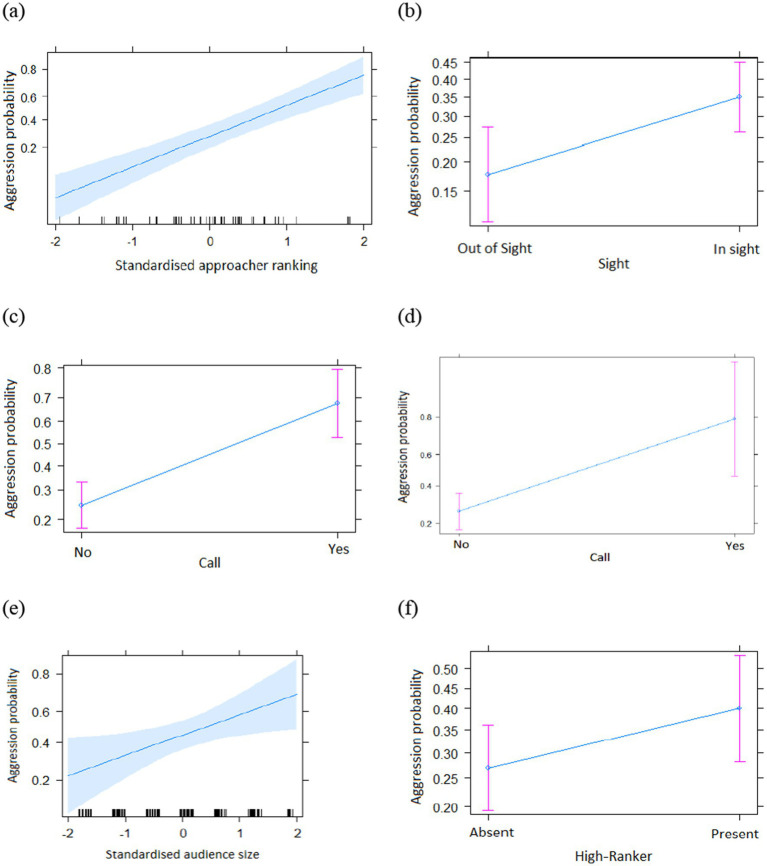 Figure 1
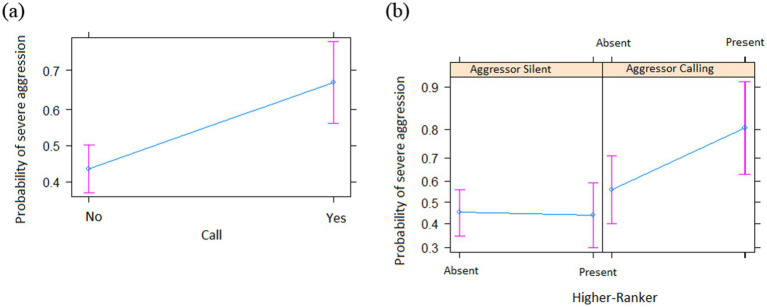 Figure 2
Peer Reviews
No public reviews on file for this paper yet. If you reviewed it on a platform where reviews are public (OpenReview, ICLR, NeurIPS, ICML), you can paste yours below so the community can read it here.
Videos
No videos yet. Explain this paper in a talk, walkthrough, or lecture? Add one.
Taxonomy
TopicsPrimate Behavior and Ecology · Animal Vocal Communication and Behavior · Animal Behavior and Reproduction