Construction of a Fluorescence‐Based Logic Gate Seeing the Effect of Perchlorate Ions on Hemicyanine Dye–β‐Cyclodextrin Complexes to Certify Safe Drinking Water
Anusha C. M., Shalini Dyagala, Sairathna Choppella, Mahesh Kumar Ravva, Subit Kumar Saha

TL;DR
A new method uses fluorescence-based logic gates to detect perchlorate ions in water, helping ensure drinking water safety.
Contribution
A novel fluorescence-based logic gate system is developed to detect perchlorate ion toxicity in water.
Findings
DASPC22 fluorescence increases with β-CD and low ClO4− concentrations due to hydrogen bonding.
A YES logic gate is constructed to quantify perchlorate toxicity in water.
AND and INHIBIT logic gates are developed using different ClO4− concentrations.
Abstract
Perchlorate ions (ClO4 −) are prevalent contaminants in the surface, and drinking water that disrupt thyroid function by competitively inhibiting the sodium‐iodide symporter (NIS), posing significant health risks. Here, fluorescence‐based logic gates have been constructed by leveraging the binding interactions between a hemicyanine dye, 4‐[4‐(dimethylamino)‐styryl]‐1‐docosylpyridinium bromide (DASPC22) and β‐cyclodextrin (β‐CD) that could be useful to know whether ClO4 − ions in water are within the toxicity range or not. In aqueous media, DASPC22 forms nonfluorescent H‐aggregates, but fluorescence is enhanced upon forming host‐guest inclusion complexes with β‐CD. At low ClO4 − ions concentrations, fluorescence intensity further increases due to enhanced complex stability through hydrogen bonding. ONIOM‐based quantum chemical calculations have supported this phenomenon. The enhancement…
Genes, proteins, chemicals, diseases, species, mutations and cell lines named across the full text — each resolved to its canonical identifier and authoritative record.
Click any figure to enlarge with its caption.
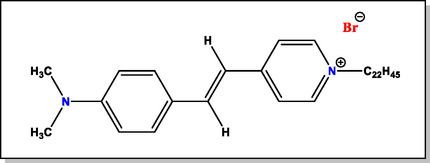 Figure 1
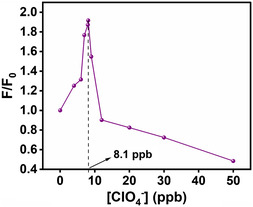 Figure 2
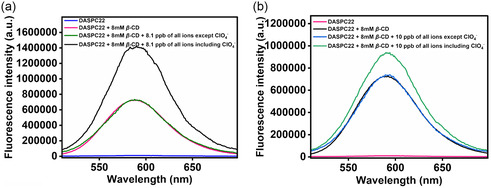 Figure 3
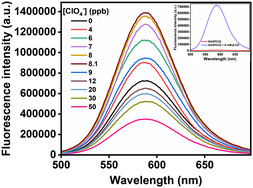 Figure 4
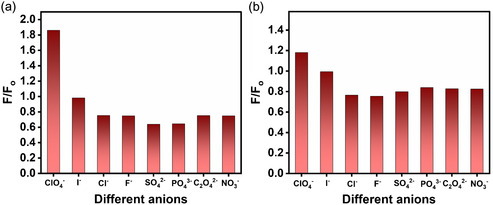 Figure 5
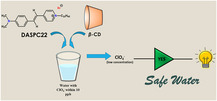 Figure 6
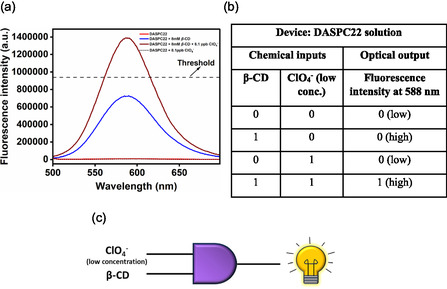 Figure 7
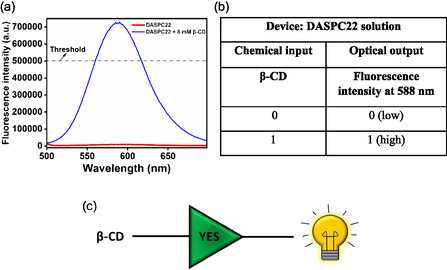 Figure 8
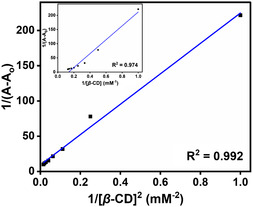 Figure 9
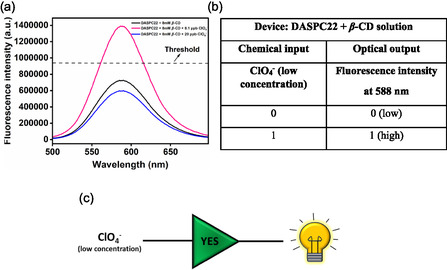 Figure 10
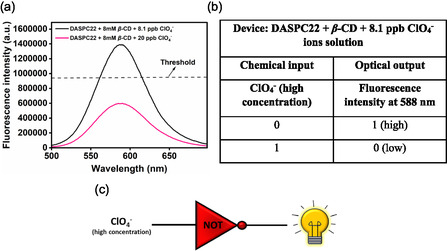 Figure 11
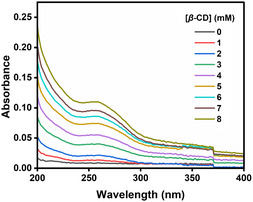 Figure 12
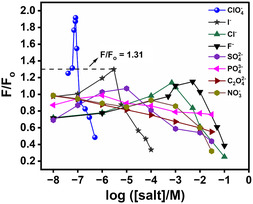 Figure 13
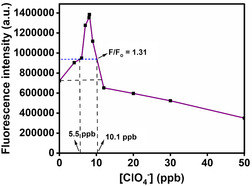 Figure 14
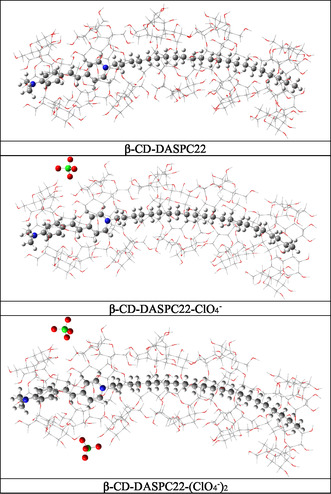 Figure 15
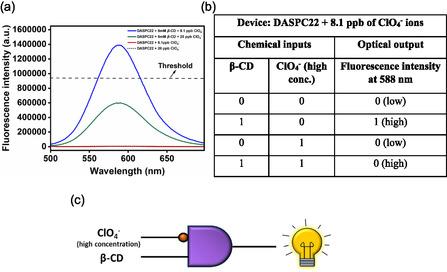 Figure 16
Peer Reviews
No public reviews on file for this paper yet. If you reviewed it on a platform where reviews are public (OpenReview, ICLR, NeurIPS, ICML), you can paste yours below so the community can read it here.
Videos
No videos yet. Explain this paper in a talk, walkthrough, or lecture? Add one.
Taxonomy
TopicsChemical Analysis and Environmental Impact · Molecular Sensors and Ion Detection · Water Treatment and Disinfection