Molecular Profiling of Ticks and Associated Pathogens: First Report of Rickettsia sibirica, Rickettsia slovaca, and Babesia microti in Ticks From Pakistan
Muhammad Kashif Obaid, Jin Luo, Shuaiyang Zhao, Zhancheng Tian, Shakir Ullah, Jehan Zeb, Guangyuan Liu, Jianxun Luo, Hong Yin, Muhammad Rashid, Qiaoyun Ren, Guiquan Guan

TL;DR
This study identifies new tick-borne pathogens in Pakistan, including Rickettsia and Babesia, highlighting potential risks to human and animal health.
Contribution
First report of Rickettsia sibirica, Rickettsia slovaca, and Babesia microti in ticks from Pakistan.
Findings
Rhipicephalus microplus was the most prevalent tick species in the study area.
Coxiella burnetii was the most common tick-borne pathogen detected.
Phylogenetic analysis grouped ticks and pathogens into distinct genetic clades.
Abstract
Global distribution of ticks and their associated tick-borne pathogens (TBPs) presents substantial health concerns for both humans and animals. The present study aimed to investigate the distribution, morpho-molecular identification, and associated TBPs of diverse tick species collected from Khyber Pakhtunkhwa and Punjab provinces of Pakistan. Morphological identifed ticks were molecularly confirmed via cytochrome oxidase I (COI) and 16S rRNA genes, which showed 15 different tick species. Among them, we found the highest prevalence rate of Rhipicephalus (Rh) microplus (404/1803; 22.41%), while the lowest prevalent tick species were Haemaphysalis (Hae) montgomeryi (44/1803; 2.44%). Similarly, the highest tick load was found on cattle (544/186; 2.92), while least was found on goats (272/164; 1.66). Various TBPs, including Rickettsia (R) spp. (via gltA, sca4, ompA, ompB genes), Anaplasma…
Genes, proteins, chemicals, diseases, species, mutations and cell lines named across the full text — each resolved to its canonical identifier and authoritative record.
Click any figure to enlarge with its caption.
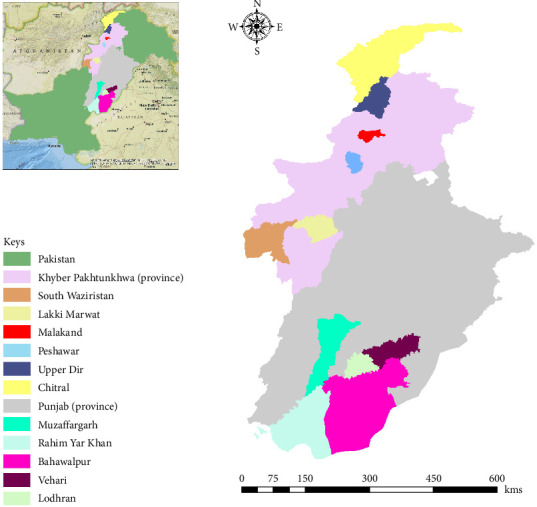 Figure 1
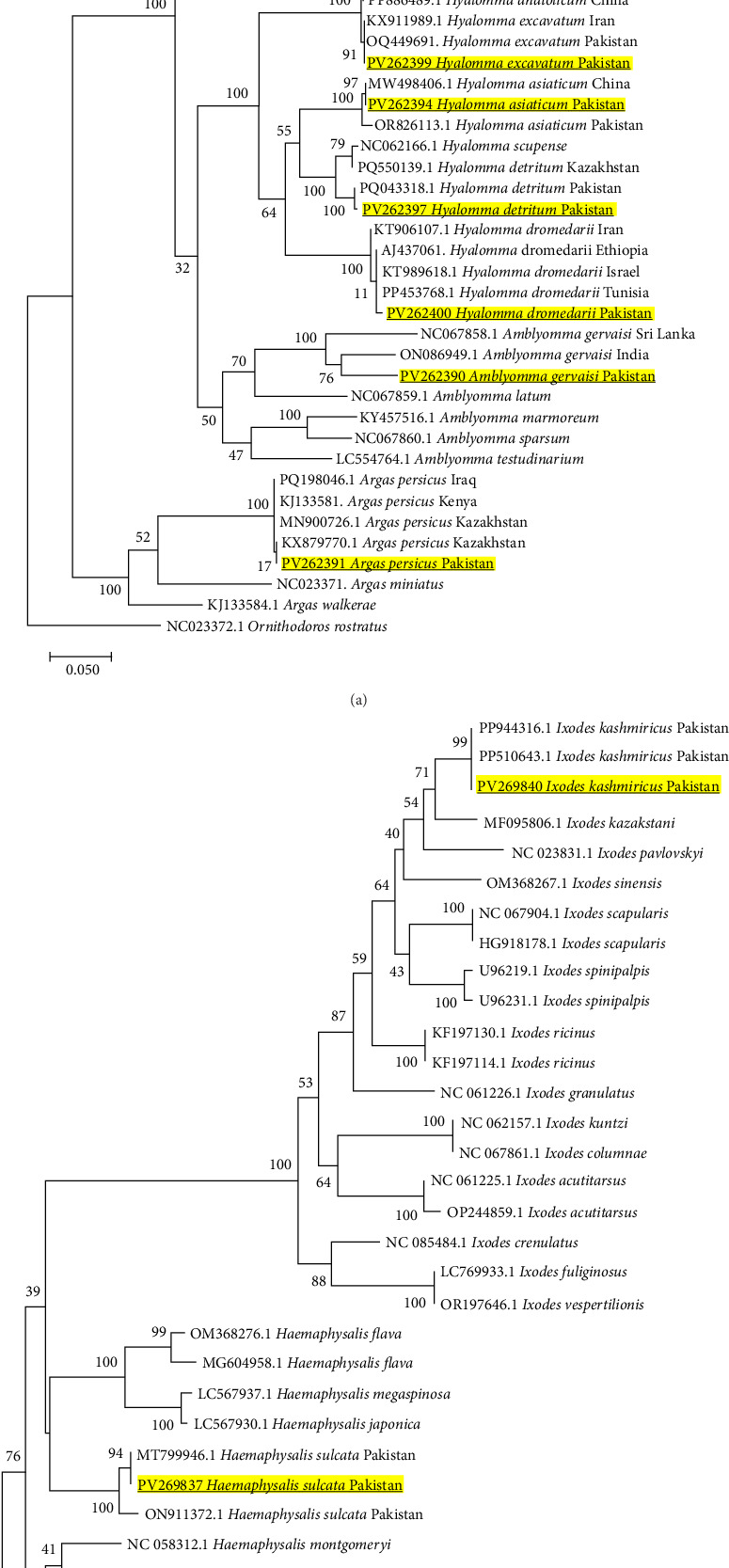 Figure 2
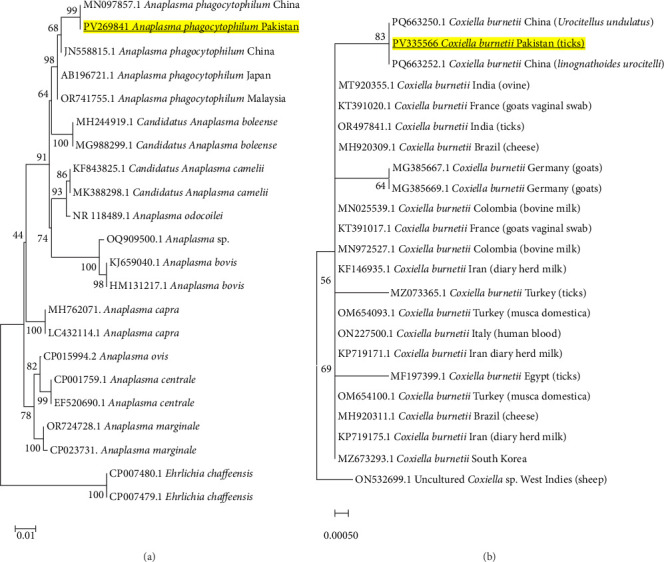 Figure 3
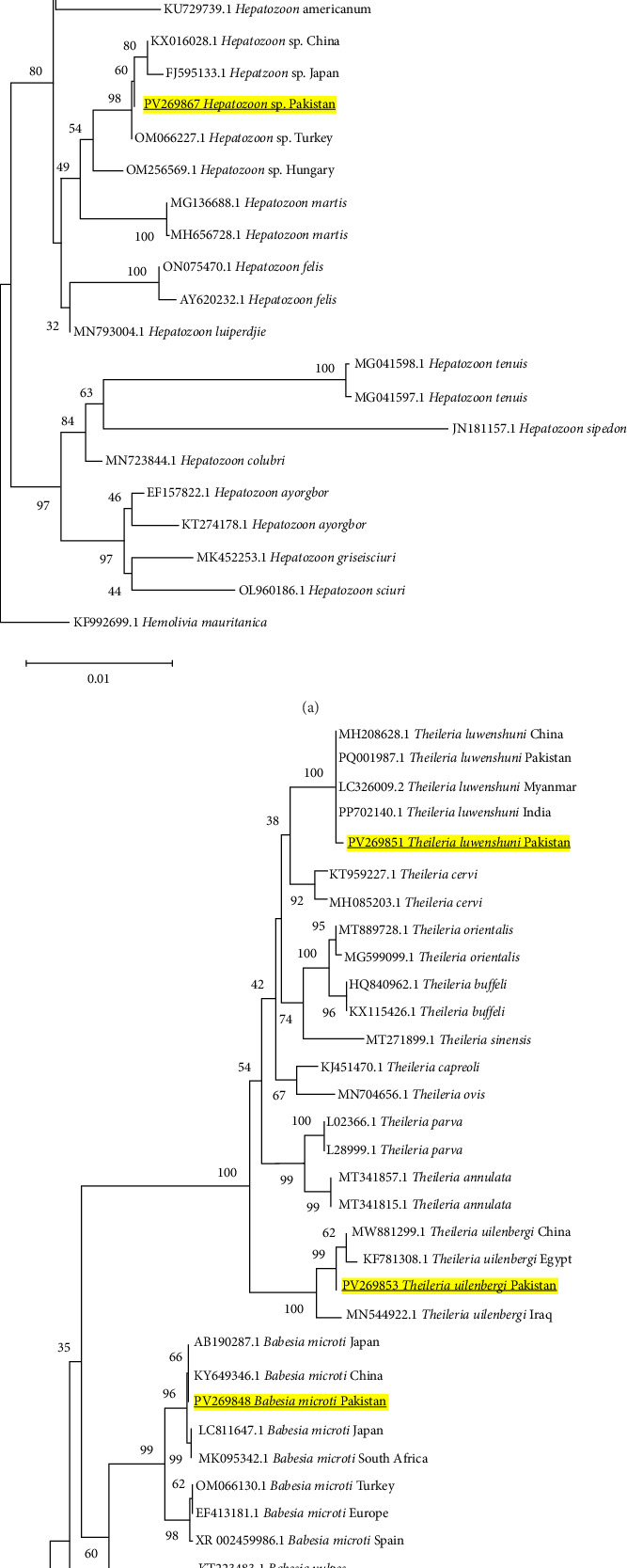 Figure 4
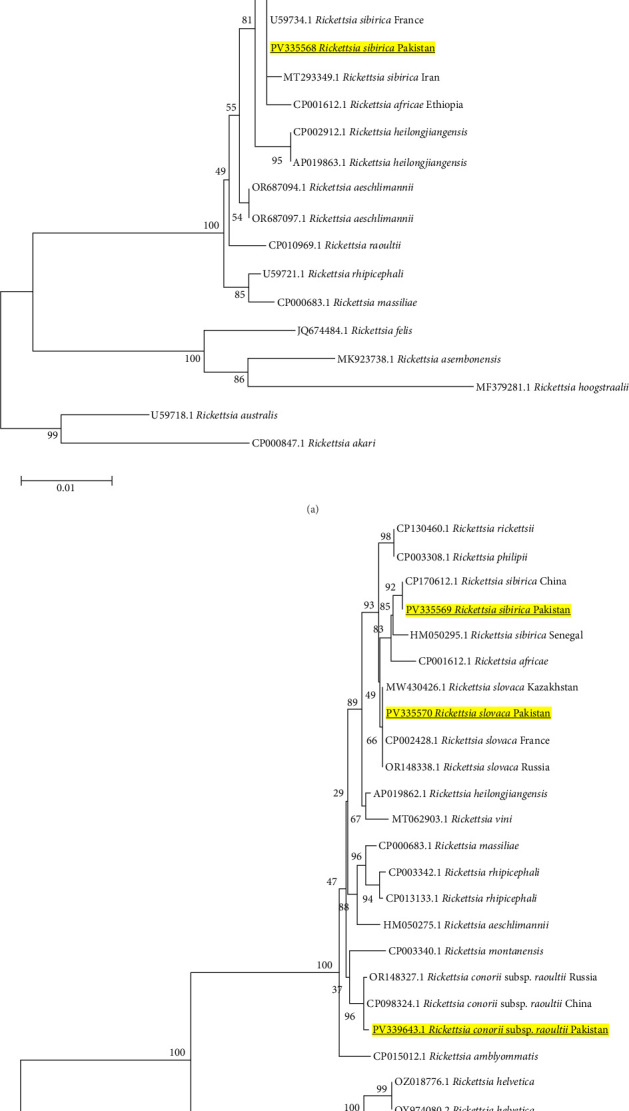 Figure 5
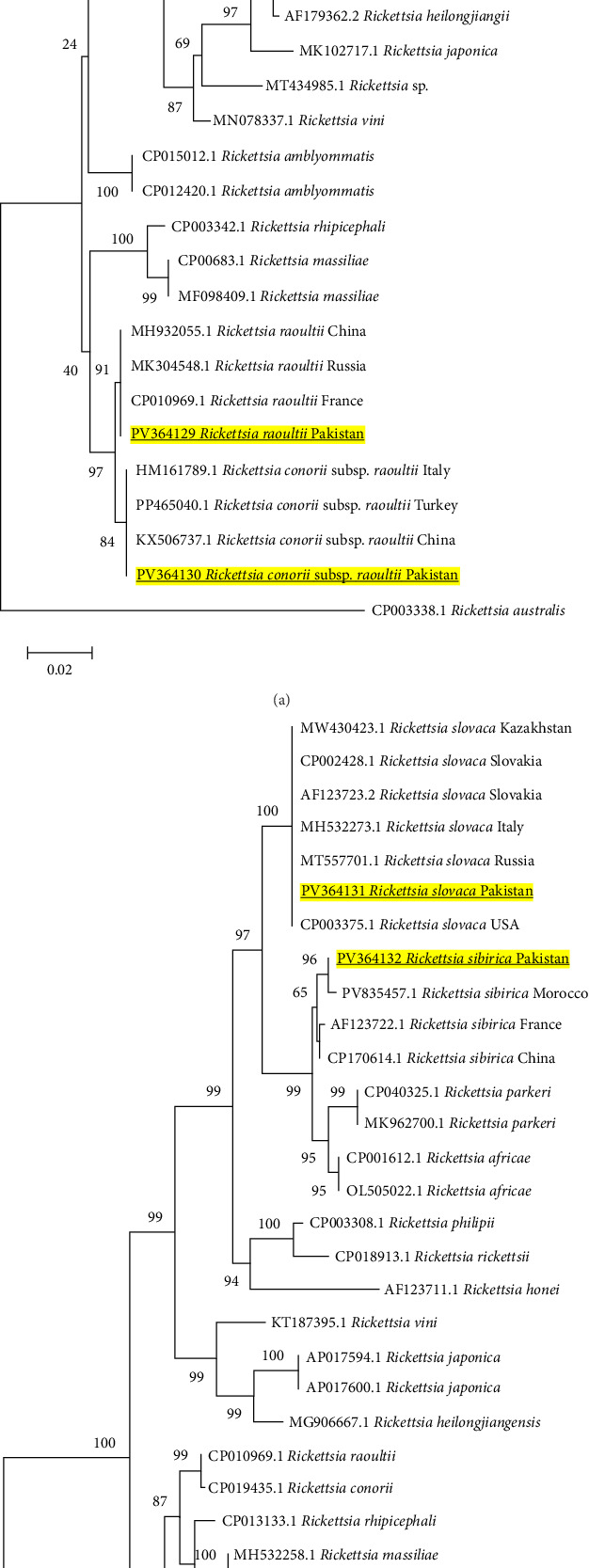 Figure 6
Peer Reviews
No public reviews on file for this paper yet. If you reviewed it on a platform where reviews are public (OpenReview, ICLR, NeurIPS, ICML), you can paste yours below so the community can read it here.
Videos
No videos yet. Explain this paper in a talk, walkthrough, or lecture? Add one.
Taxonomy
TopicsVector-borne infectious diseases · Viral Infections and Vectors · Vector-Borne Animal Diseases