Thymidine exerts anti-doxorubicin-induced cardiomyopathy effect through the regulation of the PPAR signaling pathways and ferroptosis pathways
Bin Li, Qifei Wang, Jiashuo Zhou, Peihai Li, Chen Sun, Qing Xia, Yun Zhang

TL;DR
Thymidine helps protect the heart from doxorubicin damage by affecting specific genetic pathways linked to heart function and cell death.
Contribution
This study reveals thymidine's novel protective mechanism against doxorubicin-induced heart damage via PPAR and ferroptosis pathways.
Findings
Thymidine reversed doxorubicin-induced heart function impairments in zebrafish.
Thymidine regulated genes in PPAR and ferroptosis pathways linked to heart protection.
Thymidine reduced pericardial edema and pathological changes in heart tissue.
Abstract
To evaluate the anti-cardiomyopathic activity of thymine (Thy) and to elucidate its mechanism of action. Transgenic zebrafish with enhanced green fluorescent protein (EGFP)-labelled hearts (Tg (cmlc2: EGFP)) and wild-type AB zebrafish were used as experimental animals. A blank control group, a doxorubicin (DOX) model group, a dexrazoxane (DEX)-positive drug group and Thy drug treatment group were established. After treatment, indicators closely related to cardiac function, such as the pericardial area, heart rate, stroke volume, short-axis shortening (SAS) rate, and ejection fraction of the zebrafish in each group, were evaluated to determine the protective activity of Thy against DOX-induced cardiomyopathy. The regulatory roles of key genes in the pathways associated with the cardioprotective activity of Thy were analyzed via RT-qPCR. The results indicated that Thy effectively…
Genes, proteins, chemicals, diseases, species, mutations and cell lines named across the full text — each resolved to its canonical identifier and authoritative record.
Click any figure to enlarge with its caption.
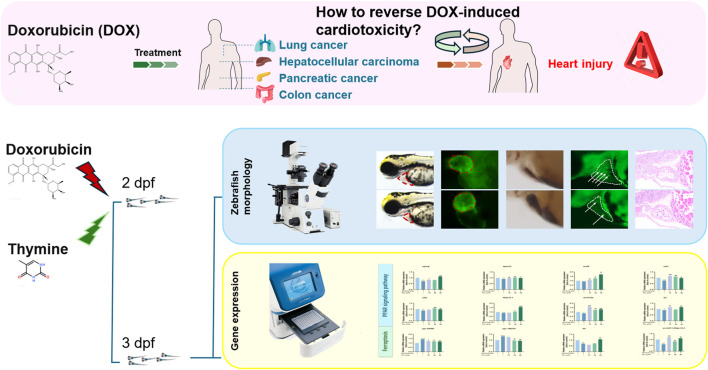 Figure 1
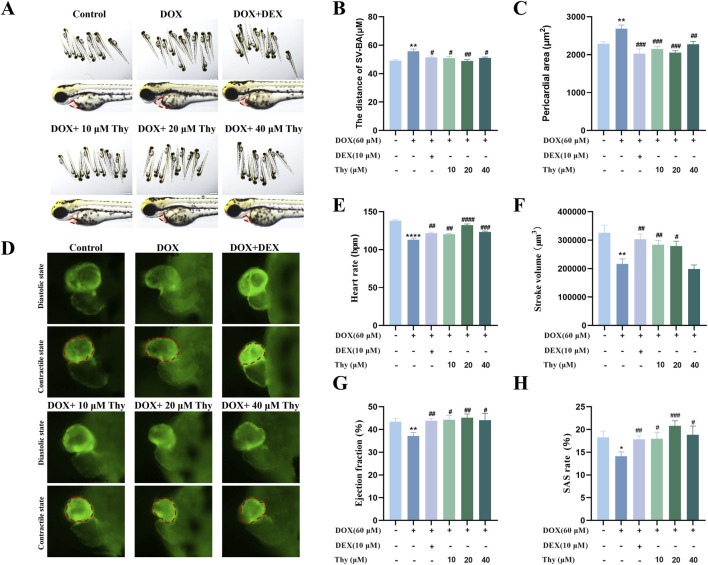 Figure 2
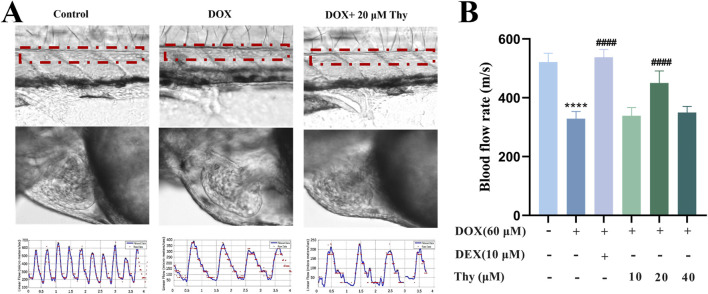 Figure 3
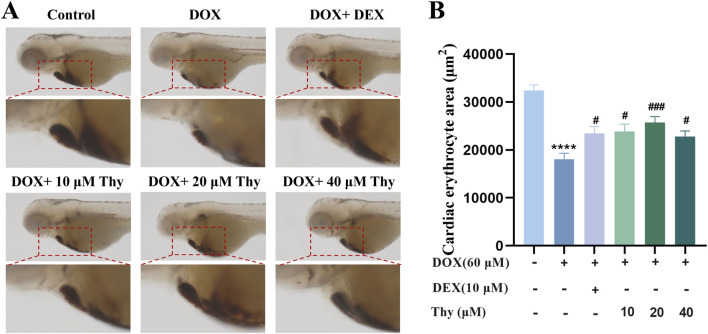 Figure 4
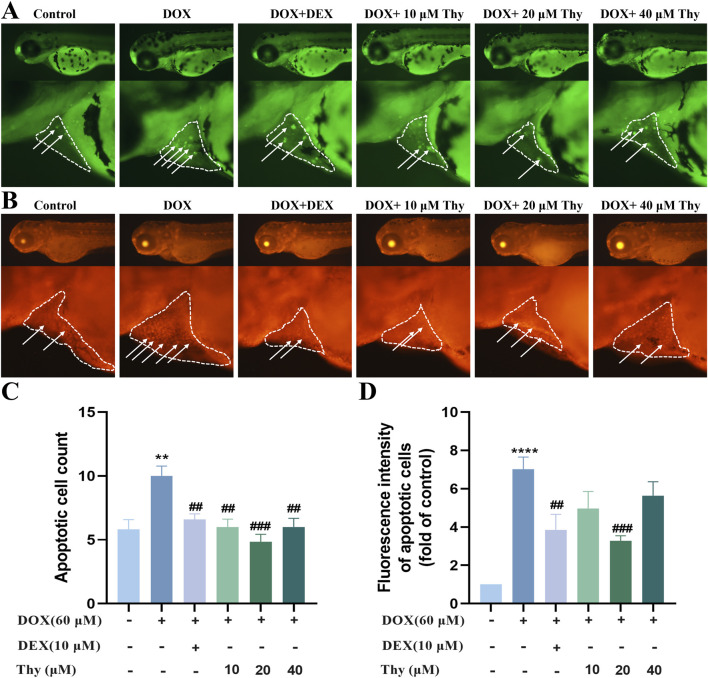 Figure 5
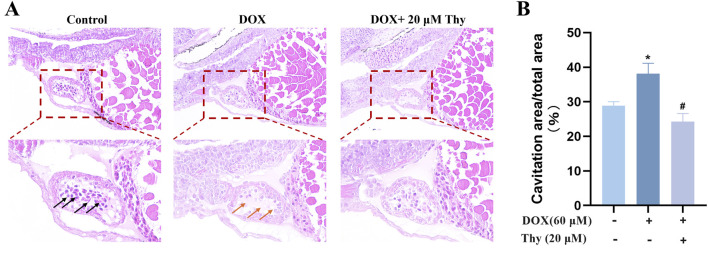 Figure 6
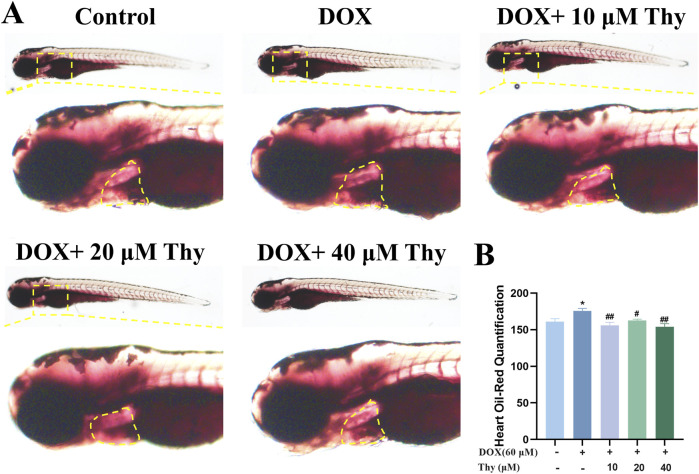 Figure 7
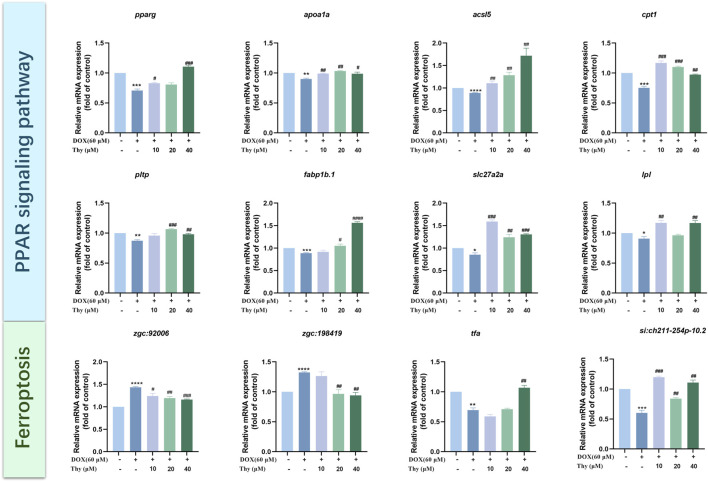 Figure 8
Peer Reviews
No public reviews on file for this paper yet. If you reviewed it on a platform where reviews are public (OpenReview, ICLR, NeurIPS, ICML), you can paste yours below so the community can read it here.
Videos
No videos yet. Explain this paper in a talk, walkthrough, or lecture? Add one.
Taxonomy
TopicsCongenital heart defects research · Nitric Oxide and Endothelin Effects · Mitochondrial Function and Pathology