REINFORCEMENT WITH THE LONG HEAD OF THE BICEPS TENDON IN LARGE AND MASSIVE REPAIRABLE ROTATOR CUFF TEARS: A PROSPECTIVE CASE SERIES
GUSTAVO DE MELLO RIBEIRO PINTO, CRISTIANO NABUCO DANTAS, MARCELO COSTA DE OLIVEIRA CAMPOS, JORGE HENRIQUE ASSUNÇÃO, MAURO EMILIO CONFORTO GRACITELLI, EDUARDO ANGELI MALAVOLTA

TL;DR
A study finds that using the biceps tendon to reinforce large rotator cuff repairs leads to improved function and low complications in patients.
Contribution
This study introduces the use of the long head of the biceps tendon as reinforcement in large rotator cuff repairs with promising clinical outcomes.
Findings
Pain and function scores improved significantly after surgery.
The biceps healing rate was 84% with a 60% retear rate in the rotator cuff.
No biceps-related complications or infections were observed.
Abstract
The treatment of large and massive rotator cuff tears remains challenging. This study evaluates the efficacy and safety of reinforcement with the long head of the biceps tendon (LHBT) in patients with large and massive repairable rotator cuff tears. This is a prospective case series involving 25 patients who underwent open repair of large and massive rotator cuff tears with LHBT reinforcement. All patients were operated by the same surgeon and followed up for one year. Pain scores (VAS: 6.6 ± 2.30 vs. 2.68 ± 2.73; p<0.001) and function scores (ASES: 36.86 ± 19.27 vs. 73.96 ± 23.73; p<0.001; UCLA: 13.04 ± 3.83 vs. 26.04 ± 7.39; p<0.001) improved significantly postoperatively compared to preoperatively. The biceps healing rate was 84%, while the rotator cuff retear rate was 60%. No complications related to the biceps or surgical site infections were documented. Reinforcement with the…
Genes, proteins, chemicals, diseases, species, mutations and cell lines named across the full text — each resolved to its canonical identifier and authoritative record.
Click any figure to enlarge with its caption.
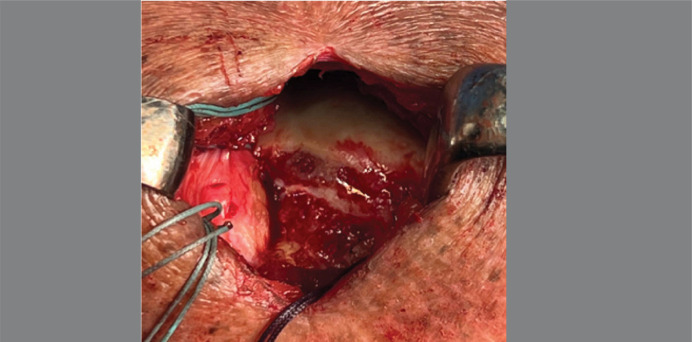 Figure 1
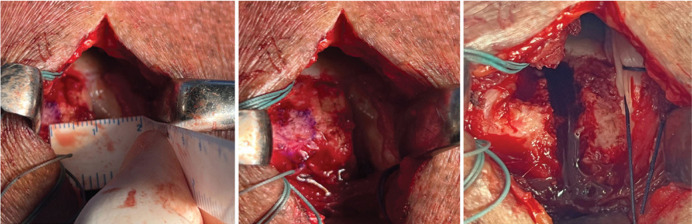 Figure 2
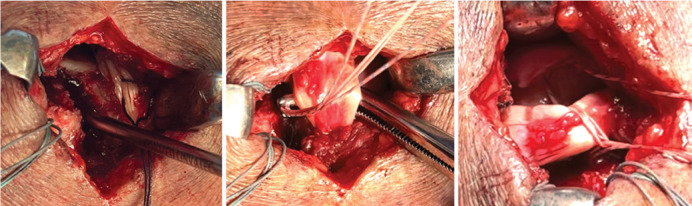 Figure 3
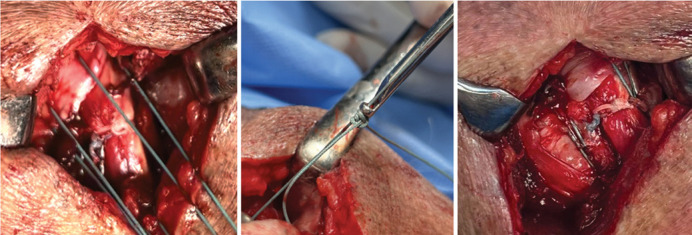 Figure 4
Peer Reviews
No public reviews on file for this paper yet. If you reviewed it on a platform where reviews are public (OpenReview, ICLR, NeurIPS, ICML), you can paste yours below so the community can read it here.
Videos
No videos yet. Explain this paper in a talk, walkthrough, or lecture? Add one.
Taxonomy
TopicsShoulder Injury and Treatment · Shoulder and Clavicle Injuries · Cardiac Arrhythmias and Treatments