ASSESSMENT OF ISOMETRIC AND ISOKINETIC ANKLE STRENGTH MEASURES: A PILOT STUDY
CAROLINA LINS, ANDREZA RIBEIRO BATISTA DE OLIVEIRA, MARINA SQUARIZI SIMÕES CHAGAS, FELIPPE RIBEIRO, ALBERTO CLIQUET, RODRIGO GONÇALVES PAGNANO

TL;DR
This pilot study compares isometric and isokinetic ankle strength in healthy individuals, finding gender and activity level differences in isokinetic strength.
Contribution
The study provides new insights into gender and activity-related differences in isokinetic ankle strength measurements.
Findings
Men showed greater isokinetic strength than women in dominant and non-dominant limbs.
Very active individuals had higher torque peaks in isokinetic strength compared to sedentary individuals.
No association was found between isometric and isokinetic ankle strength measurements.
Abstract
To evaluate isometric and isokinetic ankle strength in of dorsiflexion (DF), plantar flexion (PF), inversion (INV), and eversion (EVE) in healthy individuals. A cross-sectional study was conducted with individuals aged 18 to 60 years, of both sexes. The Lafayette® isometric manual dynamometer was used to evaluate isometric strength, the Humac Norm® isokinetic dynamometer to evaluate isokinetic strength, and the IPAQ questionnaire (International Physical Activity Questionnaire) for the level of physical activity. Statistical analysis compared sex, dominance, and physical activity level with isometric and isokinetic strengths using the Spearman coefficient and the Mann-Whitney test. There was a difference between genders for dominant and non-dominant limbs in isokinetic strength and not in isometric strength. There was a difference between isokinetic strength variables and physical…
Genes, proteins, chemicals, diseases, species, mutations and cell lines named across the full text — each resolved to its canonical identifier and authoritative record.
Click any figure to enlarge with its caption.
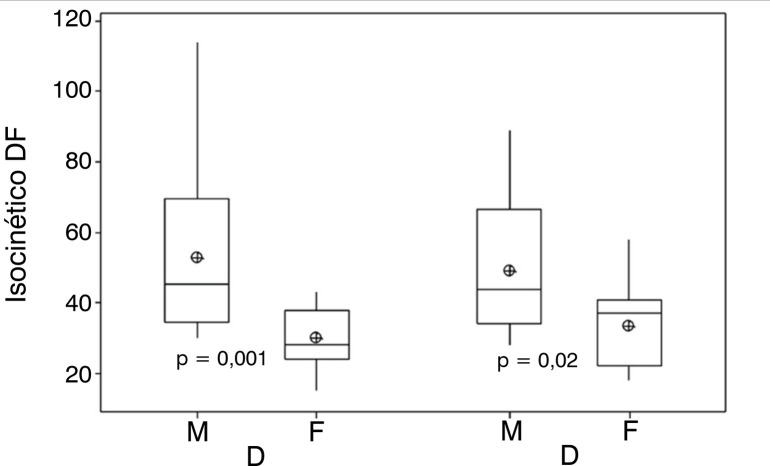 Figure 1
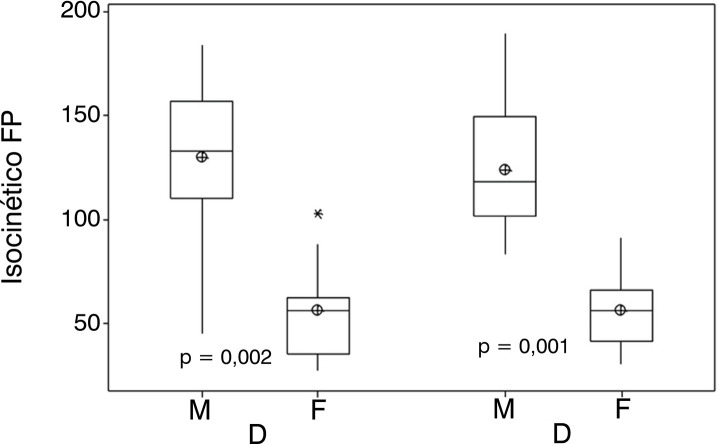 Figure 2
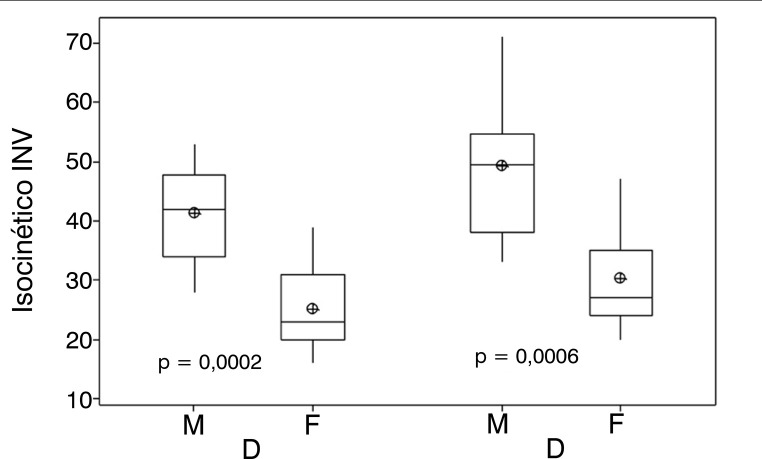 Figure 3
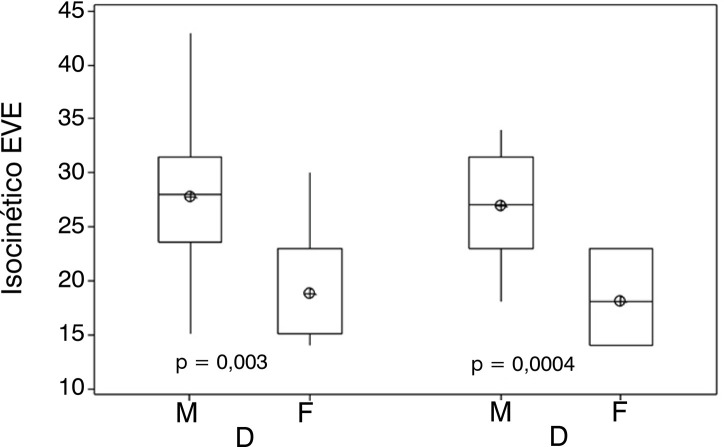 Figure 4
Peer Reviews
No public reviews on file for this paper yet. If you reviewed it on a platform where reviews are public (OpenReview, ICLR, NeurIPS, ICML), you can paste yours below so the community can read it here.
Videos
No videos yet. Explain this paper in a talk, walkthrough, or lecture? Add one.
Taxonomy
TopicsSports injuries and prevention · Foot and Ankle Surgery · Lower Extremity Biomechanics and Pathologies