A sustained reduction in the rate of severe intraventricular hemorrhage in very low birth weight infants: a novel quality improvement project in a large perinatal-neonatal centre in Asia
Thowfique Ibrahim, Arpan Agarwal, Abdul Alim Abdul Haium, Nirmal Kavalloor Visruthan, Maria Chona Badillo, Rowena Dela Puerta, Janlie Lizaso Banas, Sharifa Sarjono, Fareed Muhammed Bin Noorul Amin Alawdeen, Rehana Sultana, Victor Samuel Rajadurai

TL;DR
This study shows a successful quality improvement project in Singapore that significantly and sustainably reduced severe brain bleeding in very low birth weight infants.
Contribution
A novel quality improvement approach using a care bundle and RC-PC-S analysis led to a sustained 57% reduction in severe intraventricular hemorrhage in VLBW infants.
Findings
The rate of severe intraventricular hemorrhage dropped from 5.9% to 1.9% after implementing the quality improvement project.
The reduction in severe IVH was sustained at 2.7% in the final period and was associated with lower mortality and improved adherence to care protocols.
The RC-PC-S analysis method proved effective in identifying and addressing root causes of severe IVH.
Abstract
Severe IVH (SIVH) stands out as a leading cause of poor neuro-developmental outcomes, including cognitive, attention and motor impairment in very low birth weight (≤1.5 kg, VLBW) infants. The study aims to reduce the rate of severe intraventricular hemorrhage (SIVH) by 50% in very low birth weight (VLBW) infants admitted to the level III C neonatal intensive care unit (NICU) in Singapore. In this quality improvement (QI) study, VLBW infants admitted to NICU from 2011 to 2021 (n = 2215) were categorized into four periods: (a) pre-intervention 2011to 2012, (b) Intervention (2013 to 2017), (c) post-intervention (2018 to 2019), and (d) sustainment (2020 to 2021) periods, respectively. A multidisciplinary team identified key drivers for SIVH. A set of care bundles involving eight protocolized interventions was applied. Infants with SIVH were analyzed with an RC-PC-S process (Root Cause-…
Genes, proteins, chemicals, diseases, species, mutations and cell lines named across the full text — each resolved to its canonical identifier and authoritative record.
Click any figure to enlarge with its caption.
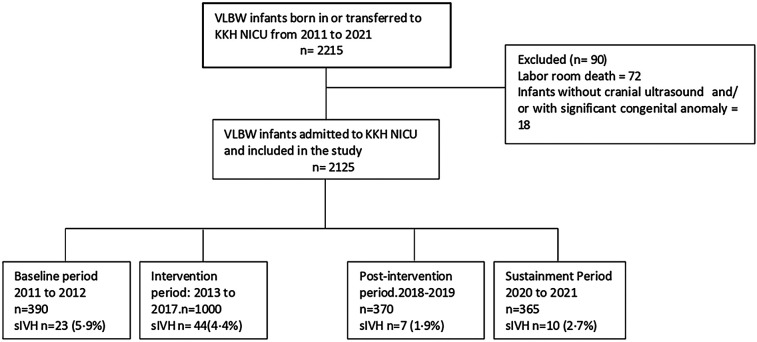 Figure 1
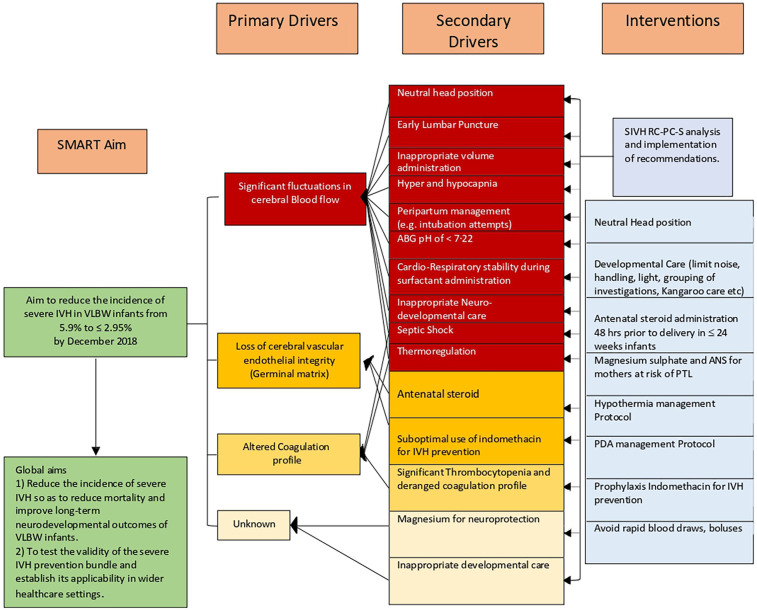 Figure 2
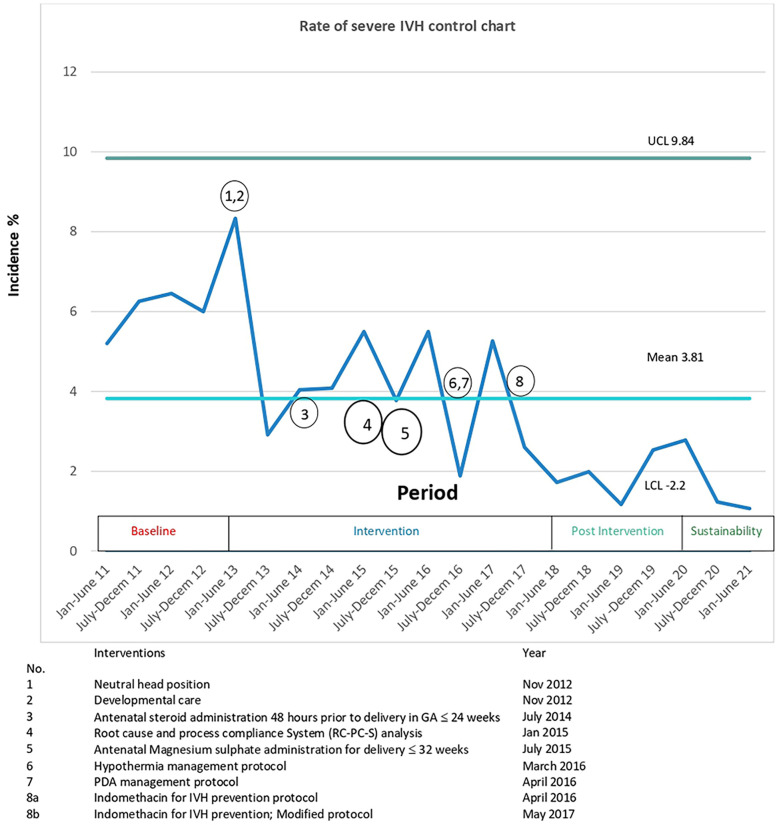 Figure 3
Peer Reviews
No public reviews on file for this paper yet. If you reviewed it on a platform where reviews are public (OpenReview, ICLR, NeurIPS, ICML), you can paste yours below so the community can read it here.
Videos
No videos yet. Explain this paper in a talk, walkthrough, or lecture? Add one.
Taxonomy
TopicsNeonatal and fetal brain pathology · Neonatal Respiratory Health Research · Neuroscience of respiration and sleep