GETgene-AI: a framework for prioritizing actionable cancer drug targets
Adrian Gu, Jake Y. Chen

TL;DR
GETgene-AI is a new framework that combines network analysis, machine learning, and AI to prioritize cancer drug targets more effectively.
Contribution
GETgene-AI introduces a novel framework integrating network-based prioritization, machine learning, and automated literature analysis for drug target prioritization.
Findings
GETgene-AI successfully prioritized targets like PIK3CA and PRKCA in pancreatic cancer with experimental validation.
The framework outperformed GEO2R and STRING in precision, recall, and efficiency for actionable target prioritization.
GETgene-AI's modular design allows scalability across different cancers and diseases.
Abstract
Prioritizing actionable drug targets is a critical challenge in cancer research, where high-dimensional genomic data and the complexity of tumor biology often hinder effective prioritization. To address this, we developed GETgene-AI, a novel computational framework that integrates network-based prioritization, machine learning, and automated literature analysis to prioritize and rank potential therapeutic targets. Central to GETgene-AI is the G.E.T. strategy, which combines three data streams: mutational frequency (G List), differential expression (E List), and known drug targets (T List). These components are iteratively refined and ranked using the Biological Entity Expansion and Ranking Engine (BEERE), leveraging protein-protein interaction networks, functional annotations, and experimental evidence. Additionally, GETgene-AI incorporates GPT-4o, an advanced large language model, to…
Genes, proteins, chemicals, diseases, species, mutations and cell lines named across the full text — each resolved to its canonical identifier and authoritative record.
Click any figure to enlarge with its caption.
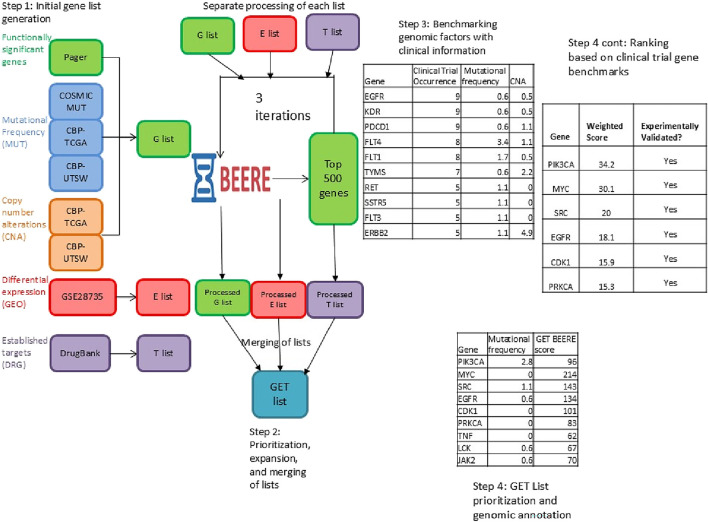 Figure 1
 Figure 2
 Figure 3
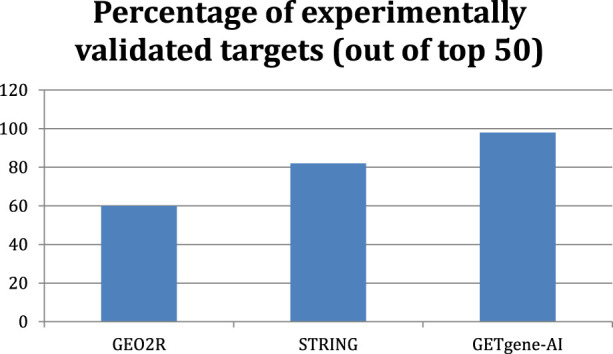 Figure 4
Peer Reviews
No public reviews on file for this paper yet. If you reviewed it on a platform where reviews are public (OpenReview, ICLR, NeurIPS, ICML), you can paste yours below so the community can read it here.
Videos
No videos yet. Explain this paper in a talk, walkthrough, or lecture? Add one.
Taxonomy
TopicsPancreatic and Hepatic Oncology Research · Cancer Genomics and Diagnostics · Bioinformatics and Genomic Networks