Assessment of a novel patient reported outcome measure for visual snow syndrome: the Colorado visual snow survey 2.0
Samuel M. Maione, Victoria S. Pelak, Peter Gerhardstein

TL;DR
Researchers tested a new survey to measure symptoms of visual snow syndrome and found it effectively distinguishes patients from healthy individuals.
Contribution
The study introduces and validates the Colorado Visual Snow Survey 2.0 as a potential patient-reported outcome measure for visual snow syndrome.
Findings
The CVSS strongly differentiated people with VSS from healthy controls.
The survey showed high internal consistency and identified key symptoms predictive of VSS.
People with VSS may be more sensitive to entoptic phenomena and depersonalization/derealization.
Abstract
Visual snow syndrome (VSS) is a condition in which people experience a continuous overlay of small dots atop their entire visual field. As a newly recognized condition, there is a gap in patient reported outcome measures (PROMs) that target VSS symptom impact. We sought to assess the Colorado Visual Snow Survey 2.0 (CVSS) as a possible PROM for VSS using a convenience sample of undergraduate students and people with VSS recruited through the Visual Snow Initiative (N = 144). We found the CVSS (1) strongly differentiated people with VSS from healthy controls, (2) demonstrated high internal consistency, and (3) aside from visual static, the degree of night vision impairment, blue field entoptic phenomenon, and afterimages, and tinnitus (in that order) best predicted group membership. We also find evidence to suggest people with VSS may be more sensitive to entoptic phenomenon and…
Genes, proteins, chemicals, diseases, species, mutations and cell lines named across the full text — each resolved to its canonical identifier and authoritative record.
Click any figure to enlarge with its caption.
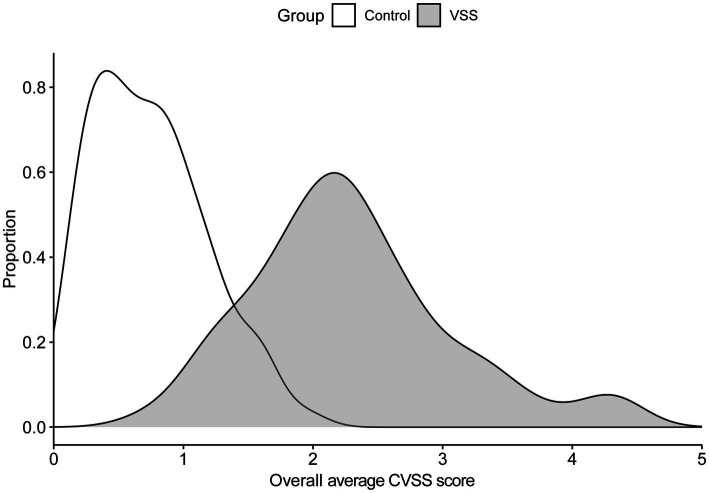 Figure 1
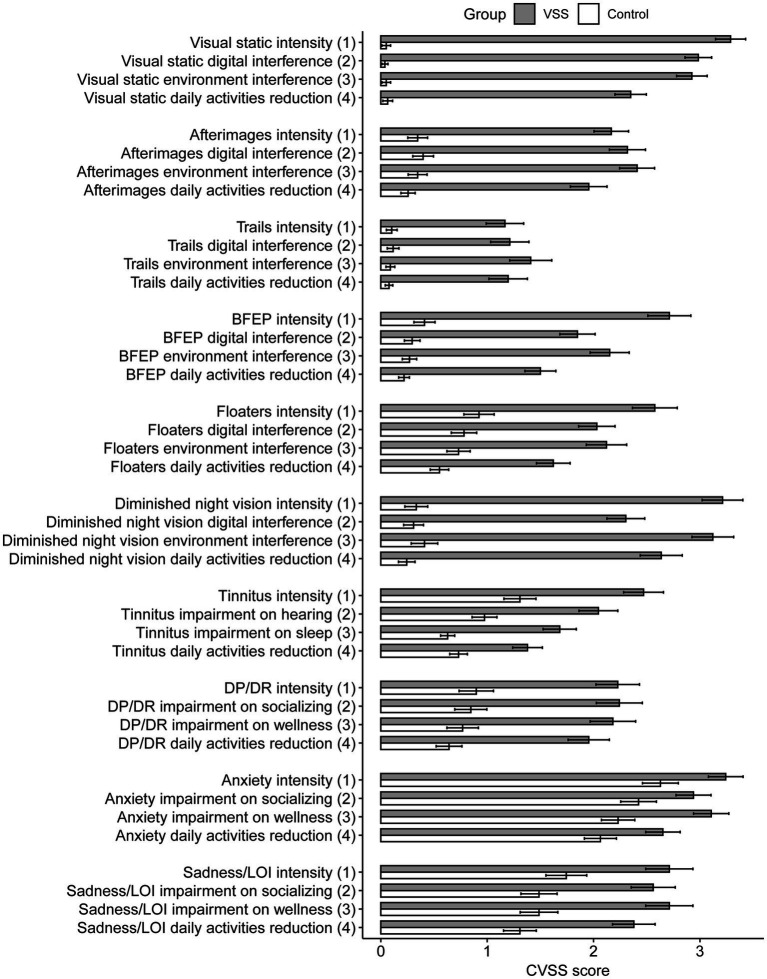 Figure 2
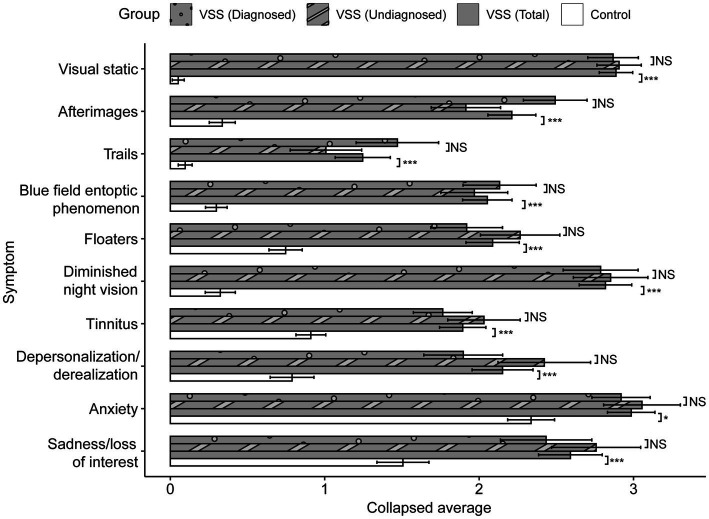 Figure 3
Peer Reviews
No public reviews on file for this paper yet. If you reviewed it on a platform where reviews are public (OpenReview, ICLR, NeurIPS, ICML), you can paste yours below so the community can read it here.
Videos
No videos yet. Explain this paper in a talk, walkthrough, or lecture? Add one.
Taxonomy
TopicsOlfactory and Sensory Function Studies · Circadian rhythm and melatonin · Urban Green Space and Health