Seasonal dynamics and niches of three vector chigger species at a focus of scrub typhus in southwest China
Yan Lv, Peng-Wu Yin, Xian-Guo Guo, Rong Fan, Cheng-Fu Zhao, Zhi-Wei Zhang, Ya-Fei Zhao, Lei Zhang

TL;DR
This study examines the seasonal activity and host preferences of three chigger species in southwest China to better understand scrub typhus transmission.
Contribution
The study reveals distinct seasonal patterns and niche differences among three key vector chigger species in a scrub typhus focus.
Findings
Leptotrombidium deliense and L. imphalum show summer-autumn activity peaks, while L. scutellare peaks in autumn-winter.
L. deliense has the widest temporal niche, and L. scutellare has the widest host niche.
Temperature is a key driver of seasonal fluctuations in chigger populations.
Abstract
The present study aims to investigate the seasonal dynamics of main vectors of scrub typhus, and thereby provide scientific information for the surveillance and control of the disease. A field investigation lasting for 12 consecutive months was conducted at a fixed survey site (Waxi Village) in Binchuan County (a focus of scrub typhus), Yunnan Province of southwest China between 2019 and 2020. Based on the taxonomic identification of all collected chigger mites, the three vector chigger species of scrub typhus (Leptotrombidium deliense, L. scutellare and L. imphalum) were screened out as the object of this study. The constituent ratio (Cr), prevalence (PM), mean abundance (MA), and mean intensity (MI) were calculated to reflect the mite infestation status. The Levins’ niche breadth (Bi) and Pianka’s proportional similarity ratio (Oij) were used to calculate the ecological niche breadth…
Genes, proteins, chemicals, diseases, species, mutations and cell lines named across the full text — each resolved to its canonical identifier and authoritative record.
Click any figure to enlarge with its caption.
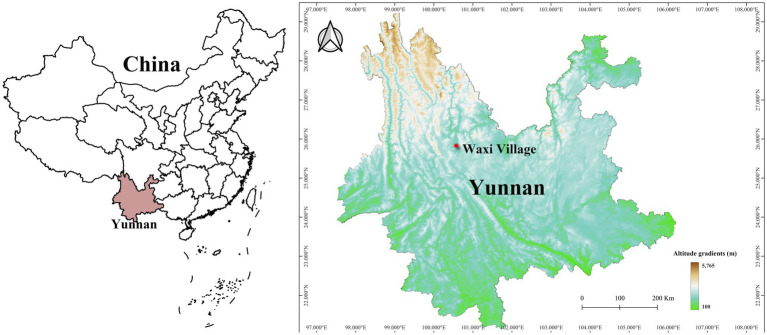 Figure 1
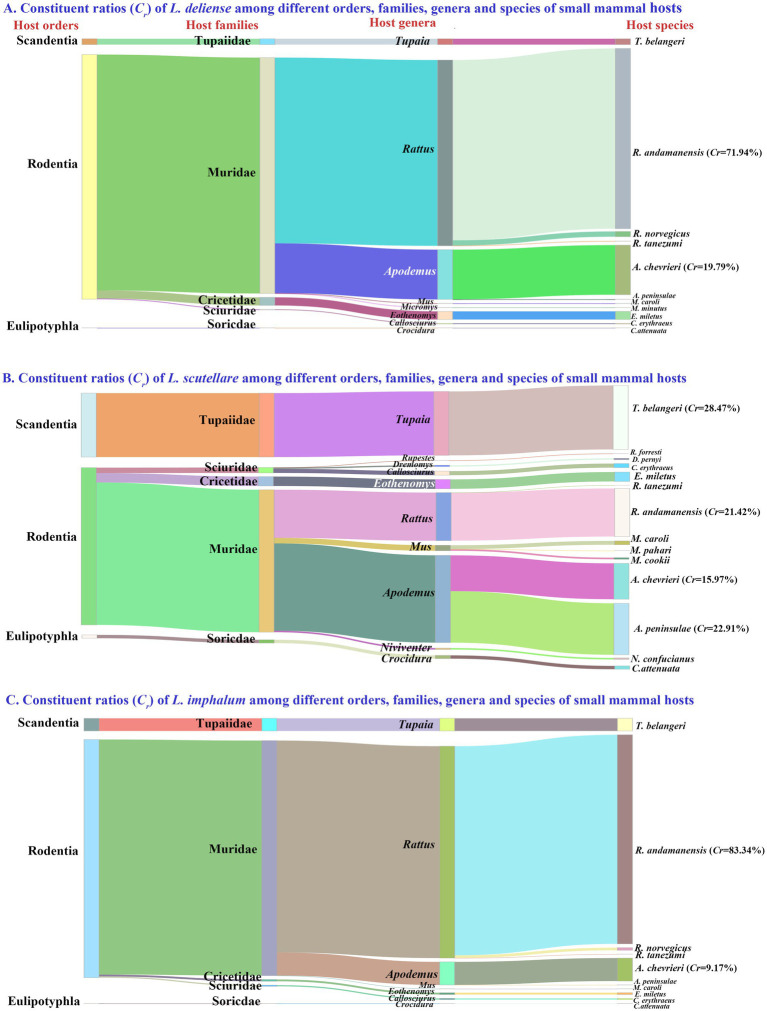 Figure 2
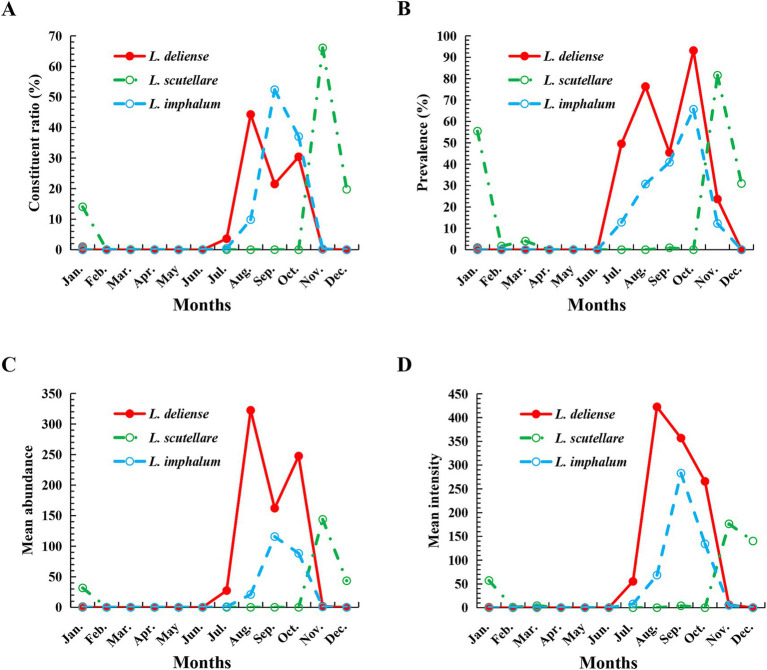 Figure 3
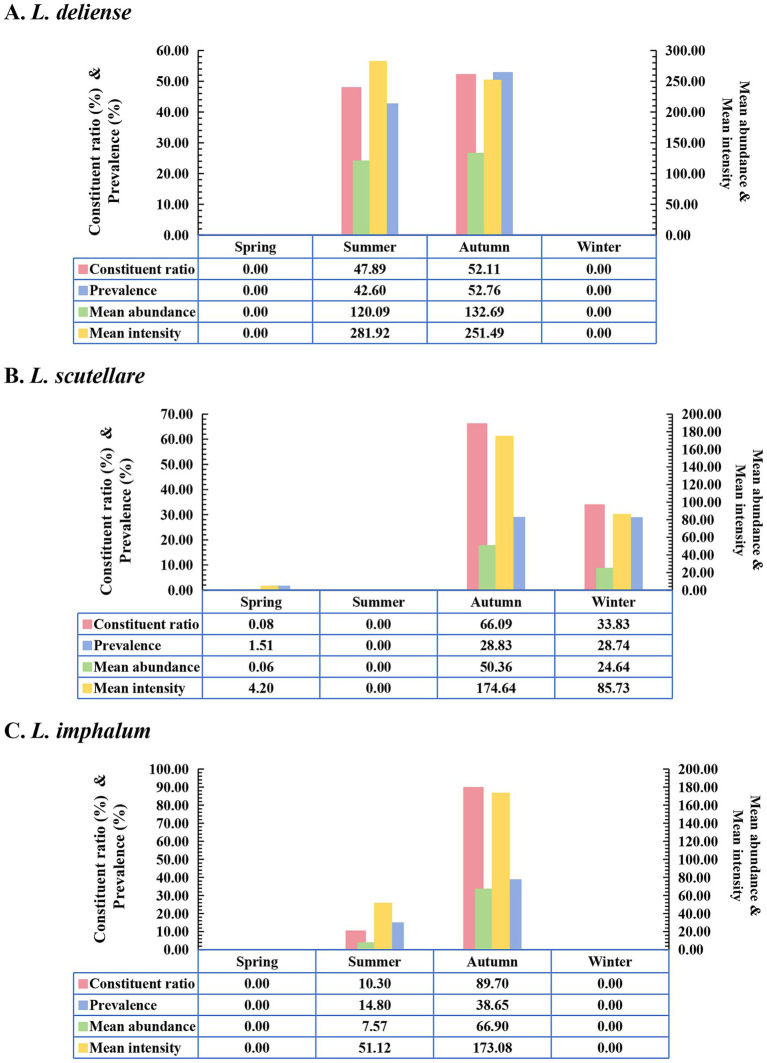 Figure 4
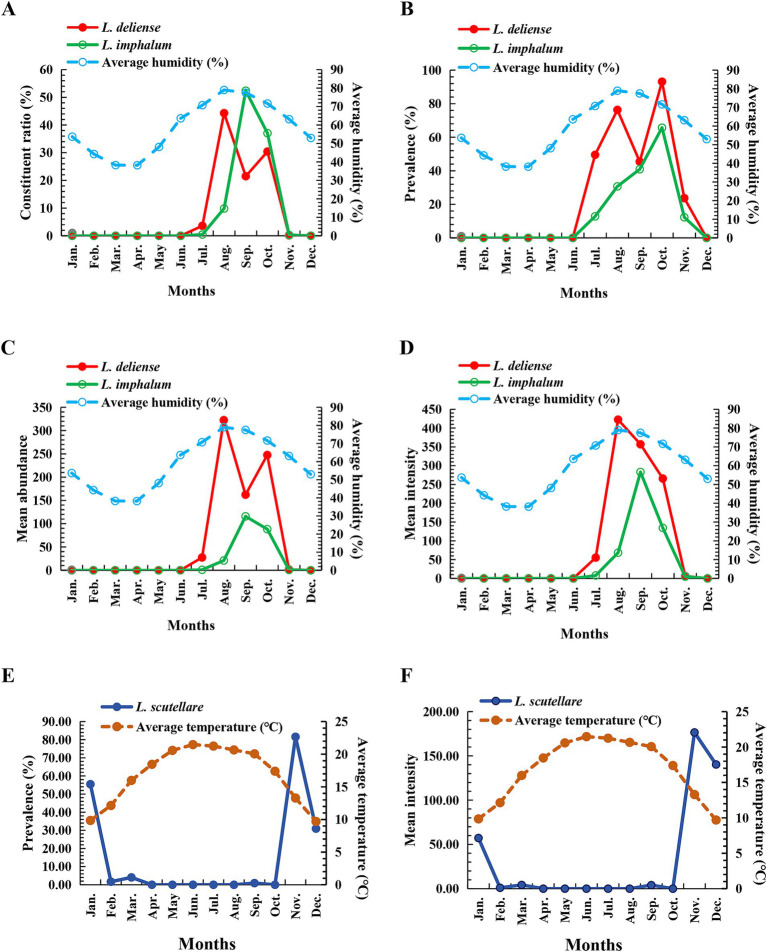 Figure 5
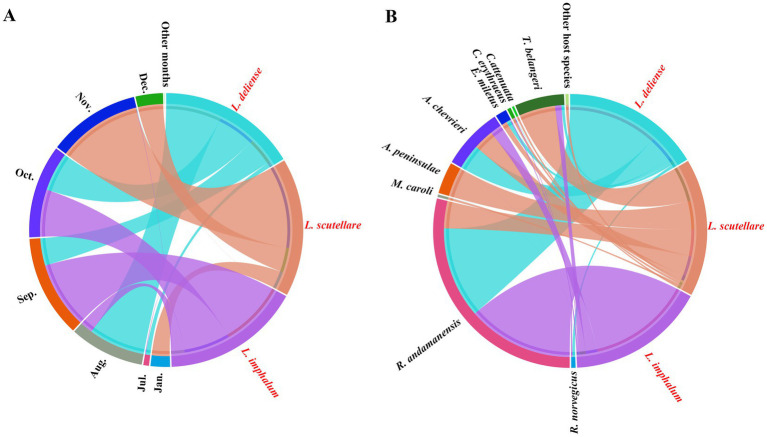 Figure 6
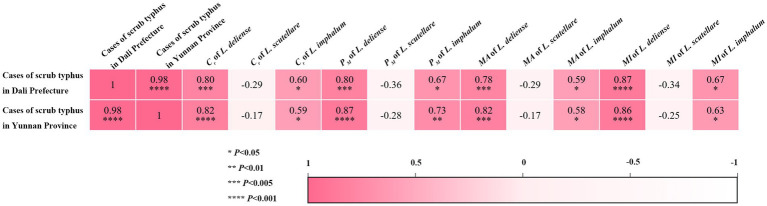 Figure 7
Peer Reviews
No public reviews on file for this paper yet. If you reviewed it on a platform where reviews are public (OpenReview, ICLR, NeurIPS, ICML), you can paste yours below so the community can read it here.
Videos
No videos yet. Explain this paper in a talk, walkthrough, or lecture? Add one.
Taxonomy
TopicsVector-borne infectious diseases · Viral Infections and Vectors · Bird parasitology and diseases