Diagnosis and treatment of paragangliomas and pheochromocytomas: a survey from the Italian Association for Neuroendocrine Tumors
Erica Pietroluongo, Antonella Lucia Marretta, Mauro Cives, Elisa Andrini, Leonardo Della Sala, Elisabetta Dell’Unto, Alice Carli, Nevena Mikovic, Ilaria Mascagni, Francesco Panzuto, Salvatore Tafuto

TL;DR
This survey explores how Italian healthcare professionals diagnose and treat rare neuroendocrine tumors called pheochromocytomas and paragangliomas, highlighting treatment preferences and the need for more evidence-based guidelines.
Contribution
The study provides insights into current diagnostic and treatment practices for rare neuroendocrine tumors in Italy, emphasizing the reliance on clinical experience over formal guidelines.
Findings
Most healthcare professionals recommend genetic counseling for all patients with pheochromocytomas or paragangliomas.
Radioligand therapy is perceived as the most effective second-line treatment for these tumors.
Clinical practice for pheochromocytomas and paragangliomas is largely guided by clinical wisdom rather than formal evidence.
Abstract
Pheochromocytomas (PCCs) and paragangliomas (PPGLs) are rare neuroendocrine neoplasms (NENs) with heterogeneous clinical presentations. Given the rarity of PCCs/PPGLs and the paucity of high-level evidence, therapeutic decisions and treatment sequences vary across institutions. This survey explored current diagnostic practices and treatment patterns among Italian healthcare professionals (HCPs) dedicated to NENs. An online survey was conducted among Italian HCPs, members of the Italian Association for Neuroendocrine Tumors (ITANET). The survey included 33 questions covering diagnosis, genetic counseling, imaging, and treatment approaches. Responses were collected from December 15, 2023, to May 30, 2024, and analyzed using descriptive statistics to identify trends in clinical practice. We recorded 80/355 responses from invited HCPs (response rate: 23%). Most HCPs (90%) referred all…
Genes, proteins, chemicals, diseases, species, mutations and cell lines named across the full text — each resolved to its canonical identifier and authoritative record.
Click any figure to enlarge with its caption.
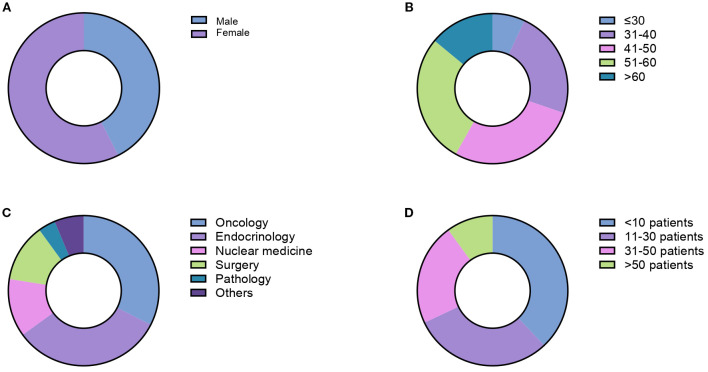 Figure 1
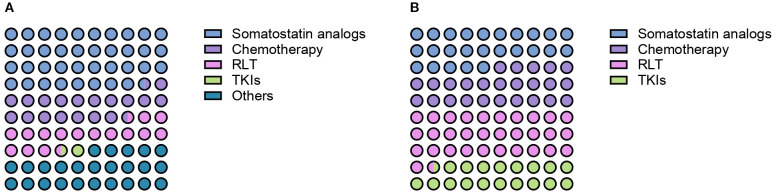 Figure 2
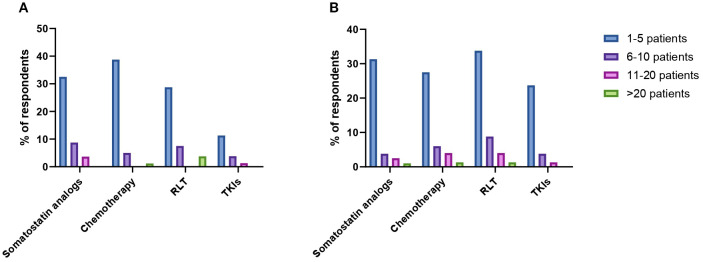 Figure 3
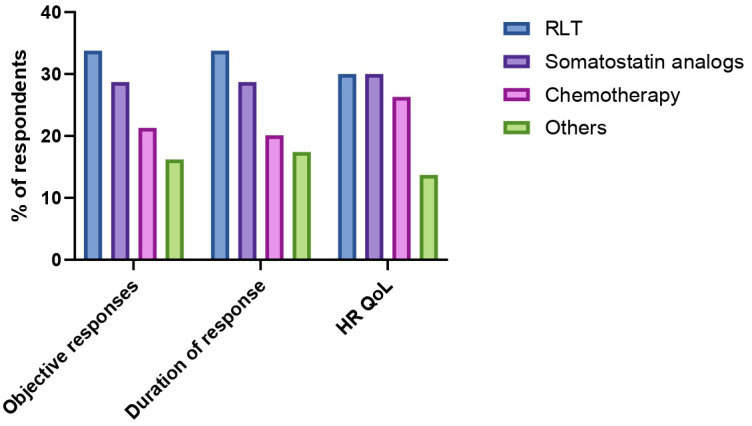 Figure 4
Peer Reviews
No public reviews on file for this paper yet. If you reviewed it on a platform where reviews are public (OpenReview, ICLR, NeurIPS, ICML), you can paste yours below so the community can read it here.
Videos
No videos yet. Explain this paper in a talk, walkthrough, or lecture? Add one.
Taxonomy
TopicsAdrenal and Paraganglionic Tumors · Pituitary Gland Disorders and Treatments · Hormonal Regulation and Hypertension