Intelligent Assessment Techniques for Abnormal Movement Patterns in Neurological Disorders: Applications and Advances
Yunjun Bao, Ronghua Hong, Wenting Qin, Zhuang Wu, Yunping Song, Lingjing Jin

TL;DR
This paper reviews intelligent technologies for assessing abnormal movements in neurological disorders to improve clinical evaluation and rehabilitation.
Contribution
The paper summarizes recent advances in intelligent assessment techniques for abnormal movement patterns in neurological disorders.
Findings
Intelligent technologies like wearable sensors and motion capture improve the accuracy of abnormal movement assessment.
Combining mathematical models and algorithms enhances the validity of clinical evaluations.
These technologies support personalized rehabilitation treatment for neurological disorders.
Abstract
Neurological disorders frequently result in diverse forms of abnormal movement. Conventional clinical assessment approaches often lack the precision and objectivity needed to evaluate muscle involvement and associated functional limitations. With the development of various intelligent assessment devices, technologies such as wearable sensors, motion capture, radar, and imaging technology, which are based on myoelectricity, kinematics, mechanics, and optics, combined with mathematical models and algorithms, have been widely used for abnormal movement recognition. These technologies further improve the accuracy and validity of clinical evaluation. In this paper, we review the latest advances in intelligent technologies that help clinicians qualitatively and quantitatively assess abnormal movement patterns and carry out personalized rehabilitation treatment. Our work was also aimed at…
Genes, proteins, chemicals, diseases, species, mutations and cell lines named across the full text — each resolved to its canonical identifier and authoritative record.
Click any figure to enlarge with its caption.
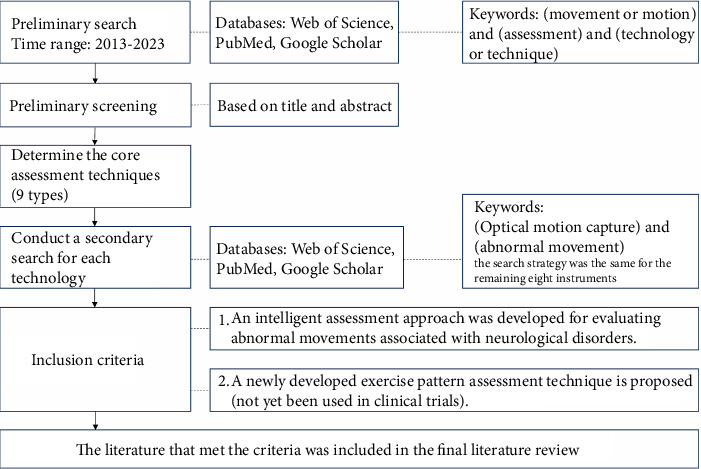 Figure 1
Peer Reviews
No public reviews on file for this paper yet. If you reviewed it on a platform where reviews are public (OpenReview, ICLR, NeurIPS, ICML), you can paste yours below so the community can read it here.
Videos
No videos yet. Explain this paper in a talk, walkthrough, or lecture? Add one.
Taxonomy
TopicsStroke Rehabilitation and Recovery · Muscle activation and electromyography studies · EEG and Brain-Computer Interfaces