DNA-based prediction of external ear morphology in the Chinese population: an exploratory study
Xindi Wang, Zibo Zhao, Jingting Wu, Yuan Li, Yufei Yang, Bo Liu, Chengye Zhou, Chuanxu Wang, Xiaogang Chen, Feng Song

TL;DR
This study explores DNA-based prediction of ear shape in Chinese people, using genetic data to build models that could help in forensic investigations.
Contribution
The study introduces DNA-based predictive models for external ear morphology tailored to the Chinese population.
Findings
AdaBoost and multinomial logistic regression models showed strong performance with AUC values above 0.7 for predicting absent tragus cases.
Binary models using genetic interactions achieved AUCs of 0.74 (AdaBoost) and 0.72 (logistic regression) for absent tragus prediction.
Several SNPs were identified as influential for different ear phenotypes in the Chinese population.
Abstract
The external human ear is a polymorphic and polygenic structure with individual uniqueness, making it a valuable target in forensic DNA phenotyping (FDP) studies. Previous genome-wide association studies have identified multiple genetic loci associated with variation in ear characteristics. However, research focused on predicting ear morphology within the context of FDP remains limited. This study aimed to develop DNA-based predictive models for external ear morphology in the Chinese population. Digital photographs of 675 volunteers were used to score 13 ear phenotypes, each categorized into three levels. Multinomial logistic regression (MLR) was applied for genetic association analysis. Five predictive models—MLR, support vector machines, random forest, AdaBoost, and k-nearest neighbors—were developed and evaluated using 10-fold cross-validation. Genetic association analysis…
Genes, proteins, chemicals, diseases, species, mutations and cell lines named across the full text — each resolved to its canonical identifier and authoritative record.
Click any figure to enlarge with its caption.
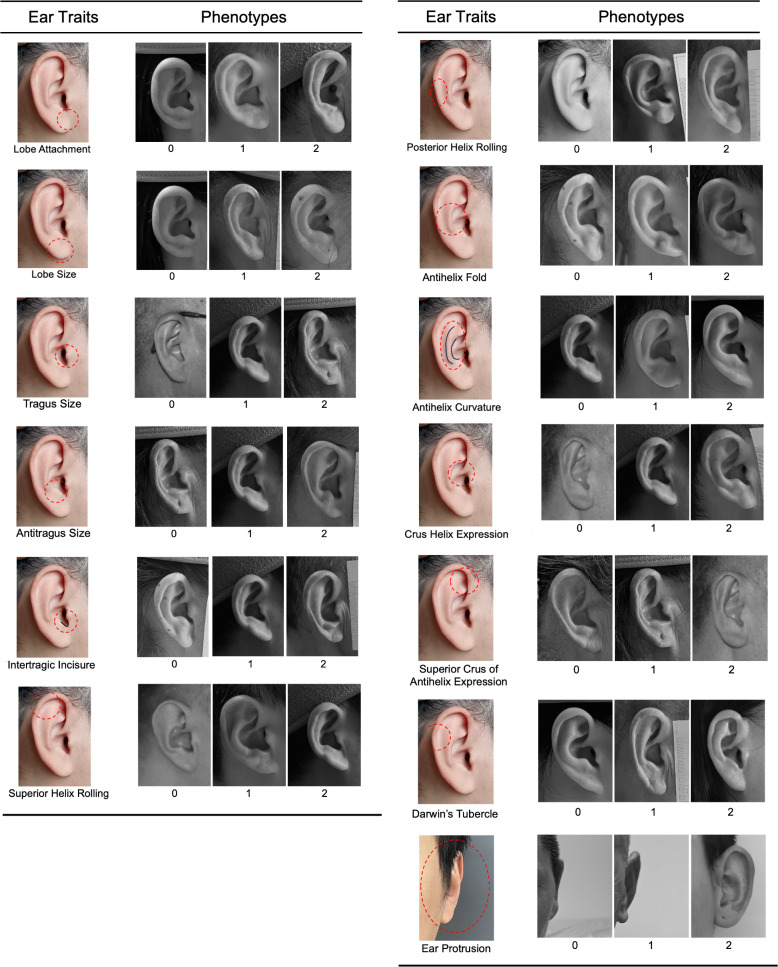 Figure 1
 Figure 2
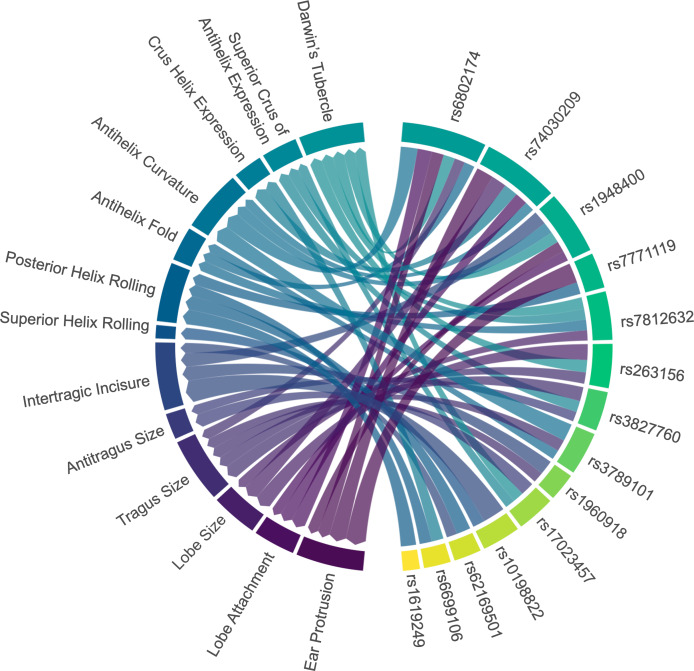 Figure 3
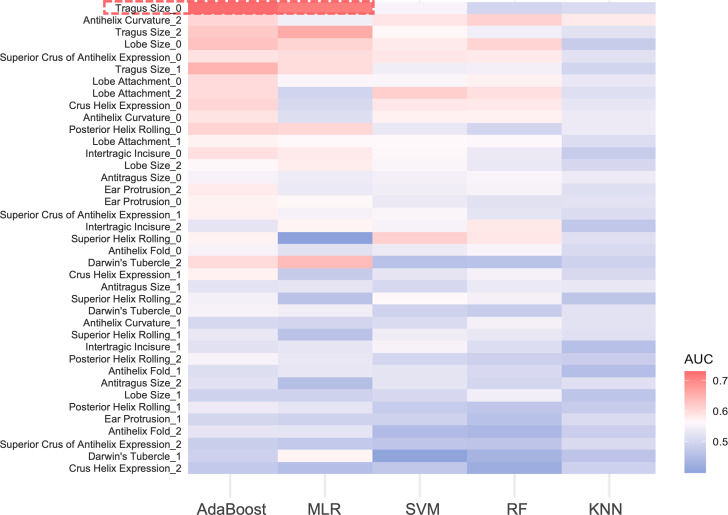 Figure 4
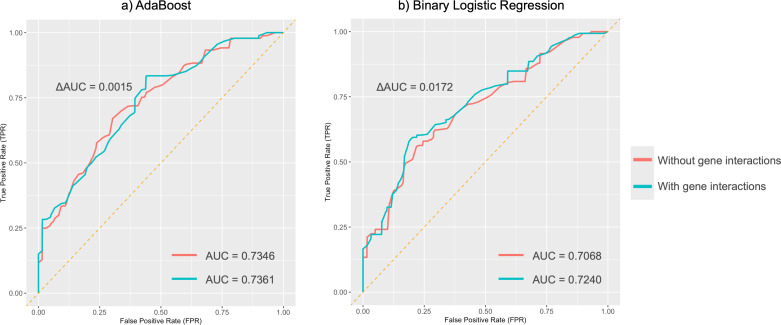 Figure 5
 Figure 6
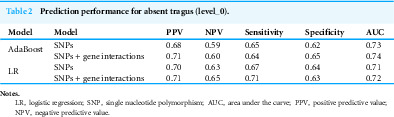 Figure 7
Peer Reviews
No public reviews on file for this paper yet. If you reviewed it on a platform where reviews are public (OpenReview, ICLR, NeurIPS, ICML), you can paste yours below so the community can read it here.
Videos
No videos yet. Explain this paper in a talk, walkthrough, or lecture? Add one.
Taxonomy
TopicsReconstructive Facial Surgery Techniques