Idiopathic Parkinson’s Disease Unmasked by Valproate-Induced Parkinsonism in a Patient With Vestibular Migraine
Teru Kamogashira

TL;DR
A patient with vestibular migraine initially showed valproate-induced Parkinsonism symptoms, but was later diagnosed with idiopathic Parkinson’s disease.
Contribution
This case highlights how valproate therapy can unmask latent Parkinson’s disease in patients with vestibular migraine.
Findings
Neurological symptoms persisted after valproate discontinuation, suggesting a more permanent condition.
Dopamine transporter imaging confirmed a diagnosis of idiopathic Parkinson’s disease.
The case underscores the importance of monitoring neurological changes during valproate treatment.
Abstract
We report a case of idiopathic Parkinson’s disease (PD) in a patient with vestibular migraine (VM), initially suspected to have valproate-induced Parkinsonism. Valproate was started at 200 mg/day and titrated to 1,000 mg/day over four months for headache control. Although valproate provided effective headache relief, neurological symptoms, including hand tremor, shoulder stiffness, drooling, and adiadochokinesis, emerged and persisted despite discontinuation of the drug. Subsequent imaging studies, including dopamine transporter-single-photon emission computed tomography and 123I-meta-iodobenzylguanidine myocardial scintigraphy, confirmed the diagnosis of PD by the neurology department. This case highlights the need for careful monitoring of neurological signs during and after valproate therapy in VM patients, as latent PD may be unmasked.
Genes, proteins, chemicals, diseases, species, mutations and cell lines named across the full text — each resolved to its canonical identifier and authoritative record.
Click any figure to enlarge with its caption.
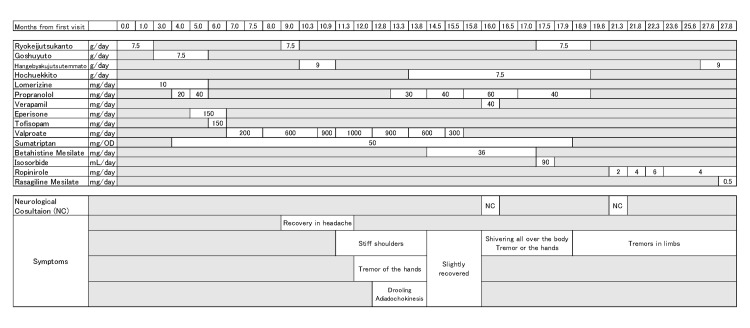 Figure 1
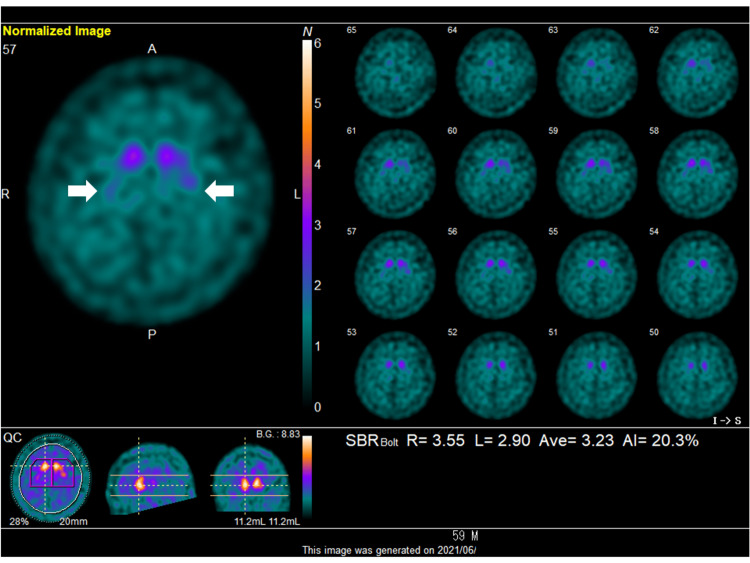 Figure 2
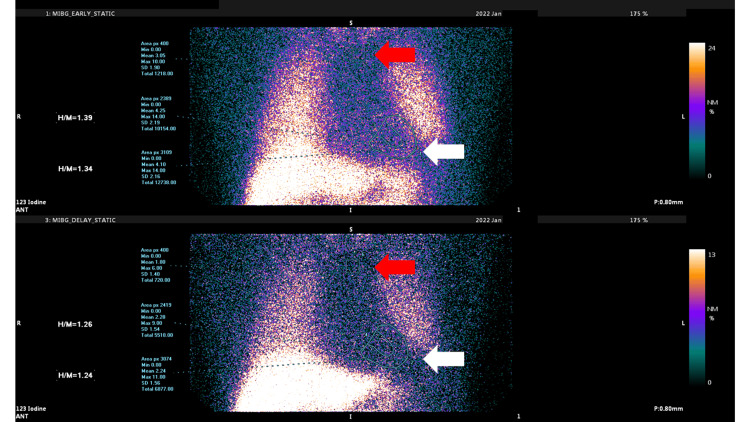 Figure 3
Peer Reviews
No public reviews on file for this paper yet. If you reviewed it on a platform where reviews are public (OpenReview, ICLR, NeurIPS, ICML), you can paste yours below so the community can read it here.
Videos
No videos yet. Explain this paper in a talk, walkthrough, or lecture? Add one.
Taxonomy
TopicsVestibular and auditory disorders · Migraine and Headache Studies · Ophthalmology and Eye Disorders