Positive-Pressure Ventilation-induced Pneumothorax After Intubation: A Pandora's Box of Early Diagnostic Pitfalls and Ultrasound-First Management
Anindya Dasgupta, Abhradip Das, Swarup Paul, Prasun Banerjee, Bodhisatwa Choudhuri, Siddharth Basu

TL;DR
A patient developed a pneumothorax after intubation, highlighting the importance of using ultrasound for early diagnosis and careful ventilation strategies to prevent complications.
Contribution
The paper emphasizes the use of ultrasound over radiography for diagnosing pneumothorax and advocates for cautious ventilation practices in non-recruitable lungs.
Findings
Ultrasound detected pneumothorax more effectively than supine radiography in a critically ill patient.
Power-aware ventilation strategies can prevent structural lung failure after intubation.
Early diagnosis and decompression improved patient outcomes in a case of post-intubation pneumothorax.
Abstract
Pneumothorax under positive-pressure ventilation can present within hours of intubation, particularly when a small, non-recruitable “baby lung” bears most of the mechanical load. We report a 67-year-old man with hypertrophic cardiomyopathy, hypertension, diabetes, and hypothyroidism who arrived obtunded (Glasgow Coma Scale 6) with severe hypoxaemia. He was intubated and initially ventilated in volume control; because saturations remained low with high airway pressures, he was switched to pressure control with higher positive end-expiratory pressure (PEEP). After a brief improvement, he acutely deteriorated with desaturation, hypotension, tachycardia, reduced minute ventilation, and rising airway pressures. Bedside lung ultrasound showed absent sliding with a barcode/stratosphere pattern and a lung point on the right; high-resolution computed tomography (HRCT) confirmed a large right…
Genes, proteins, chemicals, diseases, species, mutations and cell lines named across the full text — each resolved to its canonical identifier and authoritative record.
Click any figure to enlarge with its caption.
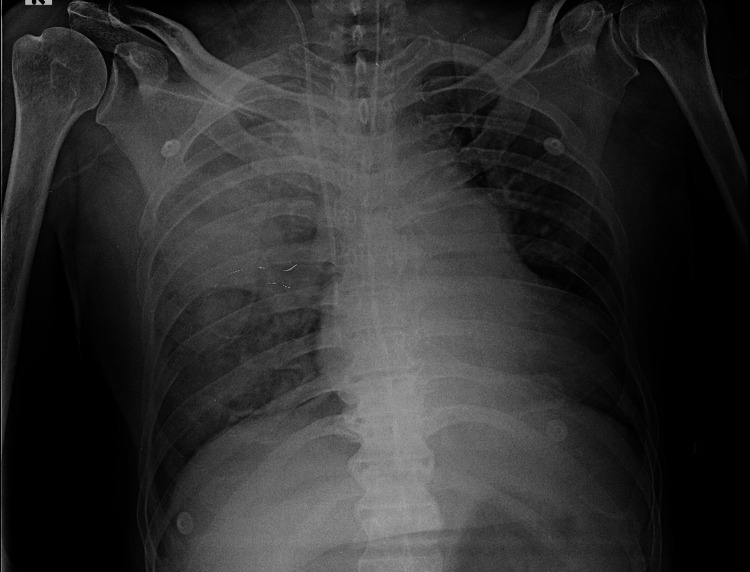 Figure 1
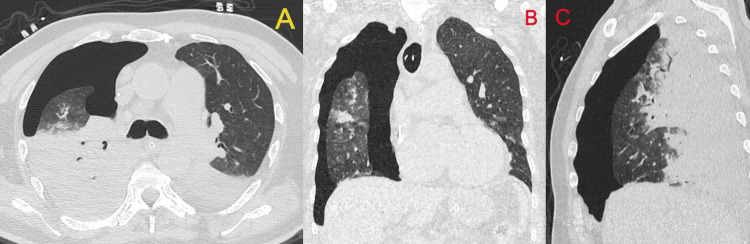 Figure 2
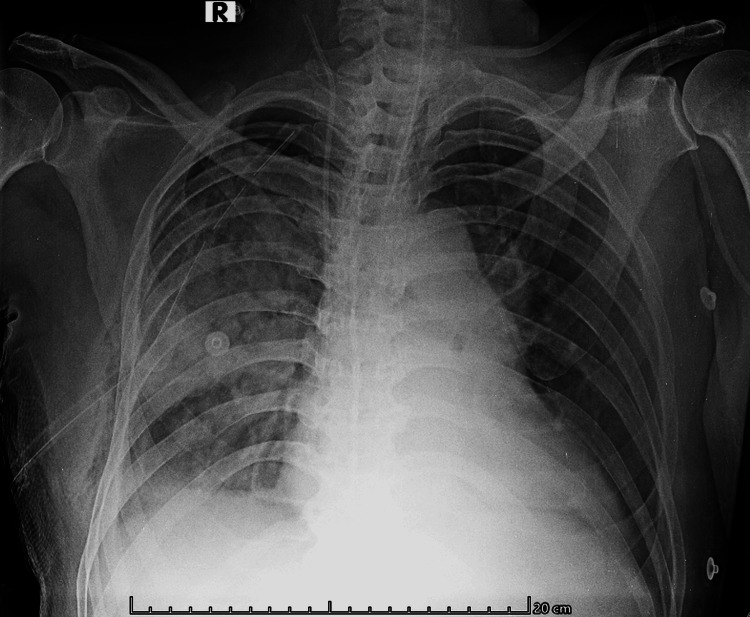 Figure 3
Peer Reviews
No public reviews on file for this paper yet. If you reviewed it on a platform where reviews are public (OpenReview, ICLR, NeurIPS, ICML), you can paste yours below so the community can read it here.
Videos
No videos yet. Explain this paper in a talk, walkthrough, or lecture? Add one.
Taxonomy
TopicsRespiratory Support and Mechanisms · Airway Management and Intubation Techniques · Pleural and Pulmonary Diseases