Dexmedetomidine in Healthy Dogs: Impact on Electrocardiographic Parameters
Guilherme Andraus Bispo, Thais Cabral de Oliveira, Marcela Fernanda Moretti, Matheus Fujimura Soares, Lais Calazans Menescal Linhares, Natália Sena Nascimento de Souza, Ana Kelly Sousa da Costa, Marilda Onghero Taffarel, Wagner Luís Ferreira, Paulo Sergio Patto dos Santo

TL;DR
This study shows that giving dexmedetomidine to healthy dogs causes slower heart rates and changes in heart electrical activity, but not in blood pressure.
Contribution
The study provides new empirical evidence on the electrocardiographic effects of intravenous dexmedetomidine in healthy dogs.
Findings
Dexmedetomidine caused significant bradycardia in healthy dogs.
ECG parameters like P wave, QRS complex, PR interval, and QT interval increased significantly.
QTc interval decreased significantly, while blood pressure remained unchanged.
Abstract
Objective: To evaluate whether intravenous administration of dexmedetomidine alters the electrocardiographic parameters of healthy dogs. Animals: 22 healthy dogs. Study Design: prospective blind clinical trial. Materials and Methods: The dogs underwent electrocardiographic monitoring at two moments: baseline moment (MB), subjected to tranquilization with butorphanol (0.25 mg/kg/IM), and dexmedetomidine moment (MDEX), after 10 min of intravenous administration of dexmedetomidine (bolus of 2 μg/kg, in 2 minutes, followed by continuous infusion at a rate of 2 μg/kg/hour). Results: After intravenous administration of dexmedetomidine, sinus bradycardia predominated. Regarding electrocardiographic parameters, there was a significant increase in the duration of the P wave (44; 51 ms), QRS complex (62; 67 ms), PR interval (95; 126 ms), and QT interval (207; 252 ms) and reduction in the QTc…
Genes, proteins, chemicals, diseases, species, mutations and cell lines named across the full text — each resolved to its canonical identifier and authoritative record.
Click any figure to enlarge with its caption.
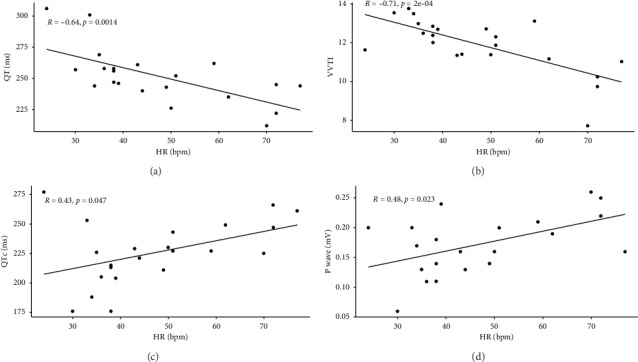 Figure 1
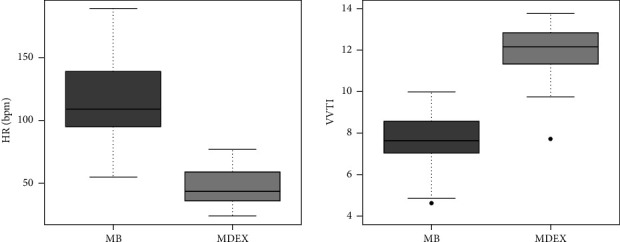 Figure 2
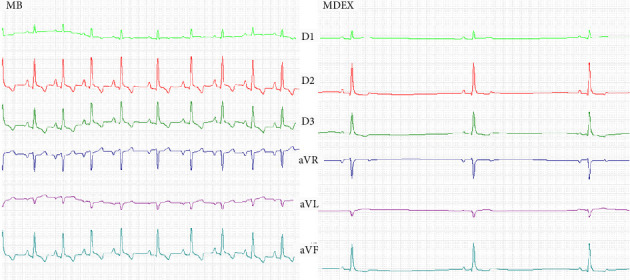 Figure 3
Peer Reviews
No public reviews on file for this paper yet. If you reviewed it on a platform where reviews are public (OpenReview, ICLR, NeurIPS, ICML), you can paste yours below so the community can read it here.
Videos
No videos yet. Explain this paper in a talk, walkthrough, or lecture? Add one.
Taxonomy
TopicsVeterinary Pharmacology and Anesthesia · Anesthesia and Sedative Agents · Pharmacological Effects and Assays