Electrowetting on Dielectric (EWOD) Based Portable Multimaterial Printer To Fabricate Origami Devices
Yuhi Watanabe, Atsushi Matsushita, Mutsuki Matsumoto, Yusuke Akitsu, Yu Kuwajima, Hiroki Shigemune

TL;DR
A portable printer using electrowetting technology was developed to fabricate origami devices on paper, enabling on-site and compact production of 3D sensors.
Contribution
A compact, portable multimaterial printer using electrowetting on dielectric (EWOD) for on-demand origami device fabrication is developed.
Findings
The printer successfully drives both conductive and insulating liquids on paper for precise printing.
A portable control circuit enables rapid fabrication of 3D origami devices like strain and breath sensors.
The system's durability was verified through repeated testing of fabricated origami devices.
Abstract
Origami devices are expected to be applied in fields such as space exploration, medicine, and agriculture and are being extensively researched in both scientific and engineering contexts. However, the difficulty of fabrication is high, and it is particularly challenging to fabricate them on-demand and on-site with a compact device. We have a technology for automatically fabricating origami devices by printing conductive and insulating solutions on paper. In this study, we have developed a portable, multimaterial printer using electrowetting on dielectric (EWOD) technique that drives both conductive and insulating liquids. We overcame the low portability of conventional inkjet printers and achieved a palm-sized compact printer. Specifically, we used EWOD to promote the driving of liquid within the channels printed on paper and investigated the electrical input, channel, and electrode…
Genes, proteins, chemicals, diseases, species, mutations and cell lines named across the full text — each resolved to its canonical identifier and authoritative record.
Click any figure to enlarge with its caption.
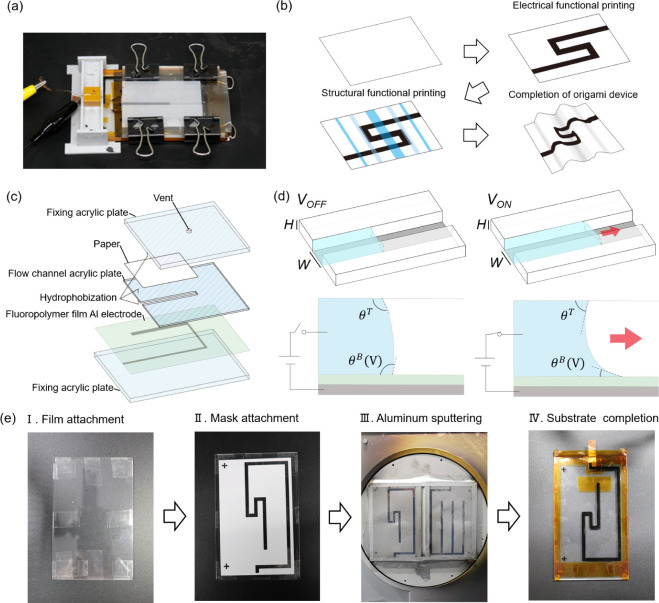 Figure 1
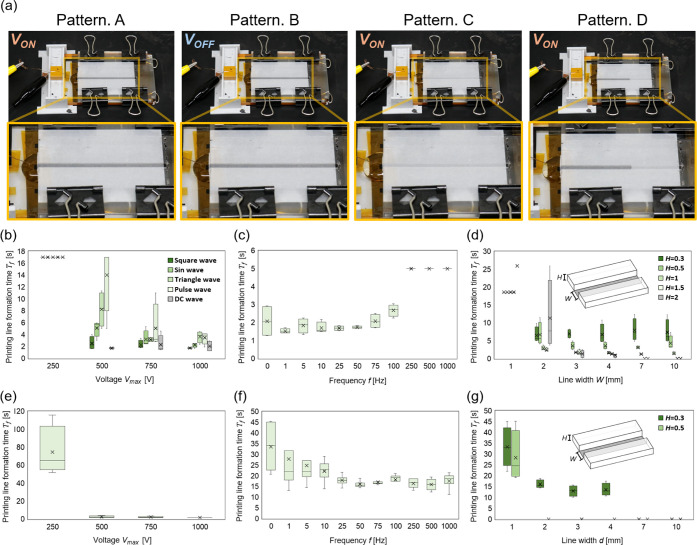 Figure 2
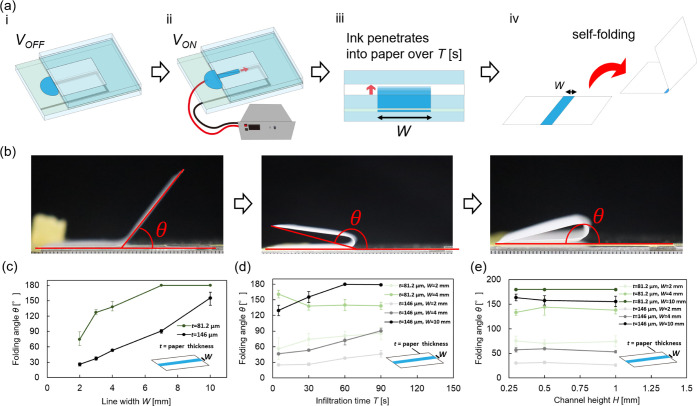 Figure 3
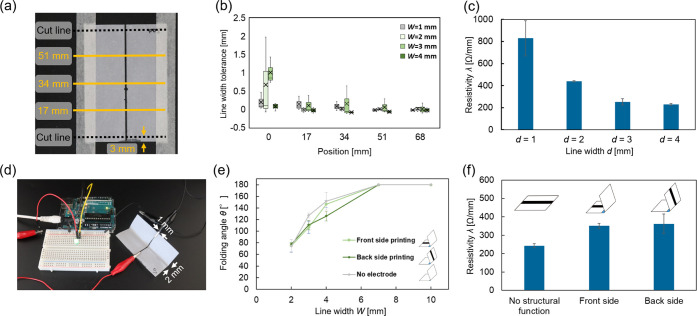 Figure 4
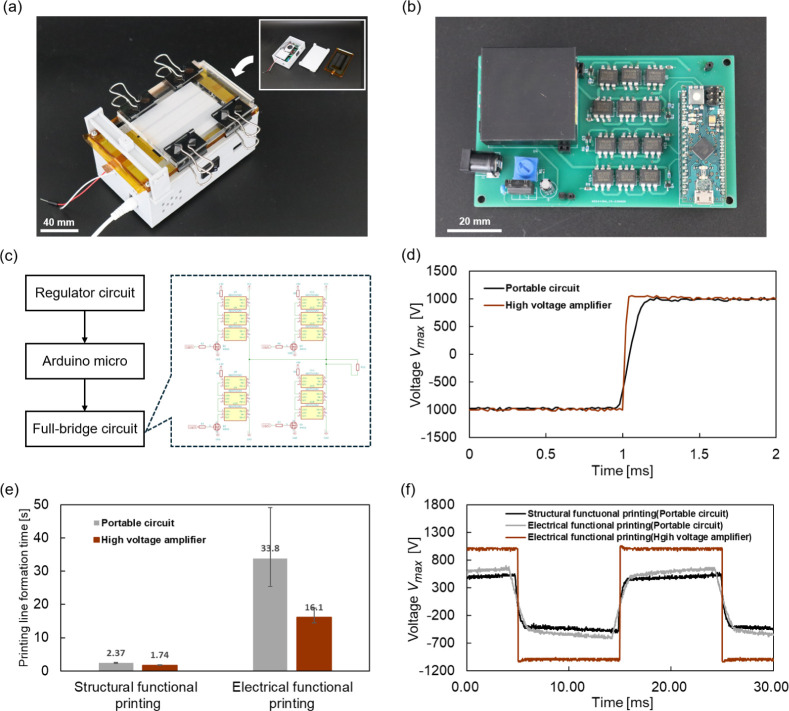 Figure 5
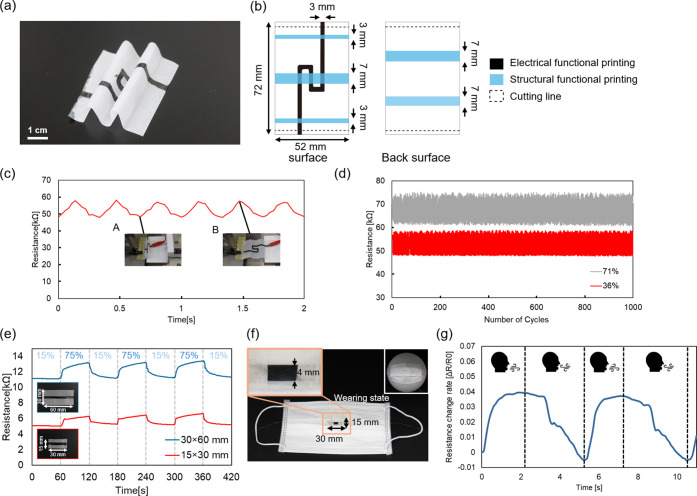 Figure 6
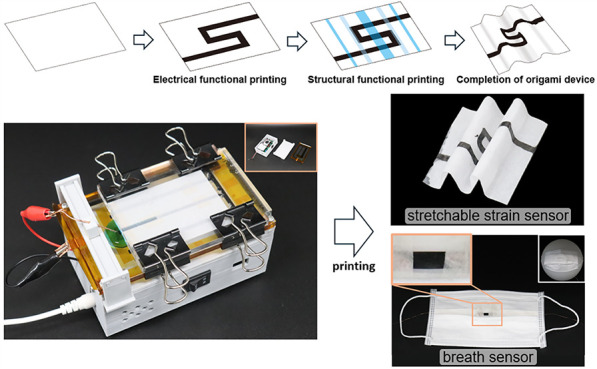 Figure 7
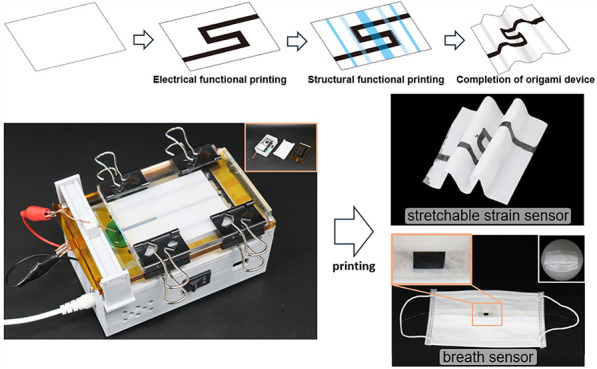 Figure 8
 Figure 9
 Figure 10
 Figure 11
 Figure 12
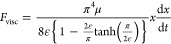 Figure 13
 Figure 14
 Figure 15
 Figure 16
Peer Reviews
No public reviews on file for this paper yet. If you reviewed it on a platform where reviews are public (OpenReview, ICLR, NeurIPS, ICML), you can paste yours below so the community can read it here.
Videos
No videos yet. Explain this paper in a talk, walkthrough, or lecture? Add one.
Taxonomy
TopicsElectrowetting and Microfluidic Technologies · Advanced Sensor and Energy Harvesting Materials · Advanced Materials and Mechanics