Combined antiresorptive and new anabolic drug approach in osteogenesis imperfecta zebrafish models
Cecilia Masiero, Francesca Tonelli, Carla Aresi, Marta Filibian, Daria Larionova, Silvia Cotti, Filippo Doria, Camilla Torriani, Paola Bertuccio, Anna Odone, Simona Villani, Antonio Rossi, Paul Eckhard Witten, Antonella Forlino

TL;DR
This study explores combining antiresorptive and anabolic drugs in zebrafish models of osteogenesis imperfecta to improve bone health.
Contribution
The study demonstrates for the first time in vivo the differential effects of combining bisphosphonates and 4PBA in dominant and recessive OI models.
Findings
Combined therapy synergistically improved osteoblast homeostasis and collagen fiber formation in both OI models.
4PBA and the combination reduced osteocyte apoptosis only in the recessive p3h1−/− model.
ALN improved vertebral thickness in the dominant Chi/+ model but not in the recessive model.
Abstract
Osteogenesis imperfecta (OI) is a family of heritable collagen I–related skeletal disorders for which, to date, no definitive cure is available. Individuals with OI are mainly treated with bisphosphonates that enhance bone mass by inhibiting bone resorption. However, new strategies combining antiresorptive molecules with bone anabolic drugs are likely to provide valid alternatives for skeletal health, protecting physiological bone turnover. Recently, cellular stress has been identified as a therapeutic target in both dominant and recessive forms of OI characterized by overmodified collagen I. The chemical chaperone 4-phenylbutyrate (4PBA) successfully ameliorated cell homeostasis in both in vitro and in vivo OI models. In this study, dominant Chihuahua (Chi/+) and recessive p3h1−/− zebrafish OI models were treated for 2 mo either with the bisphosphonate alendronate (ALN) or with 4PBA or…
Genes, proteins, chemicals, diseases, species, mutations and cell lines named across the full text — each resolved to its canonical identifier and authoritative record.
Click any figure to enlarge with its caption.
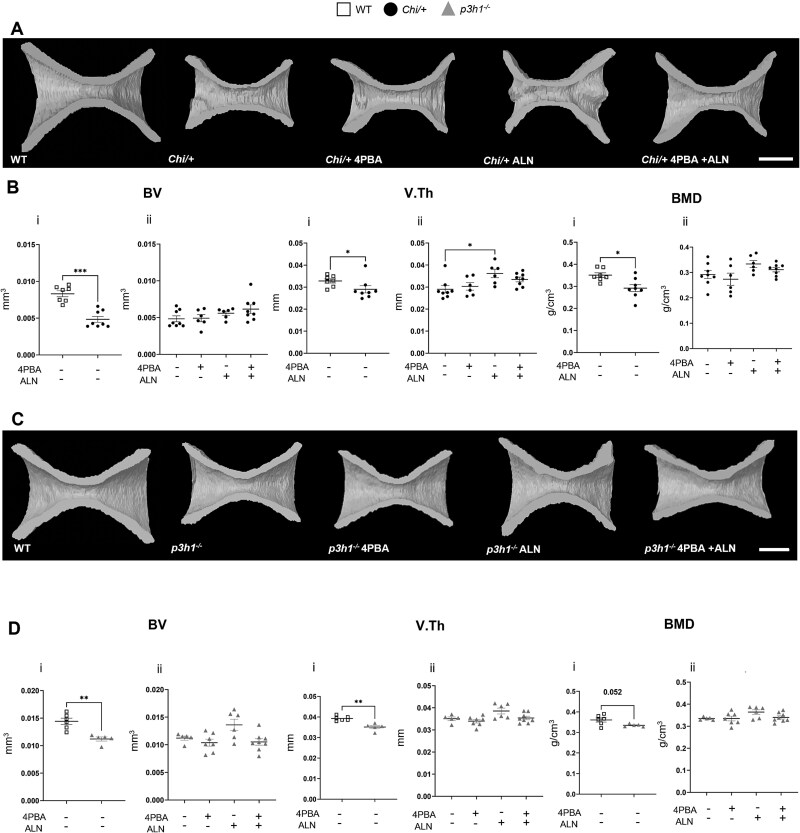 Figure 1
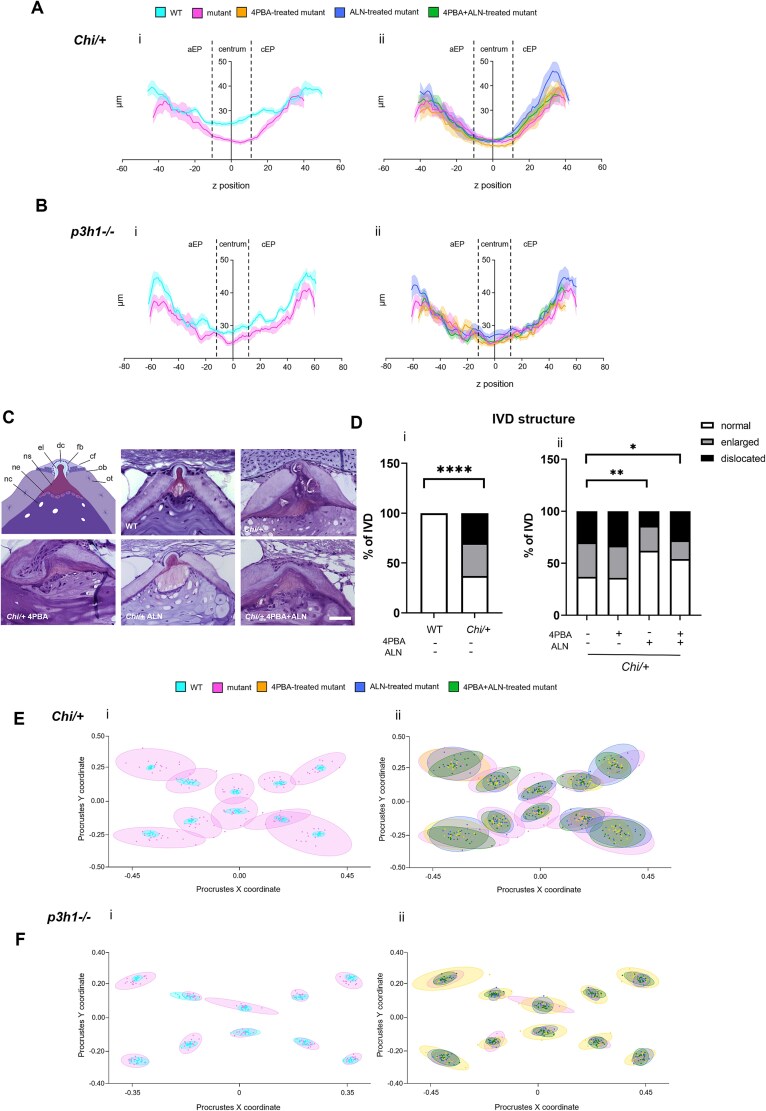 Figure 2
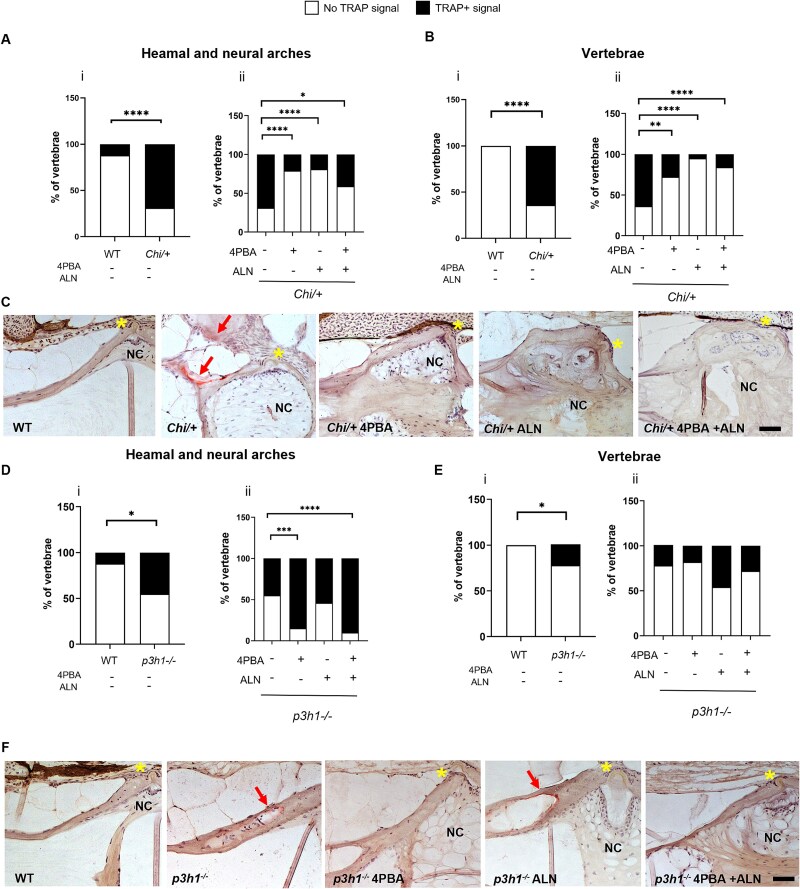 Figure 3
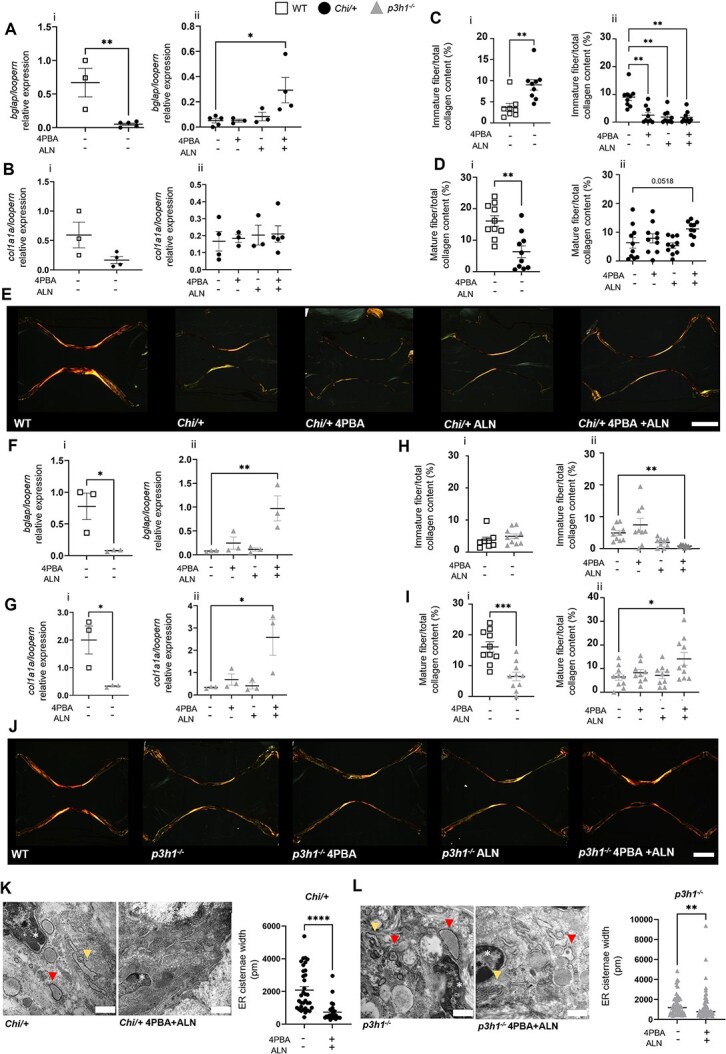 Figure 4
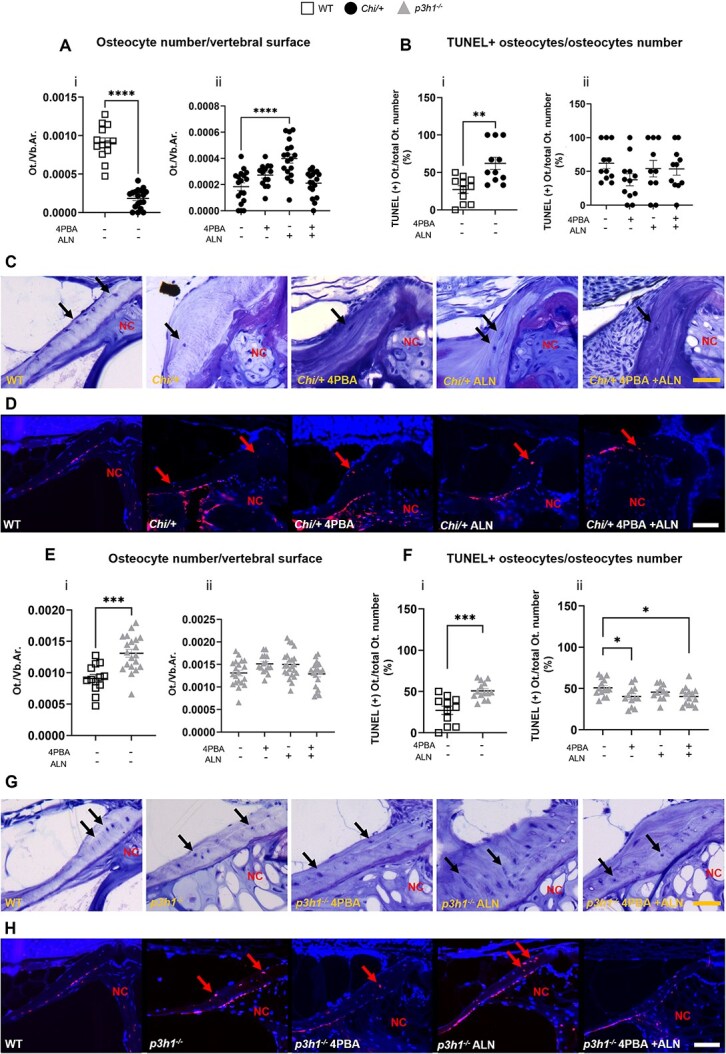 Figure 5
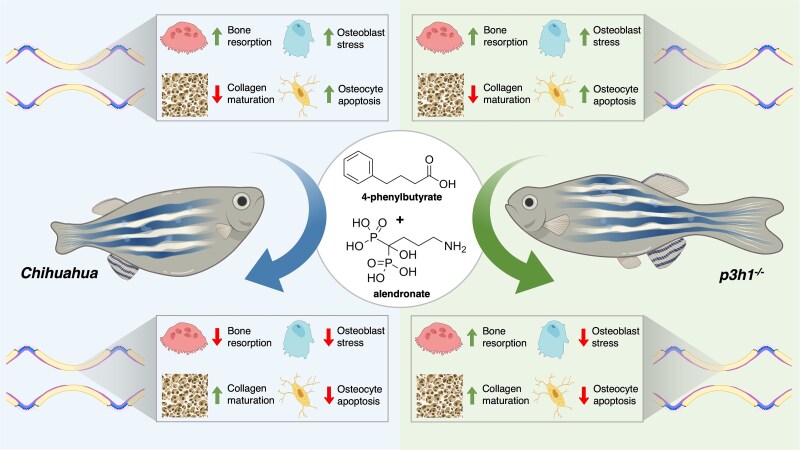 Figure 6
Peer Reviews
No public reviews on file for this paper yet. If you reviewed it on a platform where reviews are public (OpenReview, ICLR, NeurIPS, ICML), you can paste yours below so the community can read it here.
Videos
No videos yet. Explain this paper in a talk, walkthrough, or lecture? Add one.
Taxonomy
TopicsConnective tissue disorders research · Macrophage Migration Inhibitory Factor · Blood Coagulation and Thrombosis Mechanisms