Utilization of the CometChip assay for detecting PAH-induced DNA bulky adducts in a 3D primary human bronchial epithelial cell model
Victoria C. Colvin, Norah A. Owiti, Bevin P. Engelward, Susan C. Tilton

TL;DR
This study shows that the CometChip assay can detect DNA damage from PAHs in human bronchial cells, offering a sensitive method for toxicity testing.
Contribution
The study introduces the CometChip assay as a sensitive, high-throughput method for detecting PAH-induced DNA damage in 3D human bronchial cell models.
Findings
Monolayer and ALI-HBECs showed dose-dependent DNA damage from BAP exposure using the CometChip assay.
Monolayer HBECs were more sensitive to DNA damage than ALI-HBECs, correlating with CYP1A1 activity.
The CometChip assay detected DNA damage at lower BAP concentrations than other endpoints like cytotoxicity.
Abstract
Polycyclic aromatic hydrocarbons (PAHs), which are formed during incomplete combustion of organic materials, may cause cancer through DNA damage mediated by formation of bulky DNA adducts from PAH reactive metabolites. The airway epithelium is a primary route of exposure for inhaled PAHs, and primary human bronchial epithelial cells (HBECs) in monolayer or organotypic cultures offer a more realistic testing scenario compared to traditional cell lines. However, lack of knowledge about their capacity to mediate DNA damage through generation of reactive chemical intermediates limits their use in quantitative studies for toxicity assessment or predictive modeling compared to in vivo studies. In this study, we explored the capacity of monolayer HBECs to generate DNA damage from metabolic activation of benzo[a]pyrene (BAP, 0.001 – 1 μg/mL, 24 h) using the high-throughput CometChip assay in…
Genes, proteins, chemicals, diseases, species, mutations and cell lines named across the full text — each resolved to its canonical identifier and authoritative record.
Click any figure to enlarge with its caption.
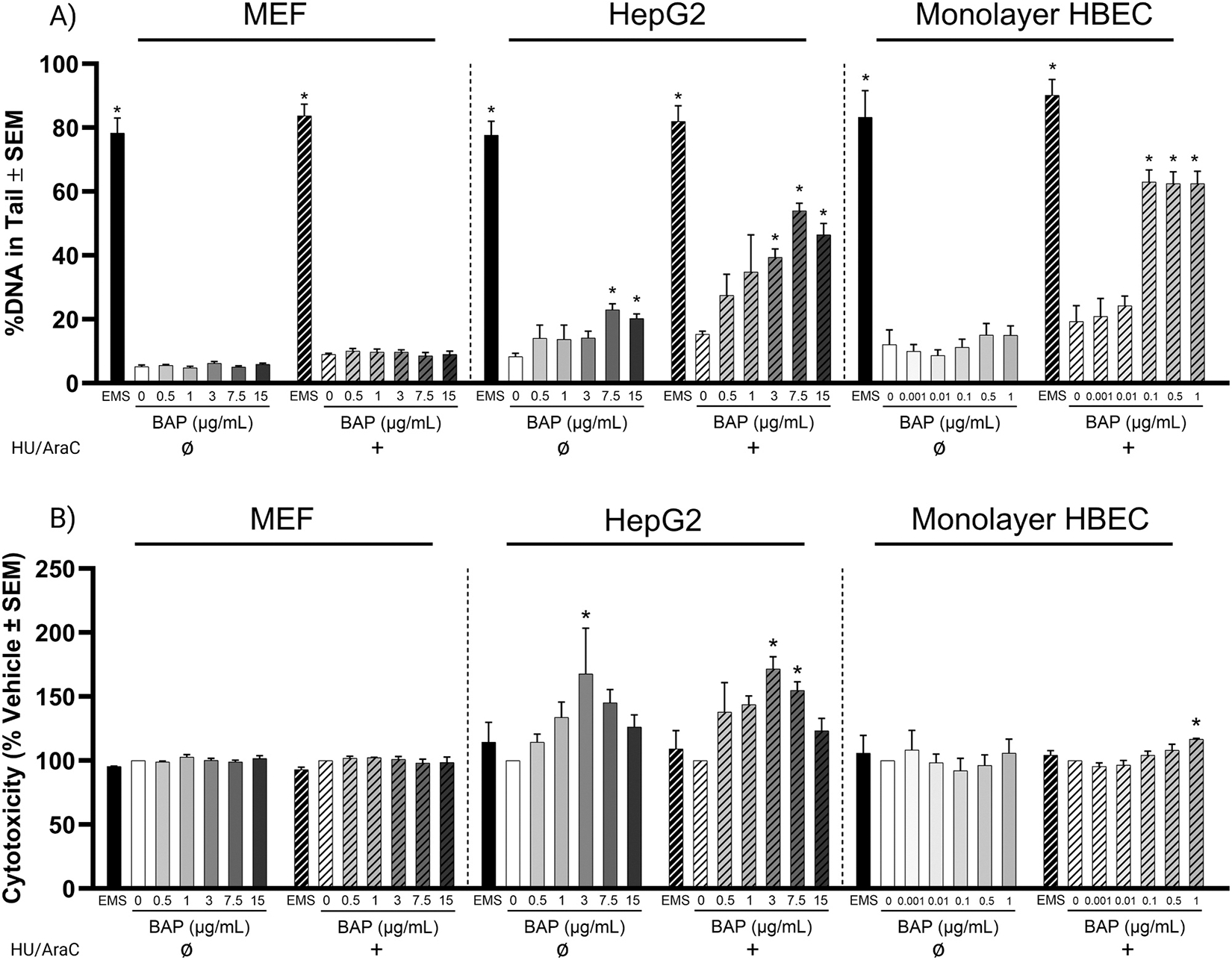 Figure 1
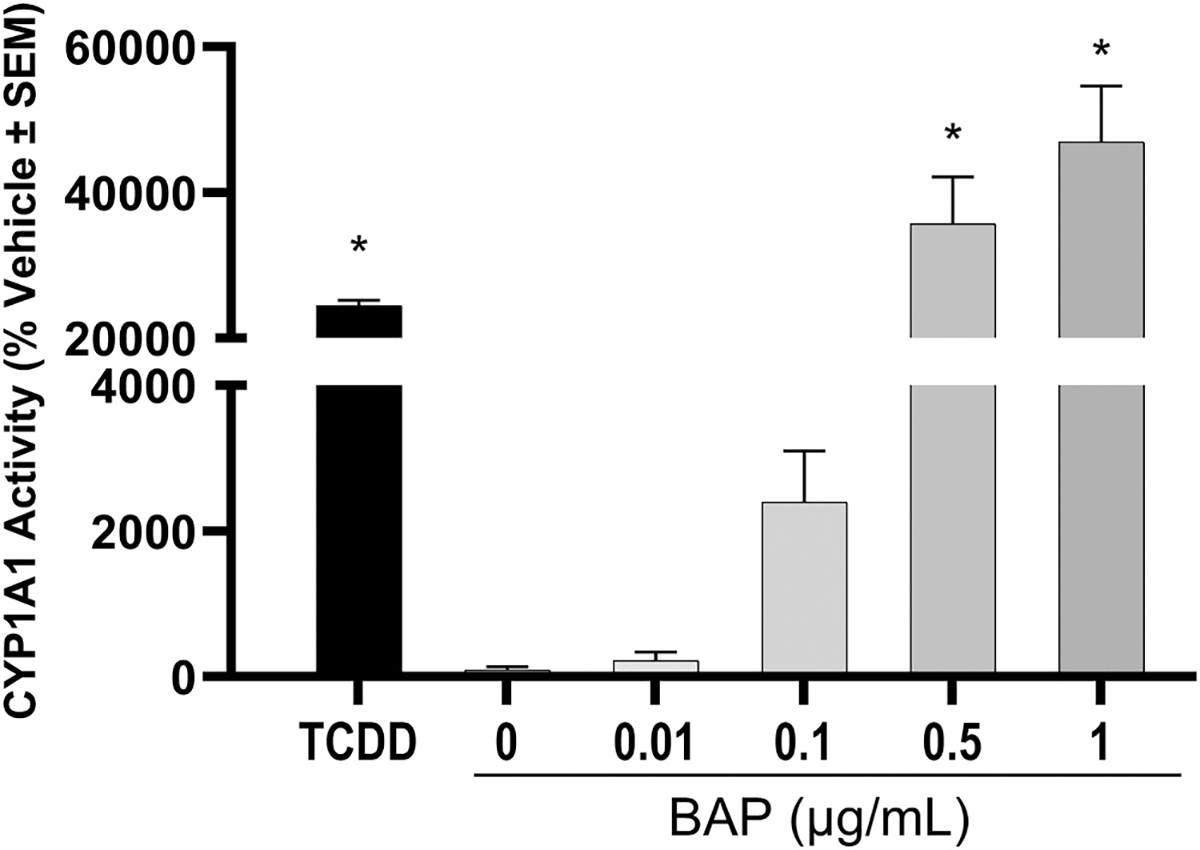 Figure 2
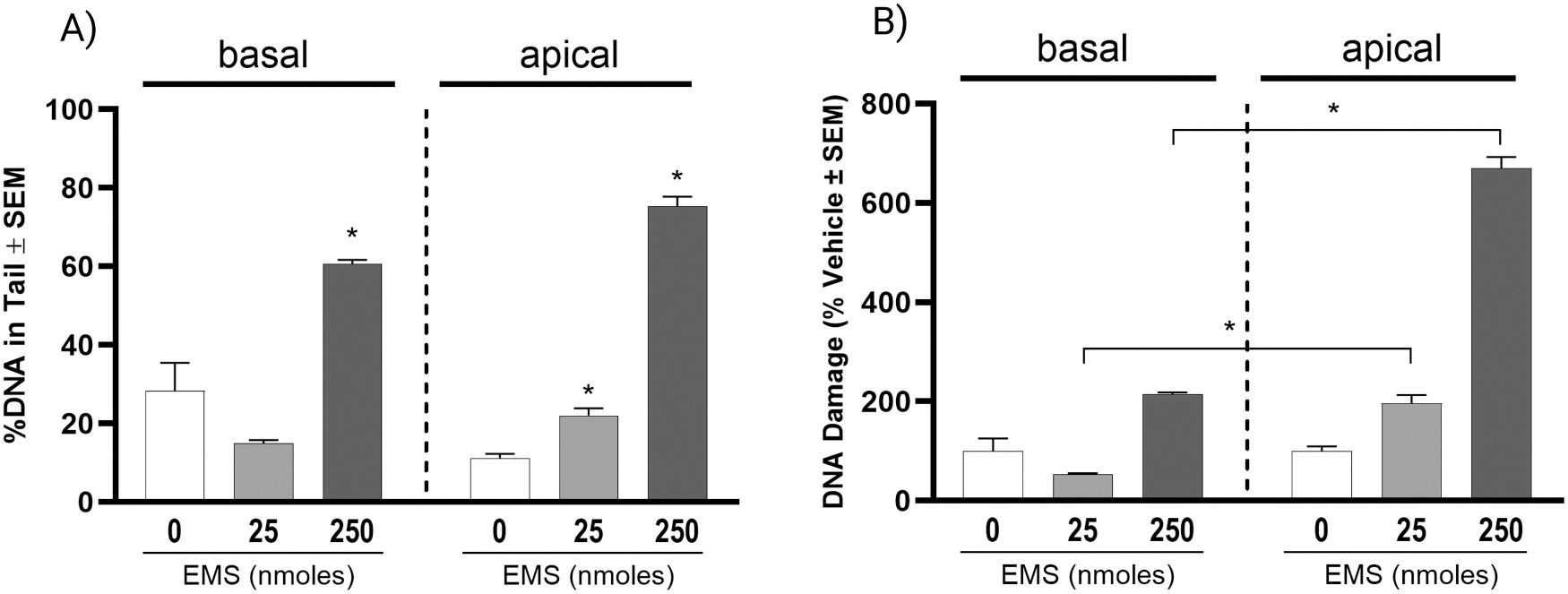 Figure 3
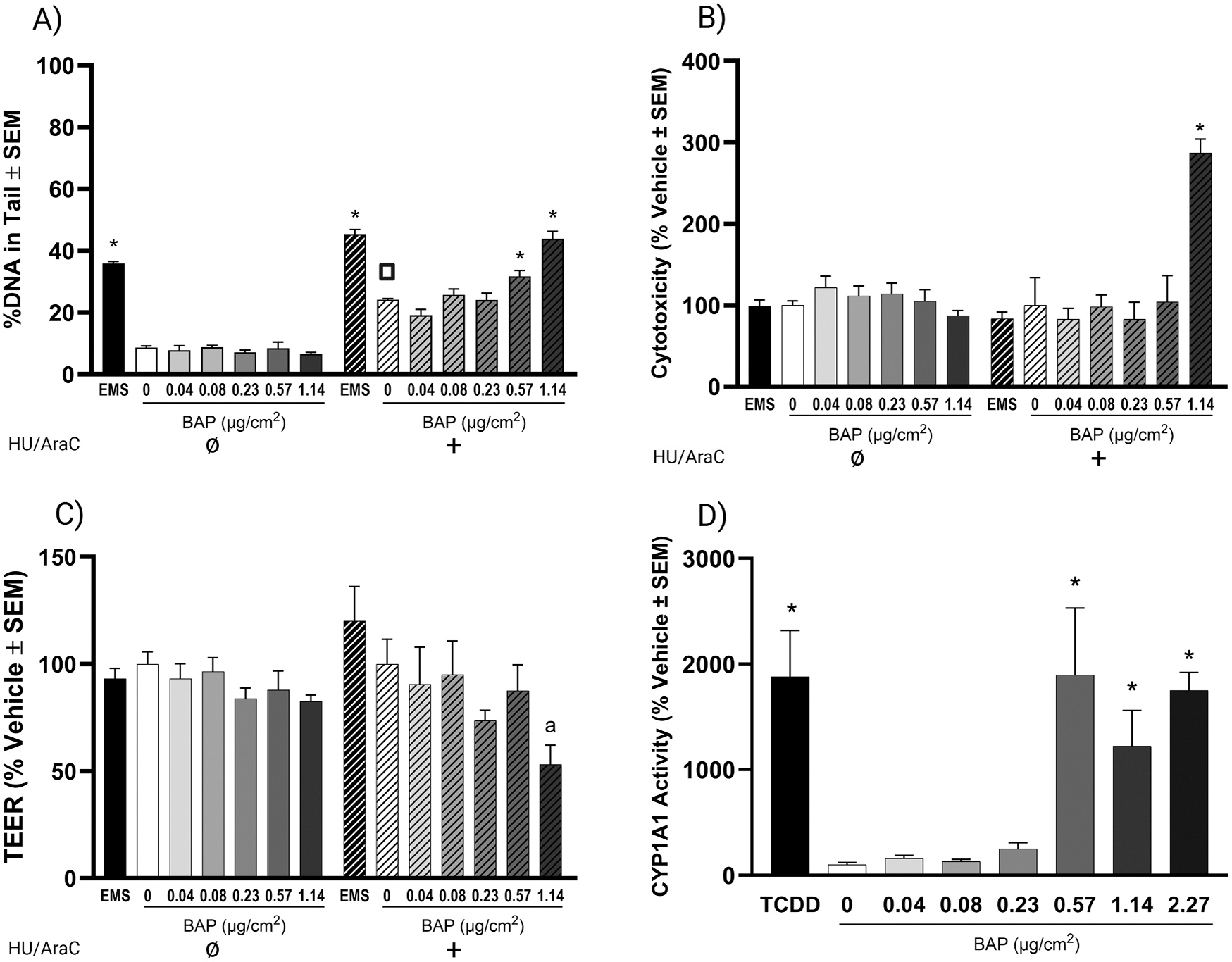 Figure 4
Peer Reviews
No public reviews on file for this paper yet. If you reviewed it on a platform where reviews are public (OpenReview, ICLR, NeurIPS, ICML), you can paste yours below so the community can read it here.
Videos
No videos yet. Explain this paper in a talk, walkthrough, or lecture? Add one.
Taxonomy
TopicsCarcinogens and Genotoxicity Assessment · Inhalation and Respiratory Drug Delivery · Effects and risks of endocrine disrupting chemicals