Stability and Induced Magnetism by Edge Modification of HfS2 Nanoribbons
Bruno G. A. Pimenta, Railson da Conceição Vasconcelos, Pedro H. de Oliveira Neto, Rafael F de Menezes, Kayla G. Sprenger, Ricardo Gargano

TL;DR
This paper explores how modifying the edges of HfS2 nanoribbons can induce magnetism and affect their electronic properties, making them useful for nanoelectronics and spintronics.
Contribution
The study reveals that edge modifications in HfS2 nanoribbons can induce magnetism and alter electronic properties, a novel finding for 2D materials.
Findings
HfS2 nanoribbons with zigzag edges show variable electronic behavior including metallic and half-metallic properties.
Edge modifications can induce magnetism in previously nonmagnetic HfS2 nanoribbons.
Armchair HfS2 nanoribbons consistently behave as semiconductors regardless of width.
Abstract
The development of two-dimensional (2D) structures has had an immense impact on the field of nanoelectronics. However, many potential candidates for practical applications remain unexplored. One such underinvestigated group is HfS2 nanoribbons. In this study, we aimed to assess the influence of nanoribbon geometries (armchair or zigzag) on key properties such as stability and band gap. Additionally, we explored the potential for edge-modification-induced magnetism. These investigations were conducted using first-principles calculations based on density functional theory (DFT). Our findings demonstrate that all simulated systems are thermodynamically stable and some also exhibit dynamical stability. In terms of band structure, the armchair configuration behaves as a semiconductor, while the zigzag configuration varies between semiconducting, metallic, and half-metallic depending on the…
Genes, proteins, chemicals, diseases, species, mutations and cell lines named across the full text — each resolved to its canonical identifier and authoritative record.
Click any figure to enlarge with its caption.
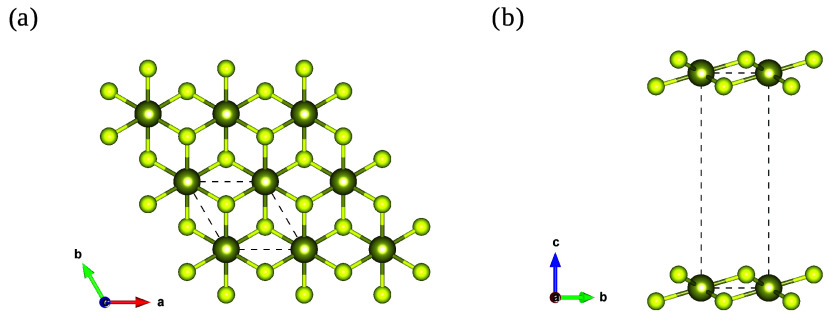 Figure 1
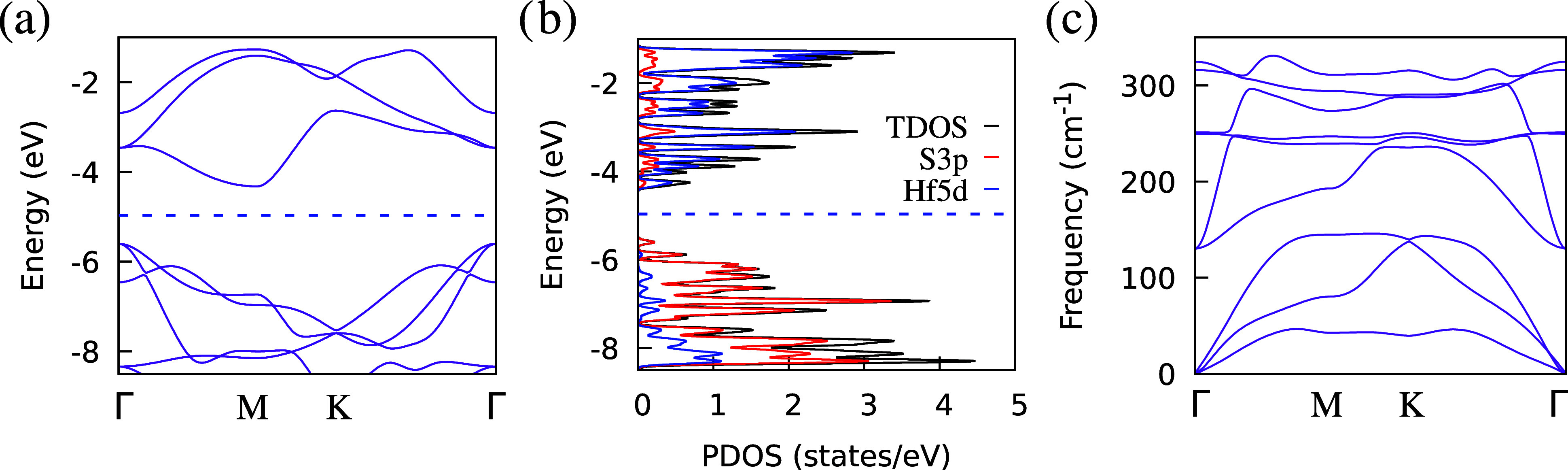 Figure 2
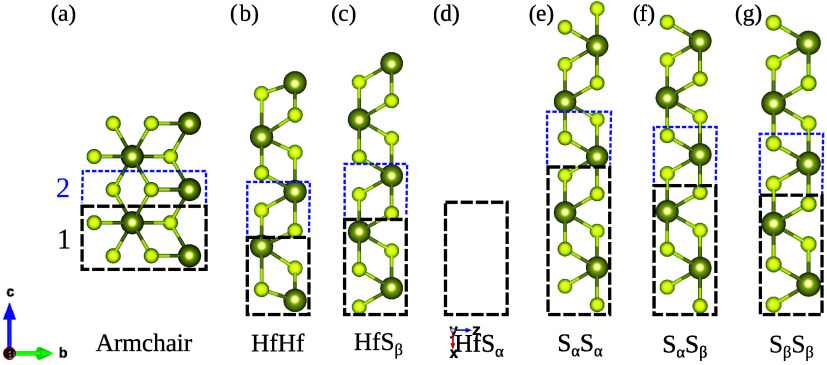 Figure 3
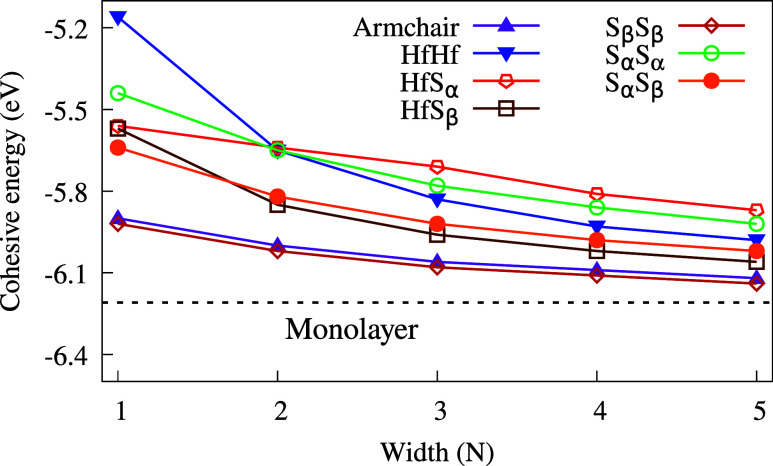 Figure 4
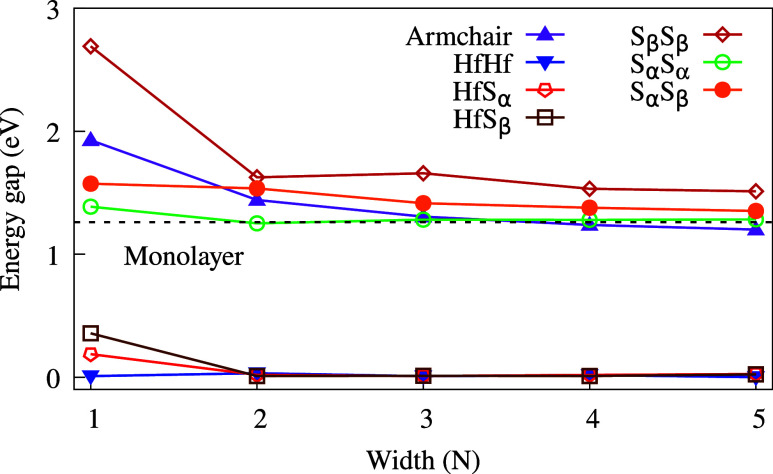 Figure 5
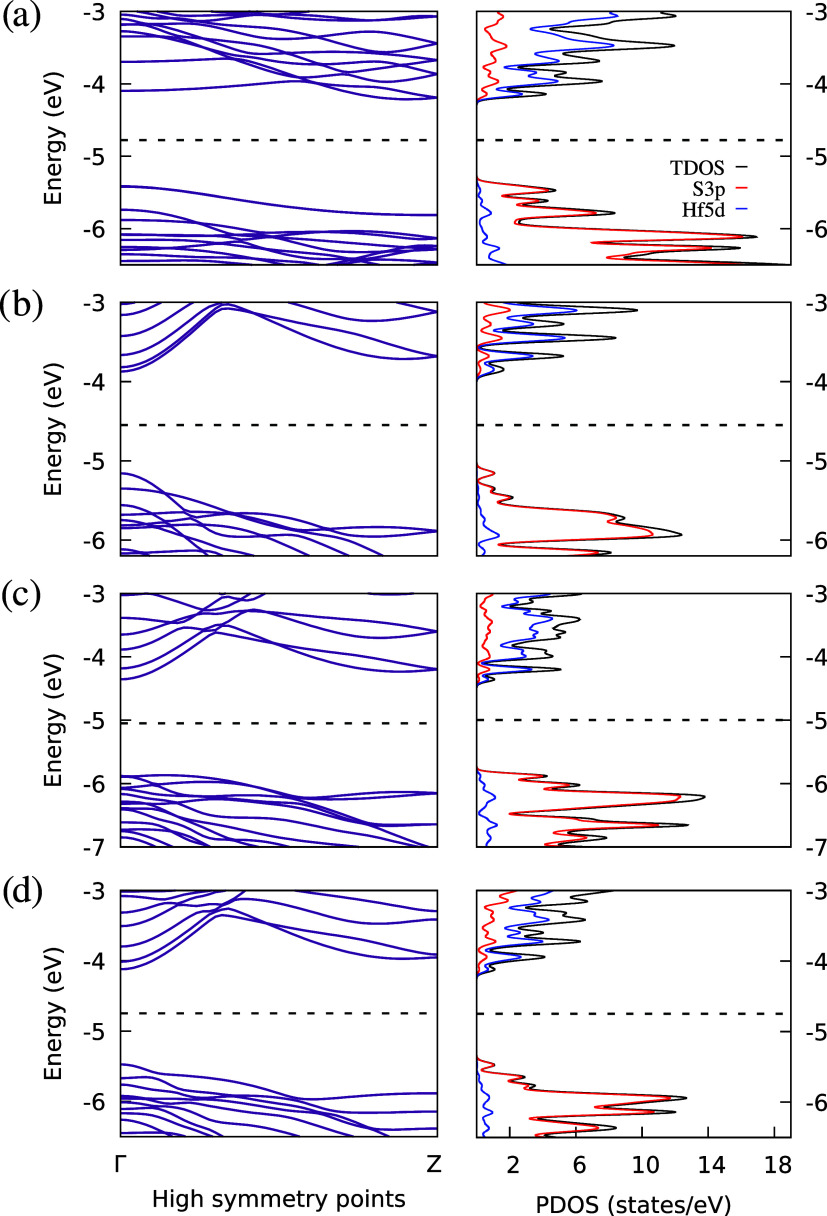 Figure 6
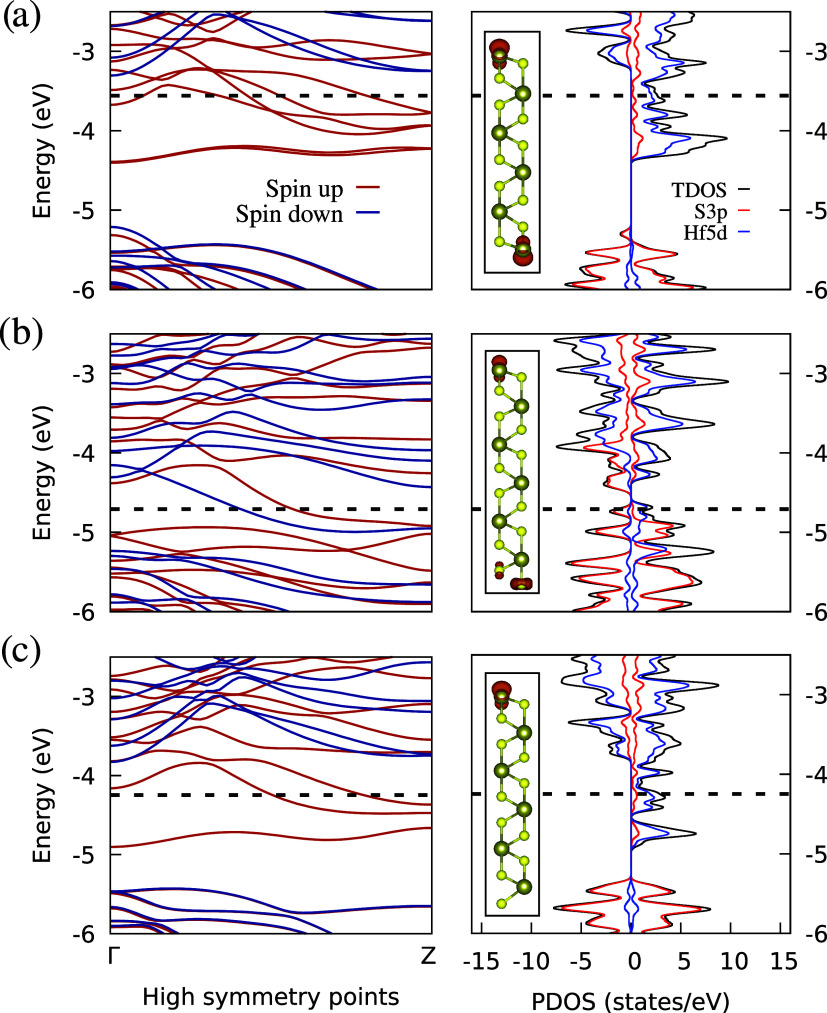 Figure 7
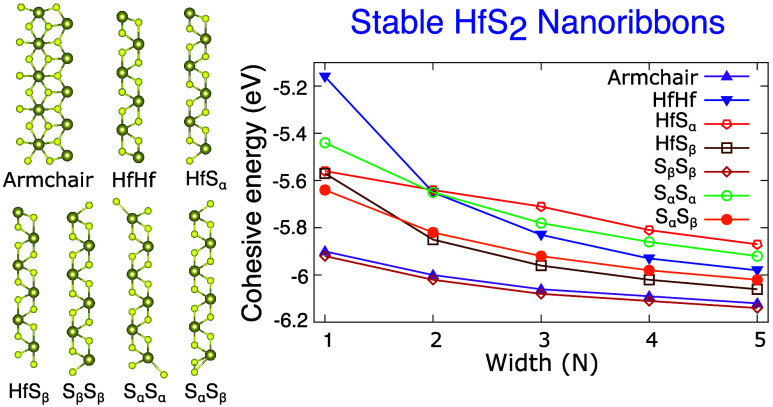 Figure 8
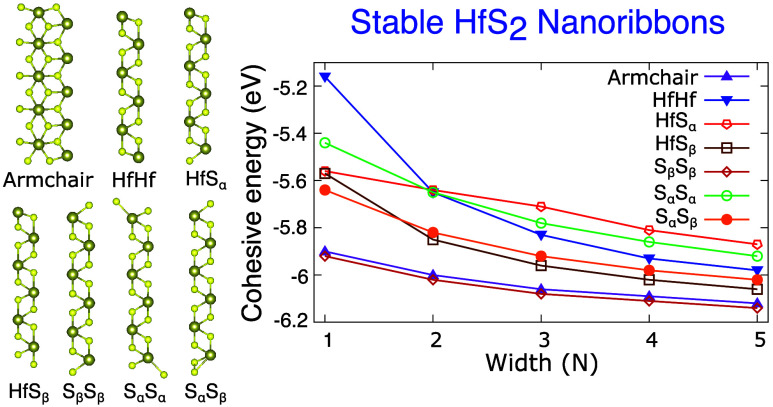 Figure 9
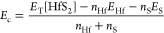 Figure 10
Peer Reviews
No public reviews on file for this paper yet. If you reviewed it on a platform where reviews are public (OpenReview, ICLR, NeurIPS, ICML), you can paste yours below so the community can read it here.
Videos
No videos yet. Explain this paper in a talk, walkthrough, or lecture? Add one.
Taxonomy
Topics2D Materials and Applications · MXene and MAX Phase Materials · Ferroelectric and Negative Capacitance Devices