Prognostic relevance of early clinical and laboratory findings in immune-mediated thrombotic thrombocytopenic purpura
Atsushi Hamamura, Kazuya Sakai, Toshiki Mushino, Yasunori Ueda, Yoshiyuki Ogawa, Hiroyuki Noguchi, Akinao Okamoto, Hideo Yagi, Takehiko Mori, Masanori Matsumoto

TL;DR
The study finds that early heart and brain symptoms in immune-mediated thrombotic thrombocytopenic purpura (iTTP) are not reliable predictors of mortality, but high lactate dehydrogenase levels indicate a worse prognosis.
Contribution
This study identifies lactate dehydrogenase levels as a novel prognostic marker in iTTP, challenging the traditional focus on early cardiac and neurological symptoms.
Findings
Elevated lactate dehydrogenase levels correlated with poorer prognosis in iTTP patients.
Early cardiac and neurological symptoms were not significant predictors of mortality.
Patients with heart function issues recovered with timely treatment.
Abstract
Immune-mediated thrombotic thrombocytopenic purpura (iTTP) is a life-threatening condition caused by a severe deficiency of a disintegrin and metalloproteinase with thrombospondin type 1 motif 13 due to autoantibodies. Despite modern treatments, including therapeutic plasma exchange, immunosuppression, and rituximab, early mortality—often due to cardiac and neurologic events—remains a concern. We analyzed data from 125 patients between 2010 and 2023 in the Japanese thrombotic thrombocytopenic purpura (TTP) registry, examining demographics, electrocardiogram and transthoracic echocardiography findings, and neurologic symptoms. Troponin I was measured. Outcomes were categorized as survivors, TTP-related deaths, and non–TTP-related deaths. Of the 125 patients, 15 died, with 5 deaths directly related to iTTP. Early cardiac findings and neurologic symptoms were not significant predictors…
Genes, proteins, chemicals, diseases, species, mutations and cell lines named across the full text — each resolved to its canonical identifier and authoritative record.
Click any figure to enlarge with its caption.
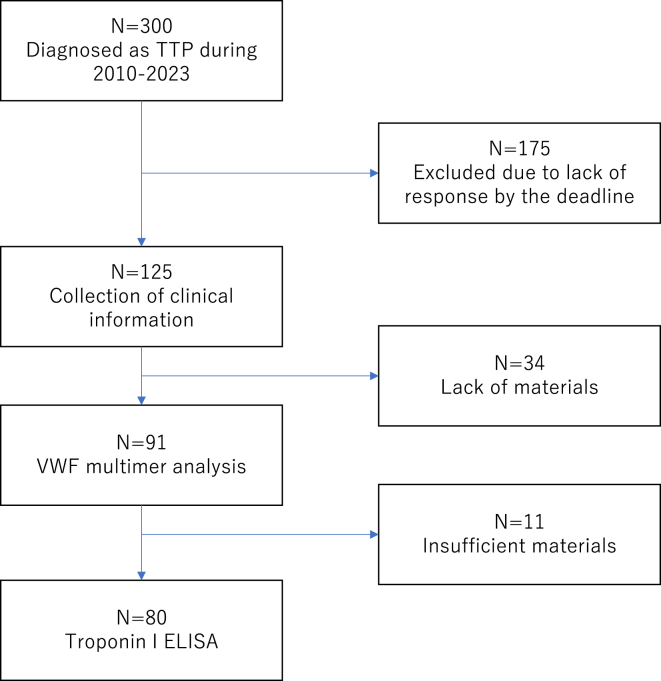 Figure 1
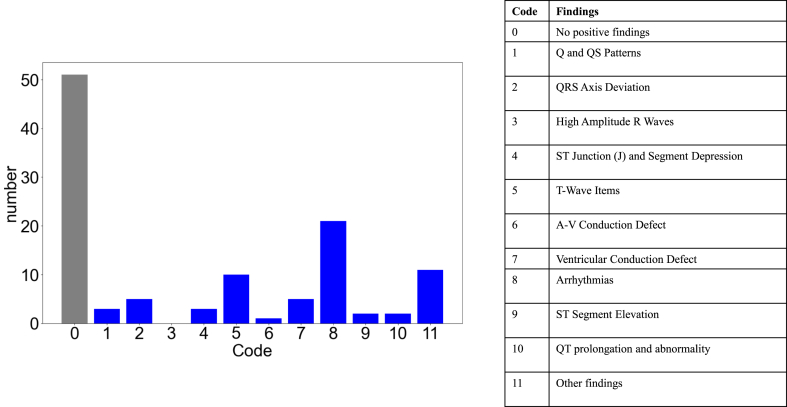 Figure 2
 Figure 3
Peer Reviews
No public reviews on file for this paper yet. If you reviewed it on a platform where reviews are public (OpenReview, ICLR, NeurIPS, ICML), you can paste yours below so the community can read it here.
Videos
No videos yet. Explain this paper in a talk, walkthrough, or lecture? Add one.
Taxonomy
TopicsComplement system in diseases · Renal Diseases and Glomerulopathies · Platelet Disorders and Treatments