Patient demographics, clinical characteristics and genetic mutations of DMD and BMD patients in Qatar Epidemiological and genetic profile of Duchenne muscular dystrophy and Becker muscular dystrophy patients in Qatar: a retrospective cohort study
Mohammad Sawahreh, Fatima Al-Maadid, Khalid Omer Ibrahim, Tawfeg Ben Omran, Mahmoud Fawzi Osman

TL;DR
This study examines the demographics and genetic mutations of DMD and BMD patients in Qatar, revealing earlier diagnosis but lower life expectancy compared to global standards.
Contribution
The study provides a detailed epidemiological and genetic profile of DMD and BMD patients in Qatar, highlighting local healthcare disparities.
Findings
Most patients were diagnosed at age 3, with 59% having orthopedic complications.
Genetic mutations included deletions (69%), duplications (11%), and point mutations (19%).
Lower corticosteroid and cardioprotective use may contribute to reduced life expectancy in Qatar.
Abstract
Duchenne muscular dystrophy (DMD) and Becker muscular dystrophy (BMD) are rare X-linked neuromuscular disorders that typically begin in childhood and progress to functional decline, loss of ambulation, and early death due to cardiac or respiratory failure. To describe the landscape of DMD and BMD in Qatar, including demographics, genetics, disease progression, risk factors, co-morbidities, and outcomes in patients aged 3–30 years, and compare findings with international data. We retrospectively reviewed records of all genetically confirmed or biopsy-supported cases of DMD and BMD between 2018 and 2024 at Sidra Medicine, the sole pediatric tertiary center in Qatar. Of the 37 symptomatic patients (36 DMD, 1 BMD), 36 were male and one was a symptomatic female. The mean age was 18 years (range 3–30). At diagnosis, median age was 3.0 years. Twenty-two (59%) had orthopedic complications…
Genes, proteins, chemicals, diseases, species, mutations and cell lines named across the full text — each resolved to its canonical identifier and authoritative record.
Click any figure to enlarge with its caption.
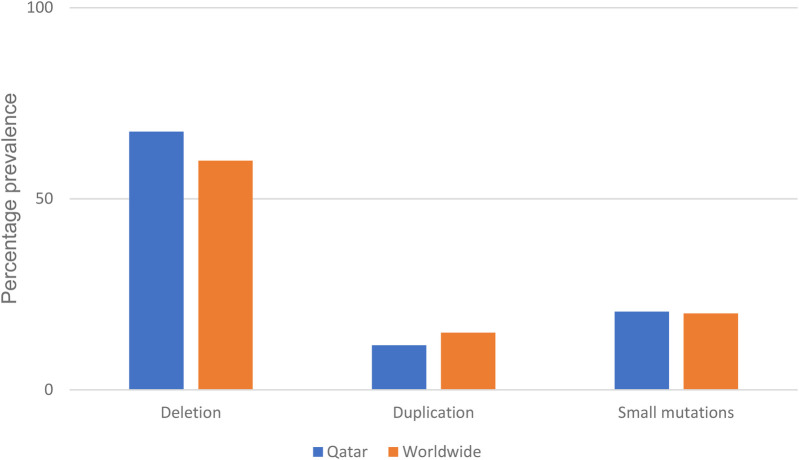 Figure 1
Peer Reviews
No public reviews on file for this paper yet. If you reviewed it on a platform where reviews are public (OpenReview, ICLR, NeurIPS, ICML), you can paste yours below so the community can read it here.
Videos
No videos yet. Explain this paper in a talk, walkthrough, or lecture? Add one.
Taxonomy
TopicsMuscle Physiology and Disorders · Cardiomyopathy and Myosin Studies · Neurogenetic and Muscular Disorders Research