Extending the Monitoring of Perfluoroalkyl Substances in Arctic Air Reveals a High Abundance of Both Short Acids and Neutral Compounds
Alexander Kasperkiewicz, Frank Wania, Fiona Wong, Alexander Vlasenko, Henrik Li, Jared Chisamore, Helena Dryfhout-Clark, Phil Fellin, Hayley Hung

TL;DR
This study tracks perfluoroalkyl substances in Arctic air, finding high levels of short-chain compounds and new insights into their transport and trends.
Contribution
The study introduces a new method for analyzing PFAS in Arctic air and identifies previously overlooked short-chain and neutral compounds.
Findings
Short-chain PFASs like TFA, PFPrA, and PFBA were frequently detected at high concentrations in Arctic air.
HF2OH and HFIPA were confirmed as new PFAS compounds in Arctic air with detection frequencies over 75%.
Concentrations of PFBA, PFOA, and PFOS have increased since 2019, suggesting ongoing emissions despite regulatory actions.
Abstract
Interest in per- and polyfluoroalkyl substances (PFASs) in the remote atmosphere now extends to perfluoroalkyl carboxylic acids (PFCAs) and perfluoroalkyl sulfonic acids (PFSAs) with short (n C < 4), medium (3 < n C < 13), and long (n C > 12) alkyl chains. A liquid chromatography–mass spectrometry method for the combined analysis of PFASs of variable chain length was applied to 204 high volume active air samples collected at Alert, Nunavut (82° 30′ N 62° 20′ W) between March 2014 and October 2023. Short-chain PFASs (scPFASs) were detected frequently (>75%) and at the highest median concentrations (trifluoroacetic acid (TFA): 20 pg/m3, perfluoropropionic acid (PFPrA): 1.1 pg/m3, perfluorobutanoic acid (PFBA): 3.7 pg/m3), while nC > 10 PFAS were sparsely detected (detection frequency [DF] < 20%). Using a suspect-screening approach, hexafluoro-2,2-propanediol (HF2OH) and…
Genes, proteins, chemicals, diseases, species, mutations and cell lines named across the full text — each resolved to its canonical identifier and authoritative record.
Click any figure to enlarge with its caption.
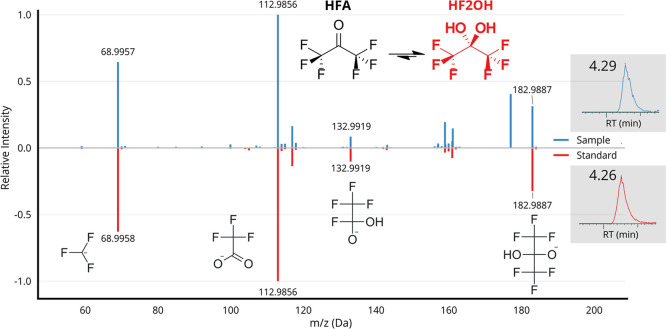 Figure 1
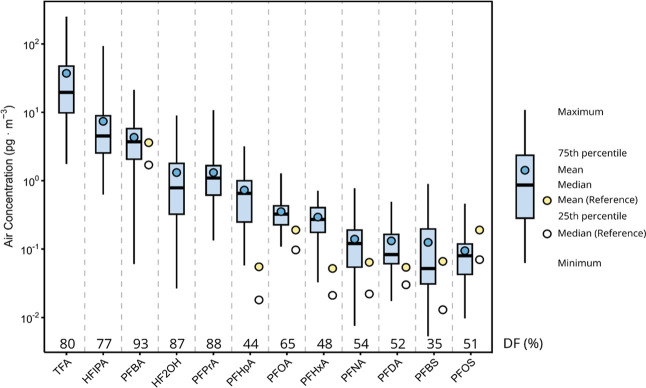 Figure 2
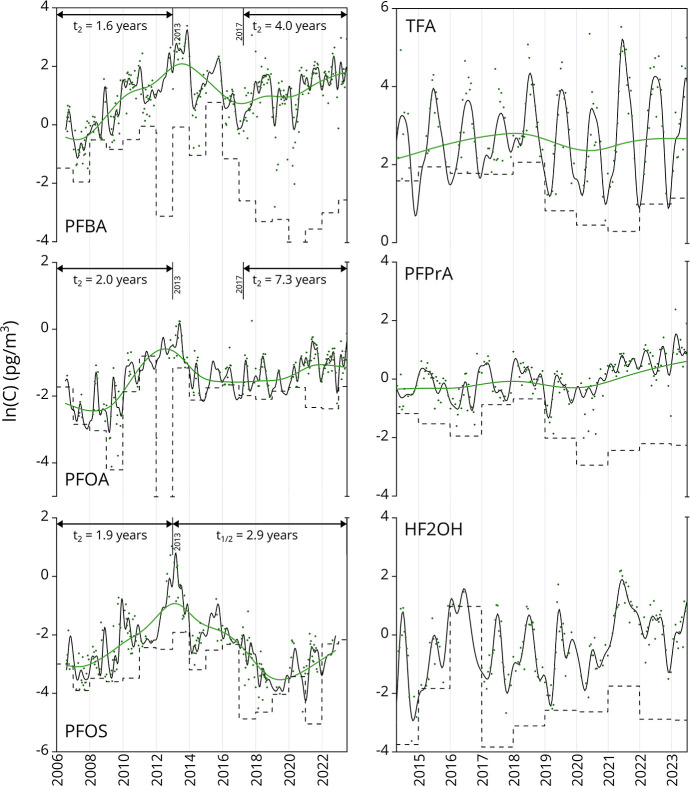 Figure 3
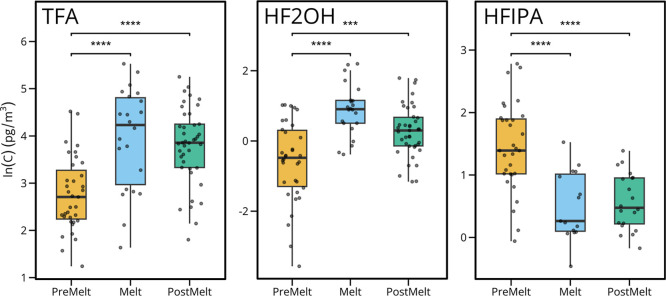 Figure 4
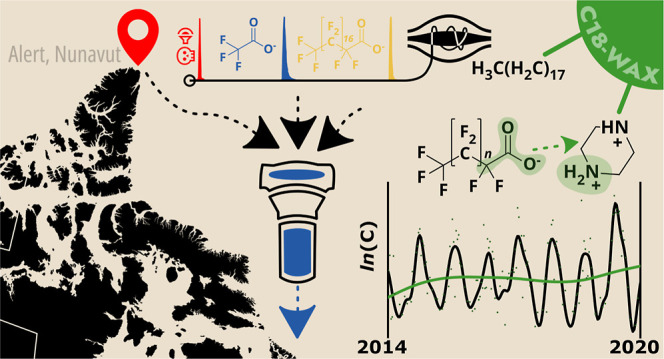 Figure 5
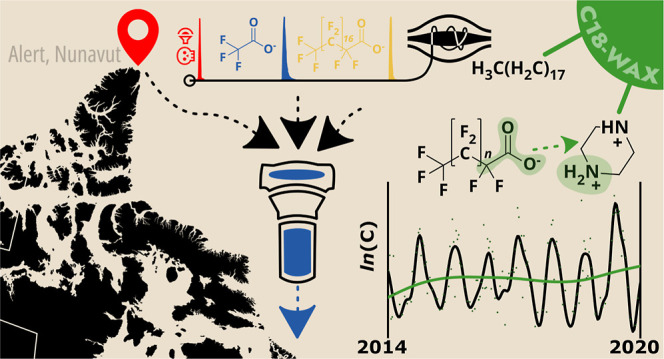 Figure 6
Peer Reviews
No public reviews on file for this paper yet. If you reviewed it on a platform where reviews are public (OpenReview, ICLR, NeurIPS, ICML), you can paste yours below so the community can read it here.
Videos
No videos yet. Explain this paper in a talk, walkthrough, or lecture? Add one.
Taxonomy
TopicsPer- and polyfluoroalkyl substances research · Atmospheric chemistry and aerosols · Toxic Organic Pollutants Impact