Somatosensory Profile of Central Post Stroke Pain of Thalamic Origin: Findings of a Quantitative Sensory Testing Study
Kristel Berati, Lukas Enz, Priska Zuber, Katarina Alexandra Ebner, Shaumiya Sellathurai, Kean Schoenholzer, Federico Burguet Villena, Laura Gaetano, Ludwig Kappos, Stefano Magon, Till Sprenger, Athina Papadopoulou

TL;DR
This study identifies somatosensory abnormalities in patients with central post stroke pain after thalamic stroke, focusing on mechanical perception for diagnosis.
Contribution
The study introduces a short QST protocol using mechanical testing for diagnosing thalamic central post stroke pain.
Findings
CPSP patients showed higher mechanical detection thresholds compared to stroke controls.
CPSP patients were more sensitive to mechanical pain than stroke controls.
Thermal perception was not significantly different between CPSP patients and controls.
Abstract
Central post stroke pain (CPSP) is attributed to vascular lesions of the central somatosensory system, including the thalamus. A better characterisation of clinical findings in patients with CPSP after thalamic stroke can facilitate research and treatment of this refractory pain syndrome. We aimed to quantify somatosensory abnormalities in CPSP patients after thalamic stroke. Sixteen patients with CPSP after thalamic stroke, 14 patients with a history of thalamic stroke without any pain (stroke control patients, SCP) and 12 healthy controls (HC) underwent detailed clinical examination, standardised quantitative sensory testing (QST) and a pain questionnaire. QST results were compared to age and sex adjusted reference data to obtain z‐scores. Group comparisons were performed with one‐way analysis of variance. Temperature perception did not differ in CPSP patients, apart from thermal…
Genes, proteins, chemicals, diseases, species, mutations and cell lines named across the full text — each resolved to its canonical identifier and authoritative record.
Click any figure to enlarge with its caption.
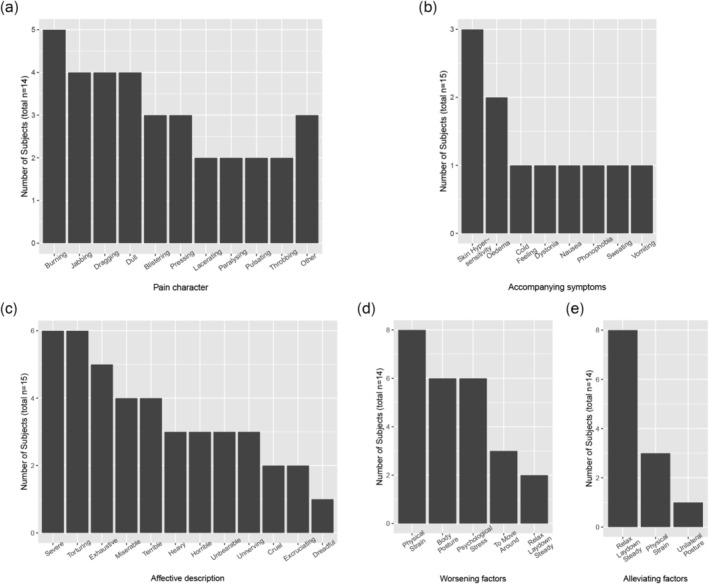 Figure 1
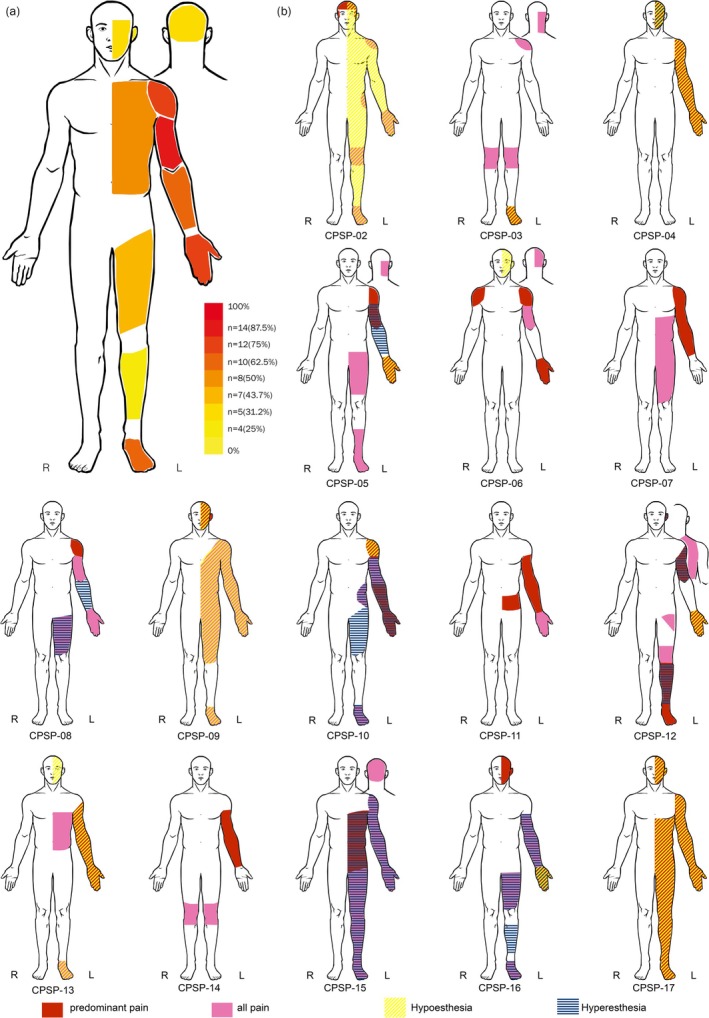 Figure 2
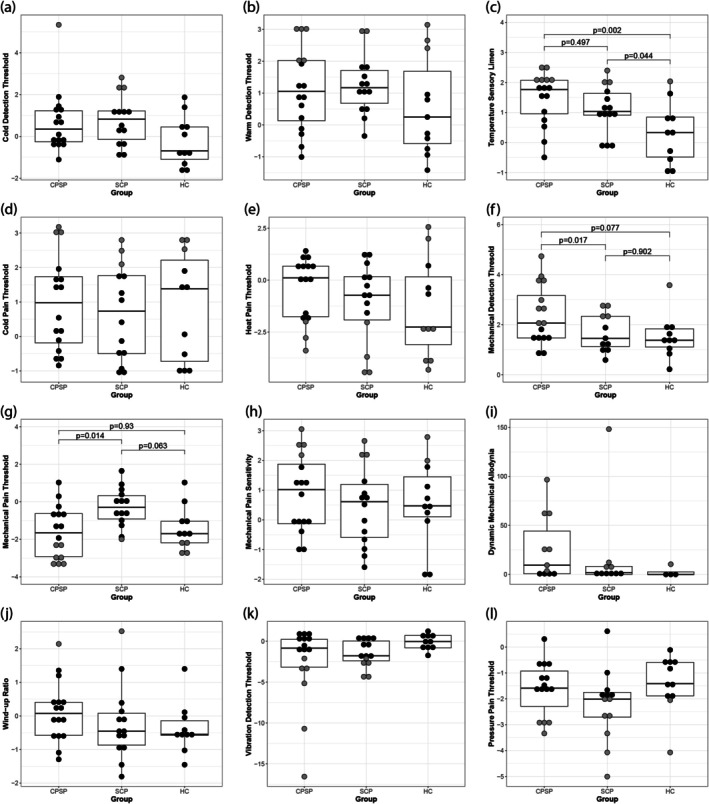 Figure 3
Peer Reviews
No public reviews on file for this paper yet. If you reviewed it on a platform where reviews are public (OpenReview, ICLR, NeurIPS, ICML), you can paste yours below so the community can read it here.
Videos
No videos yet. Explain this paper in a talk, walkthrough, or lecture? Add one.
Taxonomy
TopicsPain Mechanisms and Treatments · Olfactory and Sensory Function Studies · Botulinum Toxin and Related Neurological Disorders