Diagnostic Capabilities of MRI and CT in Evaluating Dizziness: A Systematic Review of Acute Cases in the ED
Elsuha Elgassim Ali Mohammed, Mohamed Almogtaba Mohamed Alzain Ali, Ethar Eltayeb, Lobaba Mubarak Saidahmed Ahmed, Dalia Hamdan Ahmed Dafaalla, Mohammed Omer Mohammed Elsheikh, Hanady ME M Osman

TL;DR
This review compares MRI and CT for diagnosing dizziness in emergency settings, finding MRI more effective for detecting strokes.
Contribution
The study systematically evaluates MRI and CT diagnostic performance for acute dizziness in EDs, emphasizing MRI's superiority in detecting posterior circulation strokes.
Findings
MRI has higher detection rates for dizziness causes, especially posterior circulation strokes.
CT is primarily useful for ruling out intracranial hemorrhage.
Clinical factors like age and vascular risk can guide MRI prioritization for high-risk patients.
Abstract
Dizziness is a common reason for ED visits, posing diagnostic challenges due to its broad range of potential causes, from benign vestibular conditions to critical cerebrovascular events. Although CT scans are often used to quickly assess for intracranial hemorrhage, MRI provides greater accuracy for identifying strokes in the posterior circulation. Differences in imaging practices and uncertainty about the most effective approach highlight the need for a thorough evaluation of these modalities. This narrative systematic review examined the diagnostic performance of MRI and CT in assessing patients presenting with acute dizziness in ED settings, focusing on detection rates and clinical considerations. A comprehensive literature search was conducted, and eight relevant studies were included. The methodological quality of the studies was assessed, and findings were synthesized narratively…
Genes, proteins, chemicals, diseases, species, mutations and cell lines named across the full text — each resolved to its canonical identifier and authoritative record.
Click any figure to enlarge with its caption.
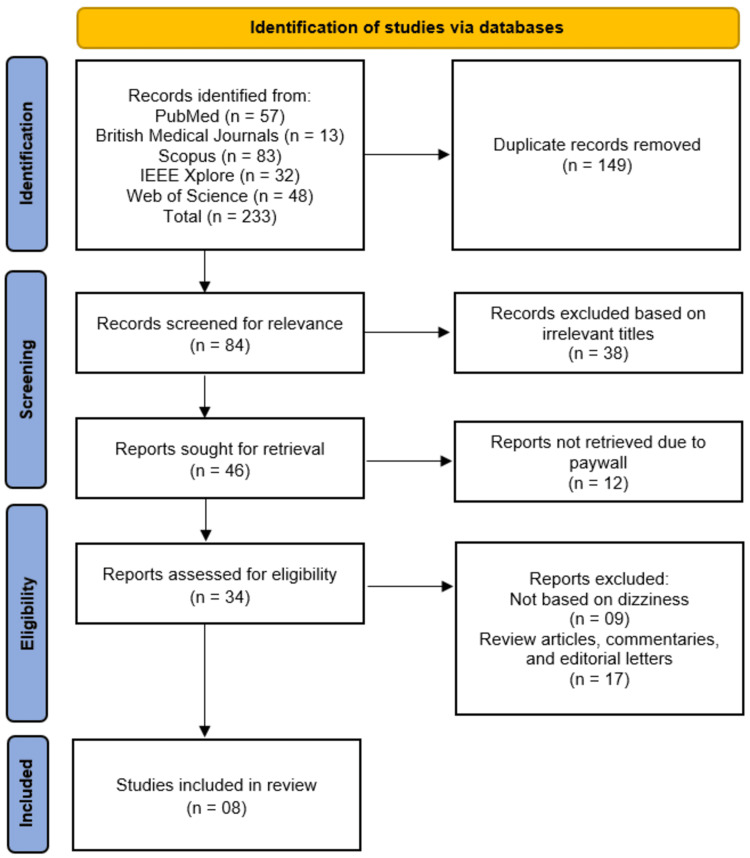 Figure 1
Peer Reviews
No public reviews on file for this paper yet. If you reviewed it on a platform where reviews are public (OpenReview, ICLR, NeurIPS, ICML), you can paste yours below so the community can read it here.
Videos
No videos yet. Explain this paper in a talk, walkthrough, or lecture? Add one.
Taxonomy
TopicsVestibular and auditory disorders · Hearing, Cochlea, Tinnitus, Genetics · Cerebral Venous Sinus Thrombosis