PI3K/Akt pathway and neuroinflammation in sepsis-associated encephalopathy
Yang Guo, Yonghao Yu

TL;DR
This review explores how the PI3K/Akt pathway influences neuroinflammation in sepsis-associated encephalopathy and suggests it as a potential target for treatment.
Contribution
The paper systematically reviews the role of the PI3K/Akt pathway in SAE neuroinflammation and highlights new therapeutic strategies.
Findings
The PI3K/Akt pathway regulates neuroinflammation and BBB integrity in SAE.
Targeting this pathway may reduce neuroinflammation and improve neurological outcomes.
Development of pathway-specific agonists and inhibitors offers new therapeutic opportunities.
Abstract
Sepsis-associated encephalopathy (SAE) is a complex neurological complication of sepsis involving activation of microglia in the central nervous system (CNS), blood–brain barrier (BBB) dysfunction, neurotransmitter dysfunction, impaired brain metabolism, and mitochondrial dysfunction. Neuroinflammation is a critical component of the pathogenesis. The phosphatidylinositol 3-kinase/protein kinase B (PI3K/Akt) signaling pathway, as a key intracellular signaling pathway, plays a crucial role in regulating neuroinflammation, maintaining the integrity of the BBB, and promoting neuronal cell survival. This review aims to summarize the role of the PI3K/Akt pathway in SAE-associated neuroinflammation and highlights potential therapeutic targets and strategies for its management. We systematically reviewed recent basic and clinical studies on PI3K/Akt signaling pathway in neuroinflammation…
Genes, proteins, chemicals, diseases, species, mutations and cell lines named across the full text — each resolved to its canonical identifier and authoritative record.
Click any figure to enlarge with its caption.
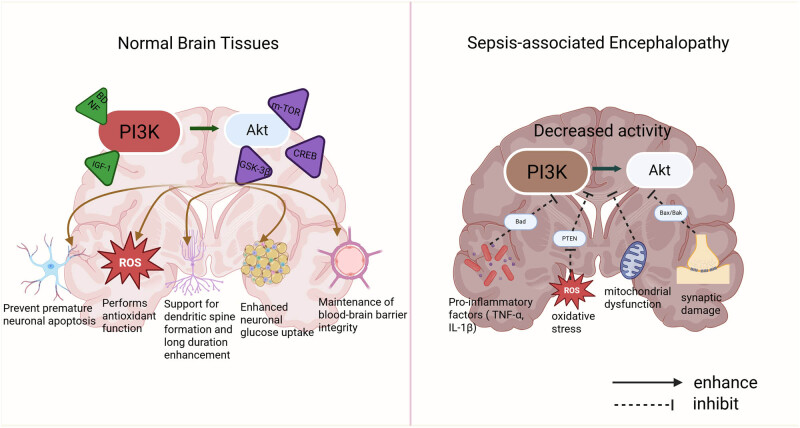 Figure 1
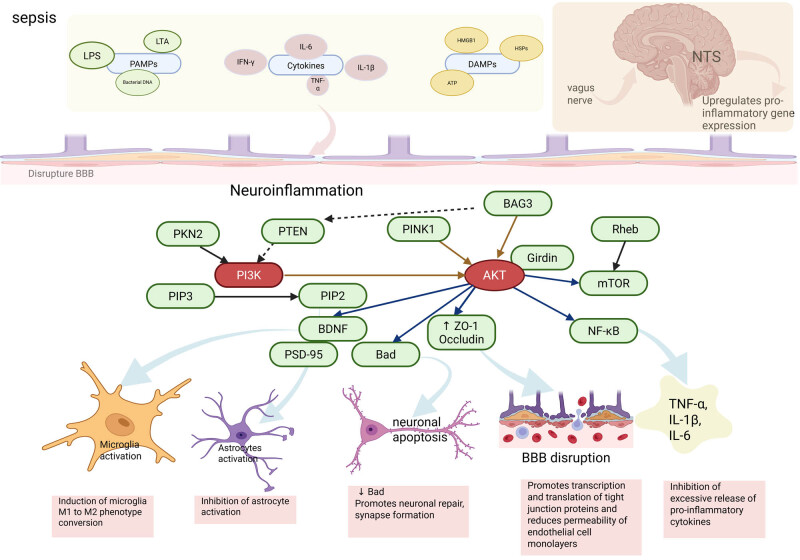 Figure 2
Peer Reviews
No public reviews on file for this paper yet. If you reviewed it on a platform where reviews are public (OpenReview, ICLR, NeurIPS, ICML), you can paste yours below so the community can read it here.
Videos
No videos yet. Explain this paper in a talk, walkthrough, or lecture? Add one.
Taxonomy
TopicsNeuroinflammation and Neurodegeneration Mechanisms · Inflammation biomarkers and pathways · Immune Response and Inflammation