A prognostic model correlated with fatty acid metabolism in Ewing’s sarcoma based on bioinformatics analysis
Xianwei Chen, Yuqi Yang, Dongqi Li, En Ye, Bingjian He, Mingshu Yu, Jiankai Luo, Jing Zhang

TL;DR
This study develops a prognostic model for Ewing’s sarcoma based on fatty acid metabolism genes, identifying PPT1 and ACOT7 as potential predictors of patient survival.
Contribution
The novel contribution is the construction of a fatty acid metabolism-based prognostic model for Ewing’s sarcoma using bioinformatics analysis.
Findings
A risk model with seven fatty acid metabolism-related genes showed good predictive accuracy with AUC values ≥0.7 at 3 and 5 years.
High- and low-risk groups differed significantly in fatty acid metabolism pathway enrichment and immune cell infiltration.
PPT1 and ACOT7 protein expression was associated with progression-free survival in EWS patients.
Abstract
Ewing’s sarcoma (EWS) is a highly aggressive malignant tumor that originates from bone or soft tissue. To date, there is no established prognostic model for EWS tumor. This study aims to identify prognostic genes and develop a predictive model associated with fatty acid metabolism in EWS using bioinformatics analysis. We analyzed the GSE17679 dataset and identified 25 differentially expressed genes related to fatty acid metabolism in EWS. A risk model composed of ACADM, ADH5, ACSL1, ELOVL4, ECI1, PPT1, and ACOT7 gene signatures was constructed. The AUC values at 3 and 5 years were both ≥0.7, indicating good predictive accuracy. GSVA analysis revealed significant differences in fatty acid metabolism pathway enrichment between high- and low-risk groups. Differential genes were primarily enriched in pathways such as fatty acid oxidation, lipid oxidation, lipid modification, and fatty acid…
Genes, proteins, chemicals, diseases, species, mutations and cell lines named across the full text — each resolved to its canonical identifier and authoritative record.
Click any figure to enlarge with its caption.
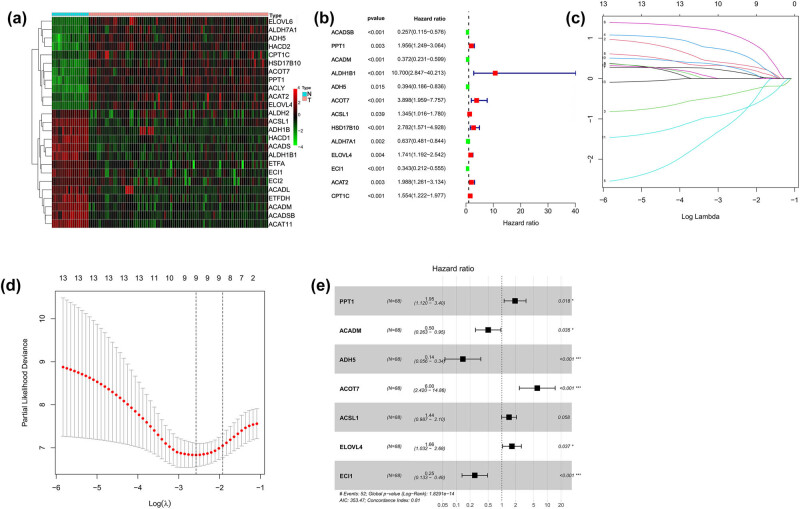 Figure 1
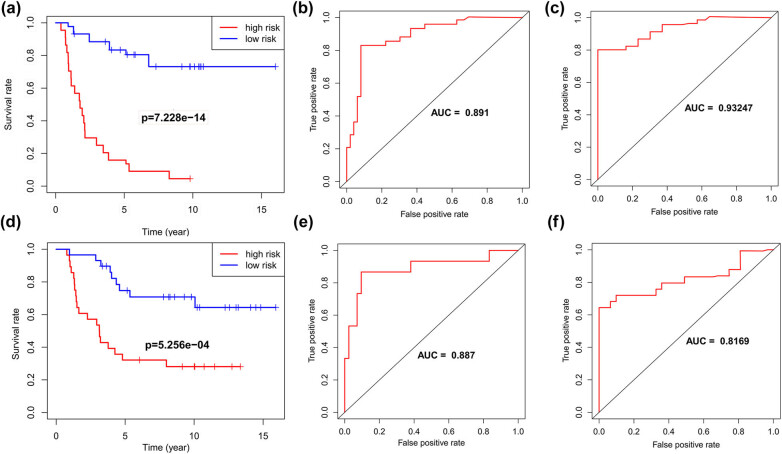 Figure 2
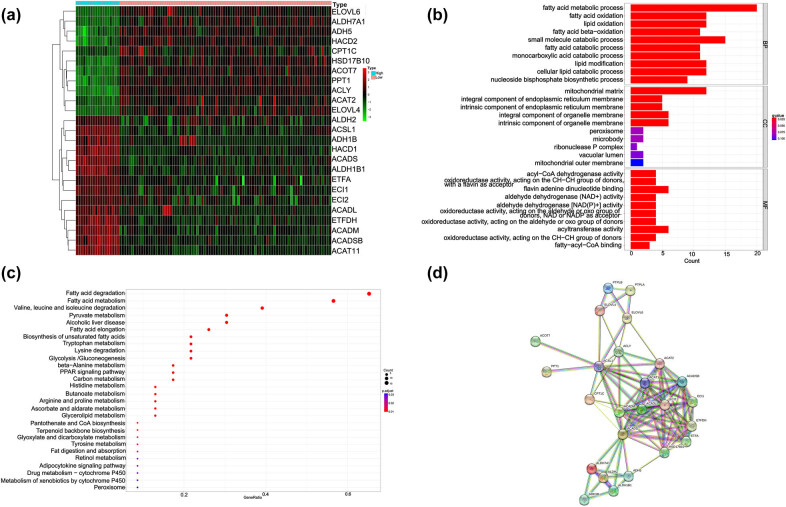 Figure 3
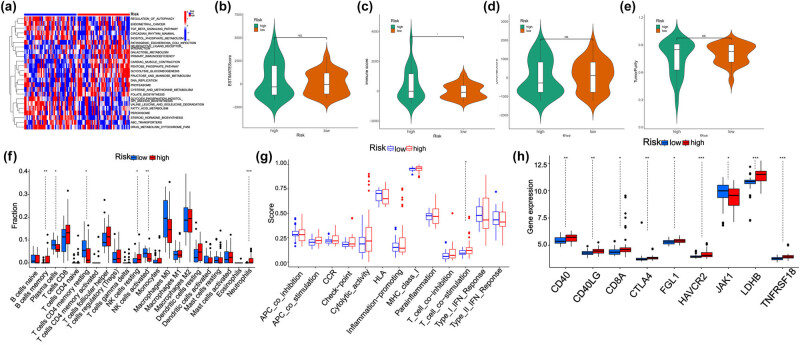 Figure 4
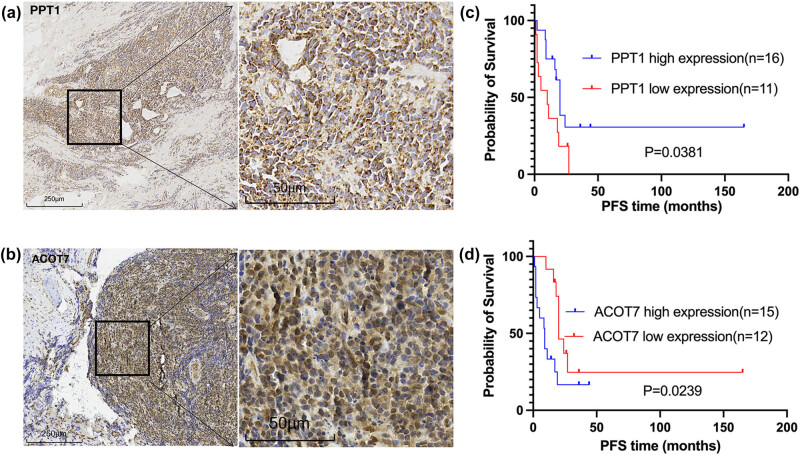 Figure 5
Peer Reviews
No public reviews on file for this paper yet. If you reviewed it on a platform where reviews are public (OpenReview, ICLR, NeurIPS, ICML), you can paste yours below so the community can read it here.
Videos
No videos yet. Explain this paper in a talk, walkthrough, or lecture? Add one.
Taxonomy
TopicsCancer, Lipids, and Metabolism · RNA modifications and cancer · Cancer-related molecular mechanisms research