A Simple yet Efficient Water-Saving Condenser
Stéphane Rosset, Clément Mazet

TL;DR
This paper introduces a water-saving condenser for chemical synthesis that performs as well as traditional water-jacketed condensers.
Contribution
A novel waterless condenser design that is efficient and suitable for various solvents, including water.
Findings
The condenser performs comparably to conventional water-jacketed glass condensers across many organic solvents.
A Teflon cap with a safety valve enhances the condenser's effectiveness.
The smallest condenser is well-suited for reactions using water as a solvent.
Abstract
We describe the design of an efficient waterless condenser for use in chemical synthesis, which exists in two different sizes. This laboratory equipment displays performances comparable to those of conventional water-jacketed glass condensers across a broad range of organic solvents. It is most effective when fitted with a Teflon cap containing a safety valve. The condenser with the smallest cross-section is particularly suitable for reactions using water as a solvent, despite its lower vapor density than air.
Genes, proteins, chemicals, diseases, species, mutations and cell lines named across the full text — each resolved to its canonical identifier and authoritative record.
Click any figure to enlarge with its caption.
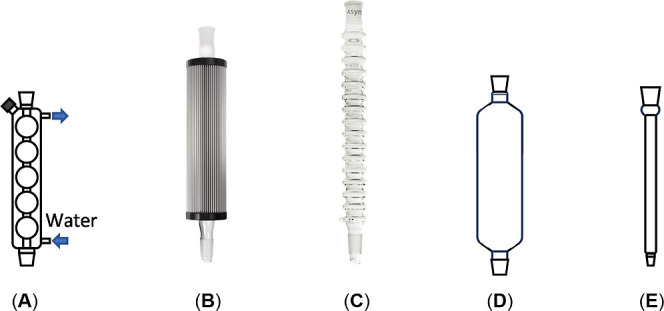 Figure 1
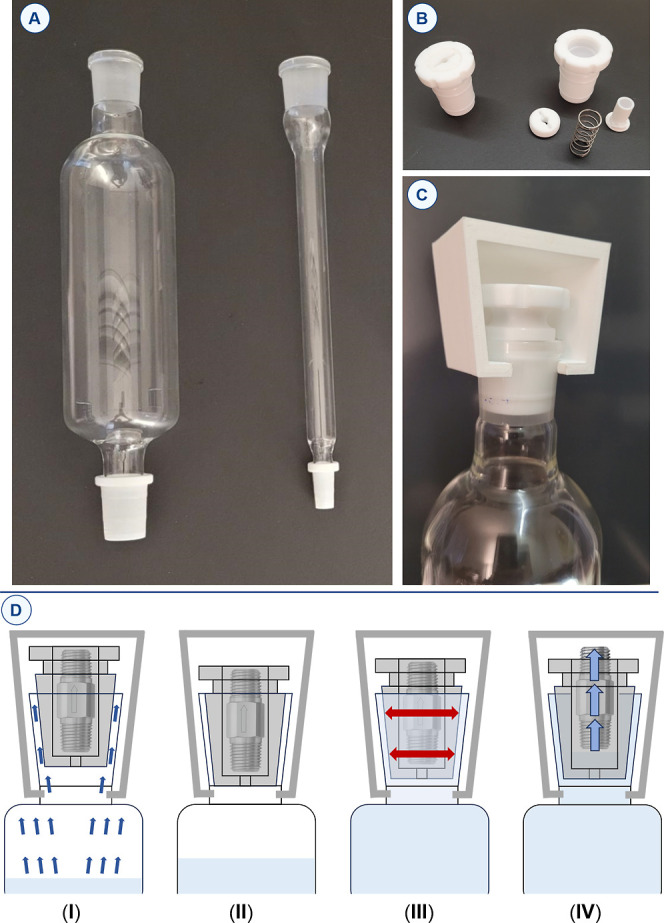 Figure 2
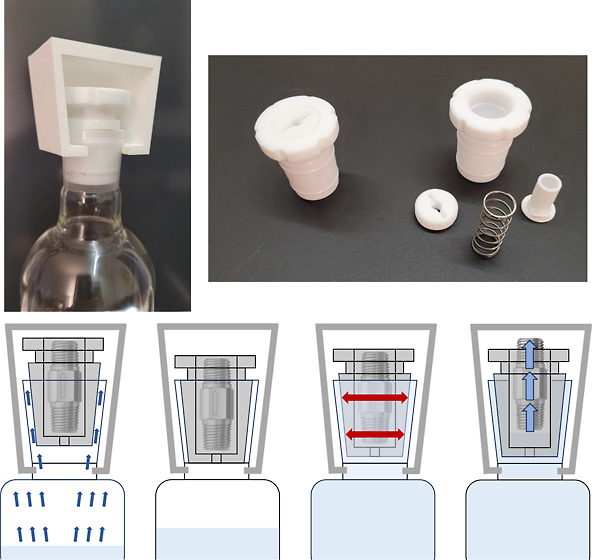 Figure 3
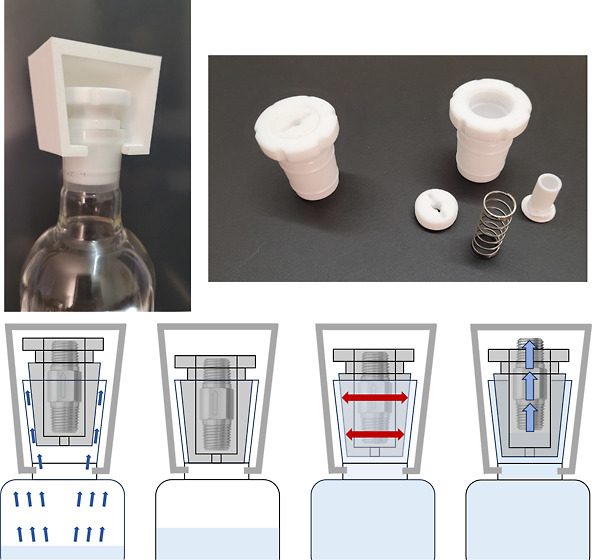 Figure 4
Peer Reviews
No public reviews on file for this paper yet. If you reviewed it on a platform where reviews are public (OpenReview, ICLR, NeurIPS, ICML), you can paste yours below so the community can read it here.
Videos
No videos yet. Explain this paper in a talk, walkthrough, or lecture? Add one.
Taxonomy
TopicsVarious Chemistry Research Topics