Tango*: constrained synthesis planning using chemically informed value functions
Daniel Armstrong, Zlatko Jončev, Jeff Guo, Philippe Schwaller

TL;DR
This paper introduces Tango*, a new method for computer-aided synthesis planning that efficiently finds chemical pathways using specific starting materials.
Contribution
Tango* improves synthesis planning by using a guided search with a computed node cost function, outperforming existing methods.
Findings
Tango* outperforms existing methods in efficiency and solve rate by optimizing a single hyperparameter.
The computed node cost function effectively guides synthesis pathways toward desired starting materials.
Tango* achieves superior performance compared to neural network approaches in constrained synthesis planning.
Abstract
Computer-aided synthesis planning (CASP) has made significant strides in generating retrosynthetic pathways for simple molecules in a non-constrained fashion. Recent work has introduced specialized bidirectional search algorithms to find synthesis pathways that incorporate pre-selected starting materials, tackling a specific formulation of the starting material-constrained problem. In this work, we introduce a simple guided search—Tango*-which allows solving the starting material-constrained synthesis planning problem using an existing unidirectional search algorithm, Retro*. We show that by optimising a single hyperparameter, Tango* outperforms existing methods in terms of efficiency and solve rate. We also highlight the effectiveness of our computed node cost function in steering synthesis pathways. TANGO* enables starting material constrained synthesis planning using computed…
Genes, proteins, chemicals, diseases, species, mutations and cell lines named across the full text — each resolved to its canonical identifier and authoritative record.
Click any figure to enlarge with its caption.
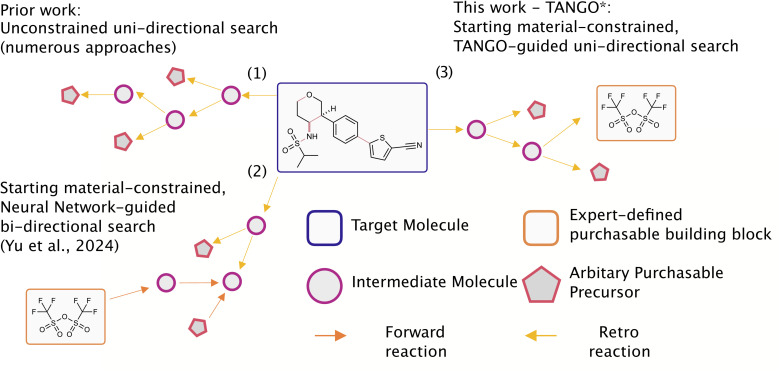 Figure 1
 Figure 2
 Figure 3
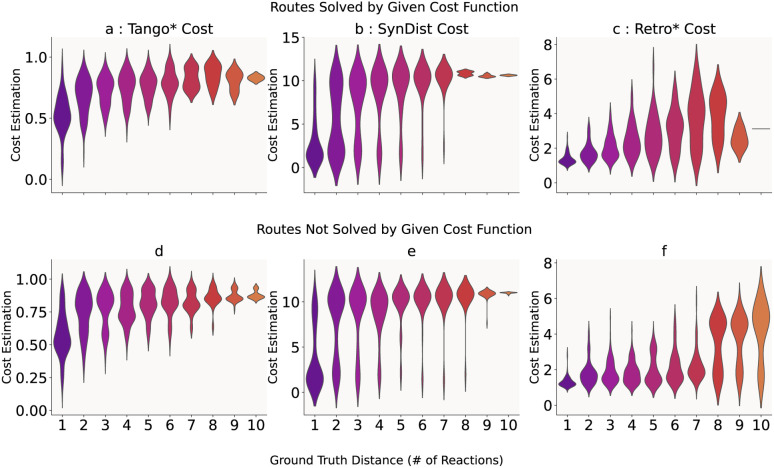 Figure 4
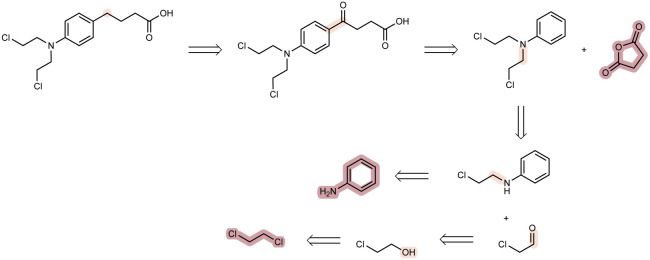 Figure 5
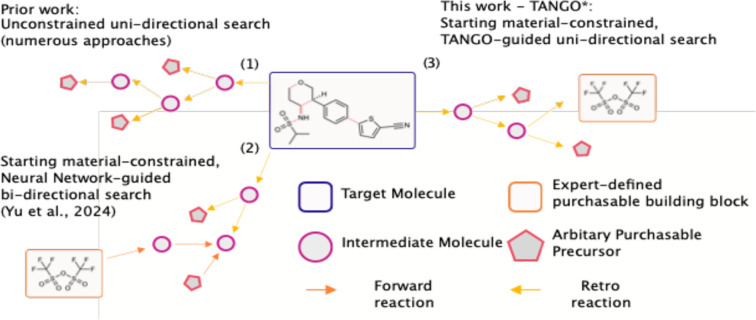 Figure 6
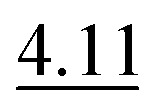 Figure 7
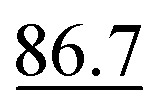 Figure 8
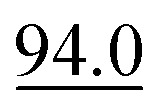 Figure 9
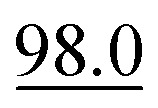 Figure 10
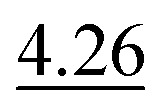 Figure 11
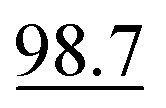 Figure 12
 Figure 13
 Figure 14
 Figure 15
 Figure 16
 Figure 17
 Figure 18
 Figure 19
 Figure 20
 Figure 21
 Figure 22
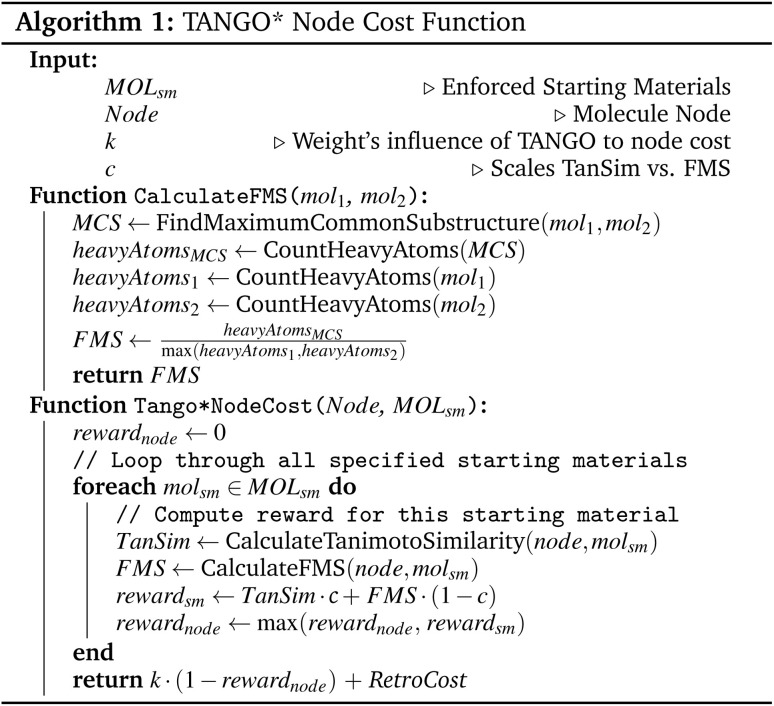 Figure 23
Peer Reviews
No public reviews on file for this paper yet. If you reviewed it on a platform where reviews are public (OpenReview, ICLR, NeurIPS, ICML), you can paste yours below so the community can read it here.
Videos
No videos yet. Explain this paper in a talk, walkthrough, or lecture? Add one.
Taxonomy
TopicsChemistry and Chemical Engineering · Computational Drug Discovery Methods · Process Optimization and Integration