Isolated Gamma-Glutamyl Transferase Elevation in an Asymptomatic Adolescent: An Unusual Presentation of Focal Nodular Hyperplasia
Manuel Lima Ferreira, Teresa Cachada Baptista, Diana Alba, Ana Reis

TL;DR
A 16-year-old girl with no symptoms had elevated GGT levels, leading to the discovery of a rare liver condition called focal nodular hyperplasia.
Contribution
This case highlights isolated GGT elevation as a potential indicator of focal nodular hyperplasia in asymptomatic adolescents.
Findings
The patient had persistent isolated gamma-glutamyl transferase elevation without symptoms.
Imaging confirmed focal nodular hyperplasia despite the absence of a central scar.
Conservative follow-up was chosen due to the asymptomatic nature of the condition.
Abstract
Incidental liver lesions (ILLs) in children are increasingly being identified due to the widespread use of imaging techniques. Focal nodular hyperplasia (FNH) is relatively rare in pediatric age, typically diagnosed based on characteristic imaging findings. We report the case of a 16-year-old asymptomatic female patient with persistent isolated elevation of gamma-glutamyl transferase (GGT), identified during routine evaluation. Further imaging, including abdominal ultrasound and magnetic resonance imaging with hepatocyte-specific contrast agent, revealed an ILL consistent with FNH, despite the absence of a classical central scar. The adolescent remained asymptomatic, and conservative follow-up was decided. This case highlights the diagnostic relevance of isolated GGT elevation as a potential indicator of FNH.
Genes, proteins, chemicals, diseases, species, mutations and cell lines named across the full text — each resolved to its canonical identifier and authoritative record.
Click any figure to enlarge with its caption.
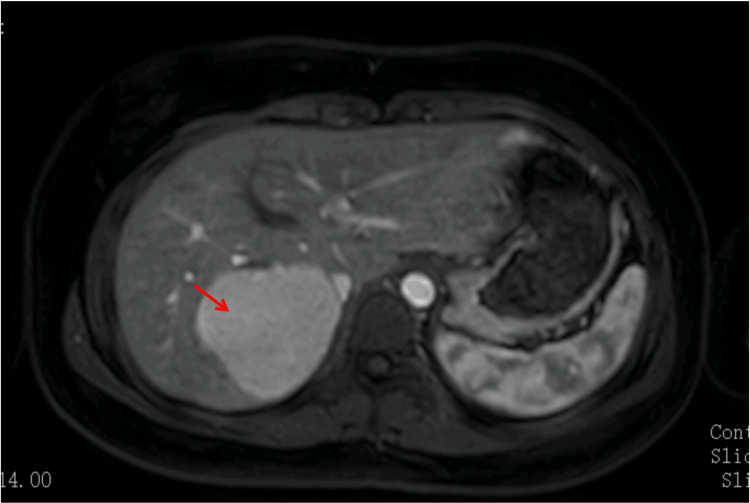 Figure 1
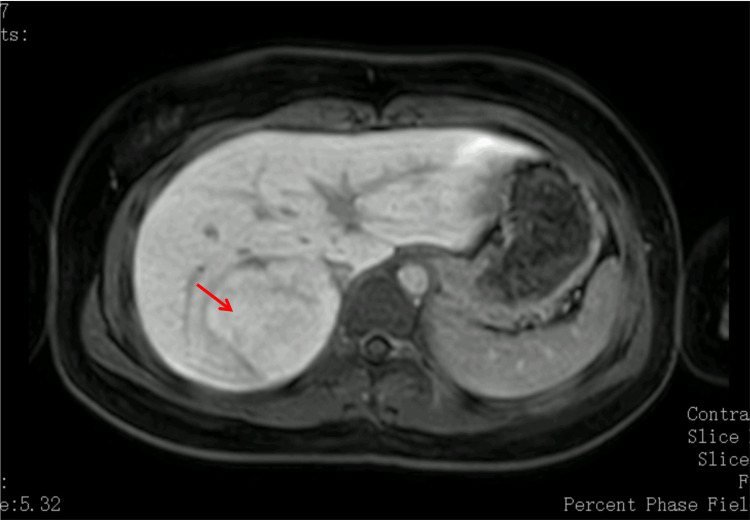 Figure 2
Peer Reviews
No public reviews on file for this paper yet. If you reviewed it on a platform where reviews are public (OpenReview, ICLR, NeurIPS, ICML), you can paste yours below so the community can read it here.
Videos
No videos yet. Explain this paper in a talk, walkthrough, or lecture? Add one.
Taxonomy
TopicsMedical Imaging and Pathology Studies · Neuroendocrine Tumor Research Advances · Polyomavirus and related diseases