Role of immunosuppressive JNK pathway in the tumor microenvironment among TNBC subtypes in IBCSG trial 22-00
Andrea Joaquin Garcia, Takashi Semba, Mattia Rediti, Daniel J. McGrail, Xuemei Xie, Xiaoping Wang, Dileep R. Rampa, David Venet, Laurence Buisseret, Samira Majjaj, Roswitha Kammler, Marco Colleoni, Sherene Loi, Giuseppe Viale, Meredith M. Regan, Françoise Rothé

TL;DR
This study shows that high JNK phosphorylation in immune-related triple-negative breast cancer tumors is linked to a worse prognosis but may respond to low-dose chemotherapy.
Contribution
Developed an RNA-based signature to estimate JNK phosphorylation and its role in immunosuppressive tumor environments in TNBC.
Findings
High pJNK levels correlate with immunosuppressive TME, marked by increased Tregs and lower CD8+/Treg ratios.
High pJNK immune tumors showed improved disease-free survival with low-dose CM treatment.
pJNK signature may serve as a biomarker to guide immunotherapy strategies in TNBC.
Abstract
Phosphorylation of the JNK (pJNK) protein promotes an immunosuppressive tumor microenvironment (TME), enhancing aggressiveness in inflammatory triple-negative breast cancer (TNBC). This study evaluated the role of JNK signaling using a gene signature. RNA sequencing was performed on 347 TNBC tumors from the phase 3 International Breast Cancer Study Group (IBCSG) 22-00 trial, which evaluated adjuvant low-dose cyclophosphamide and methotrexate (CM). Immune-related tumors were identified by TNBC subtype or tumor-infiltrating lymphocytes (TILs). Associations between JNK and outcomes were analyzed using Cox models. Low pJNK levels were associated with better disease-free survival (DFS) in immune-related tumors. These tumors also had lower Treg levels and higher CD8+/Treg ratios. Notably, immunomodulatory (IM) tumors with high pJNK showed improved DFS when treated with CM. High pJNK…
Genes, proteins, chemicals, diseases, species, mutations and cell lines named across the full text — each resolved to its canonical identifier and authoritative record.
Click any figure to enlarge with its caption.
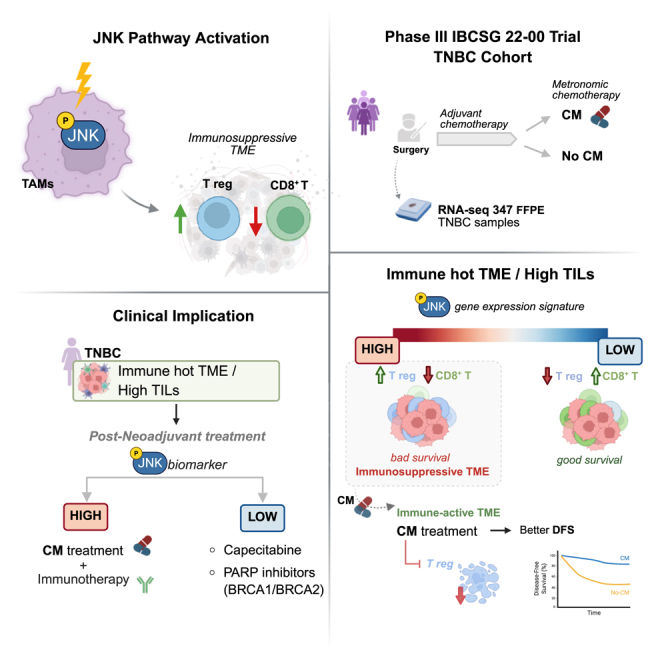 Figure 1
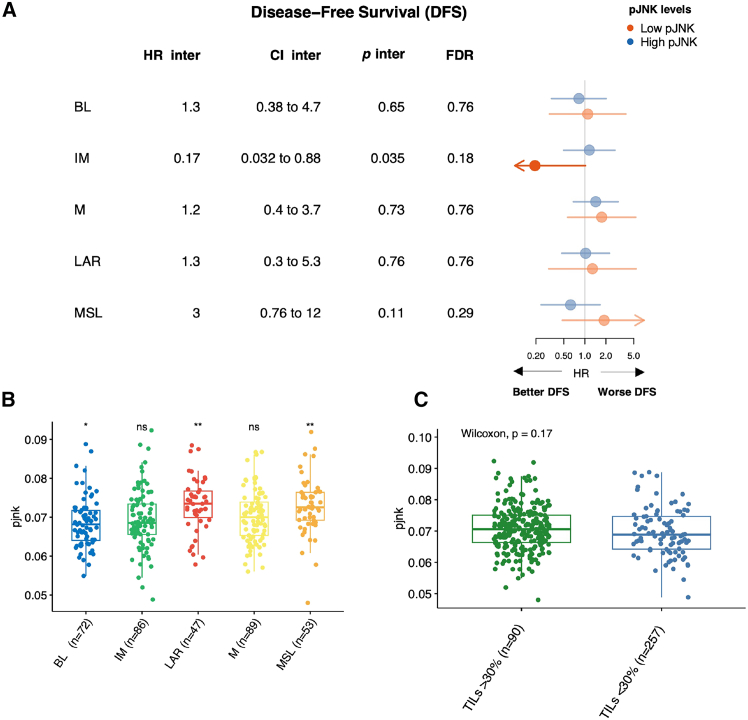 Figure 2
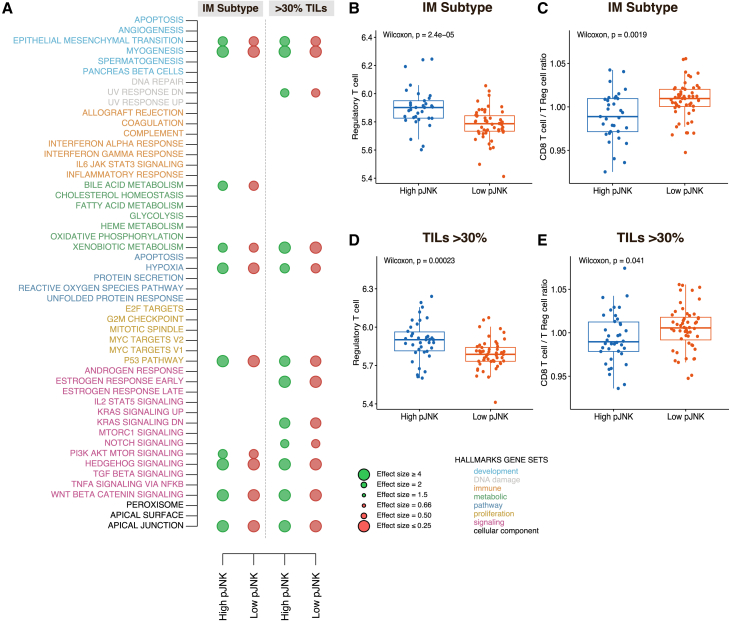 Figure 3
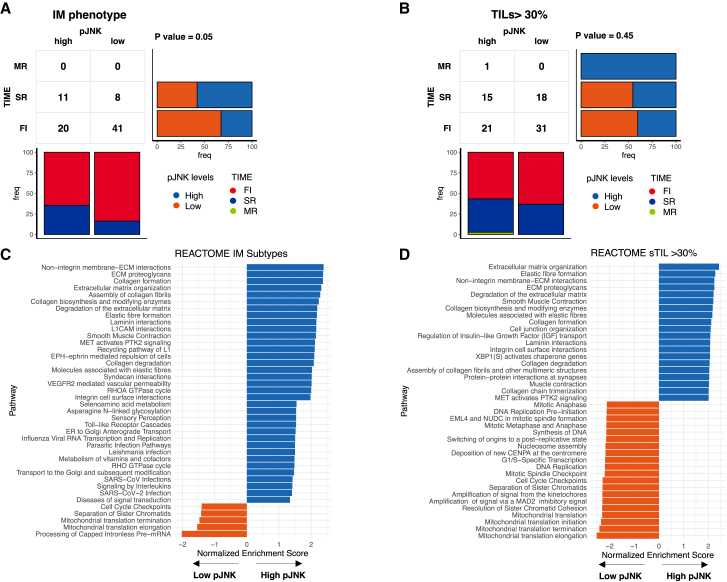 Figure 4
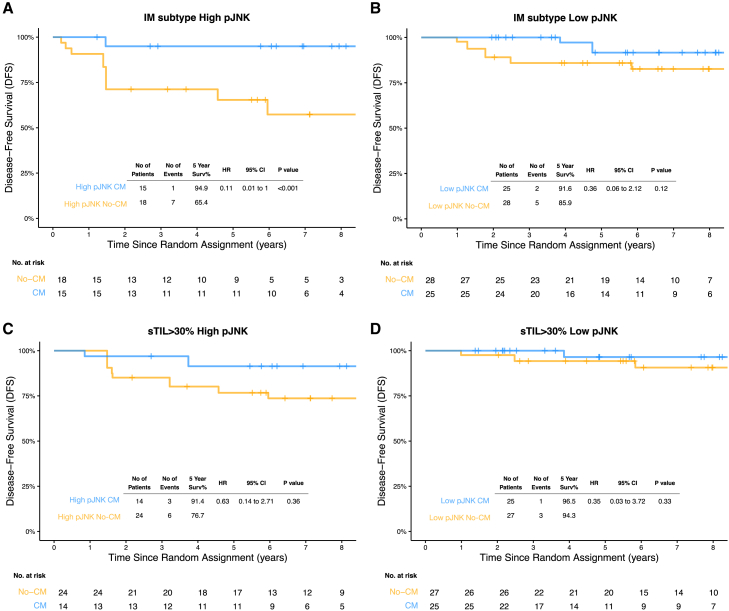 Figure 5
Peer Reviews
No public reviews on file for this paper yet. If you reviewed it on a platform where reviews are public (OpenReview, ICLR, NeurIPS, ICML), you can paste yours below so the community can read it here.
Videos
No videos yet. Explain this paper in a talk, walkthrough, or lecture? Add one.
Taxonomy
TopicsCancer Immunotherapy and Biomarkers · Cancer Cells and Metastasis · Melanoma and MAPK Pathways