Structural analysis of TRIM family PRYSPRY domains and its implications for E3-ligand design
Rezart Zhubi, Apirat Chaikuad, Christian J. Muñoz Sosa, Andreas C. Joerger, Stefan Knapp

TL;DR
Researchers studied the structure of PRYSPRY domains in TRIM proteins, revealing how they differ and how this could impact drug design for targeting these proteins.
Contribution
The study provides new structural insights into TRIM family PRYSPRY domains and their implications for ligand design.
Findings
TRIM11 shows a unique subdomain swap, and TRIM36 forms a dimer with a partially occluded binding site.
Loop variations in PRYSPRY domains suggest differences in substrate specificity and binding modes.
Opitz syndrome mutations in MID1 affect protein stability, as revealed by structural mapping.
Abstract
•Crystal structures of the PRYSPRY domain of nine TRIM-family proteins determined.•Structural and functional divergence of TRIM-family PRYSPRY domains.•Unique subdomain swapping in TRIM11 and dimerization motif in TRIM36.•Opitz-syndrome-associated mutations in MID1 PRYSPRY domain mapped.•Potential druggability and challenges in ligand design assessed. Crystal structures of the PRYSPRY domain of nine TRIM-family proteins determined. Structural and functional divergence of TRIM-family PRYSPRY domains. Unique subdomain swapping in TRIM11 and dimerization motif in TRIM36. Opitz-syndrome-associated mutations in MID1 PRYSPRY domain mapped. Potential druggability and challenges in ligand design assessed. Tripartite motif (TRIM) proteins constitute one of the largest subfamilies of RING-type E3 ubiquitin ligases and are attractive targets for the development of novel degraders that…
Genes, proteins, chemicals, diseases, species, mutations and cell lines named across the full text — each resolved to its canonical identifier and authoritative record.
Click any figure to enlarge with its caption.
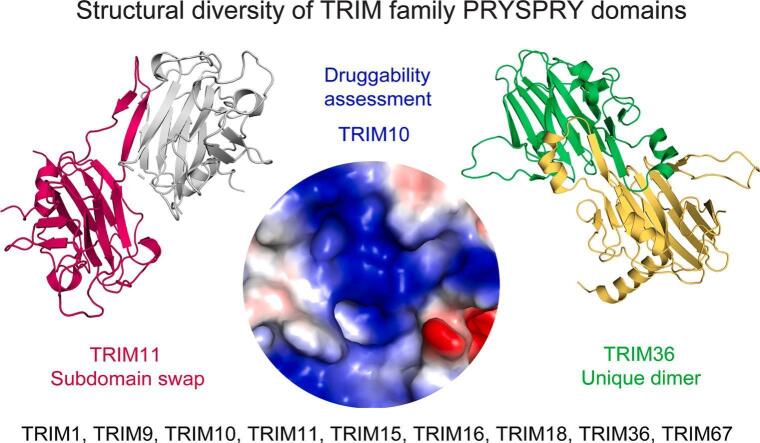 Figure 1
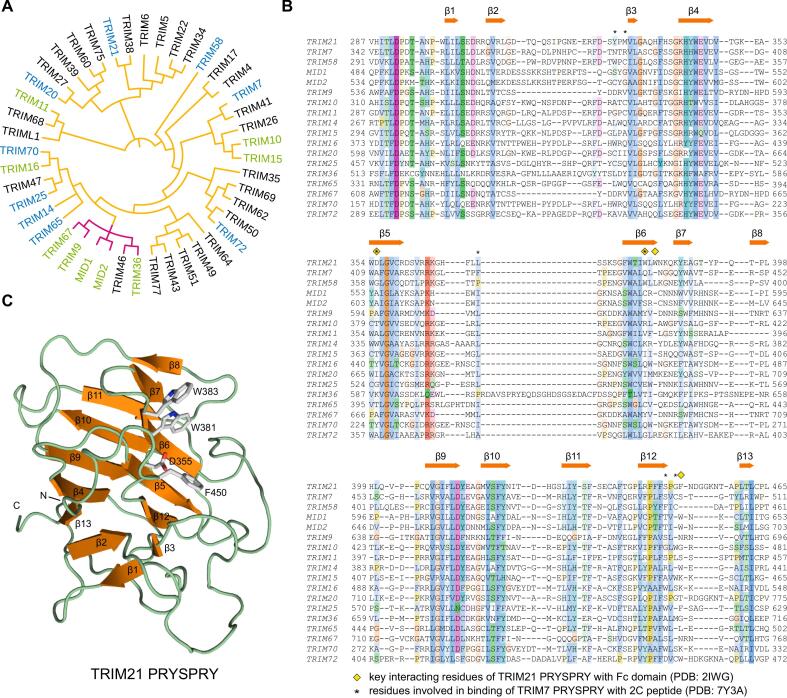 Figure 2
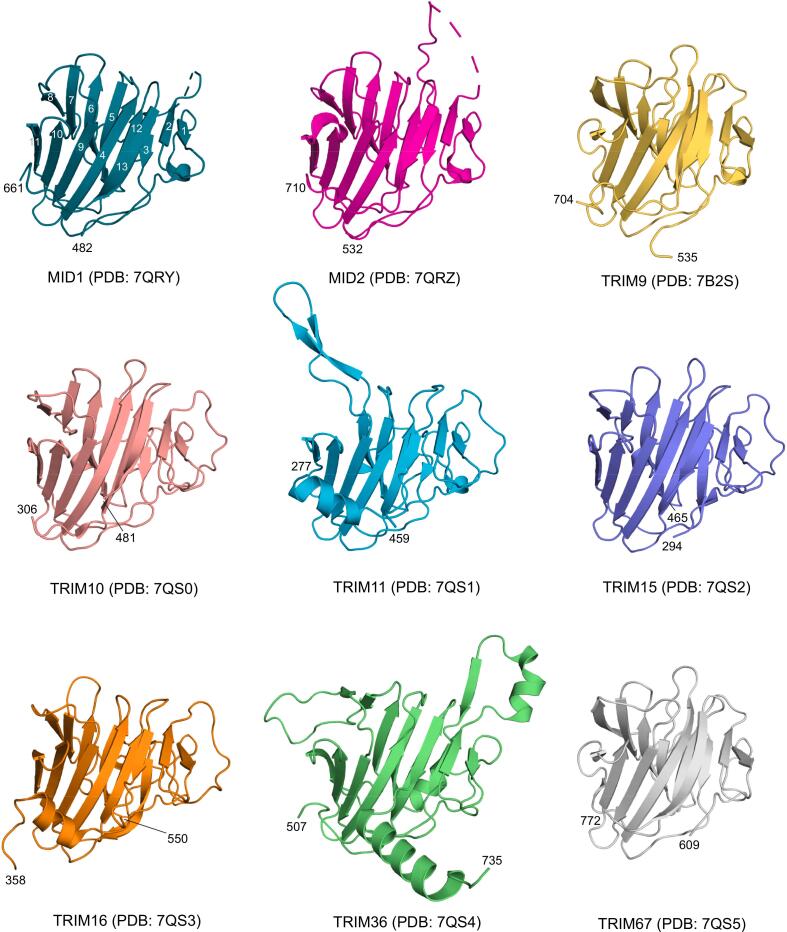 Figure 3
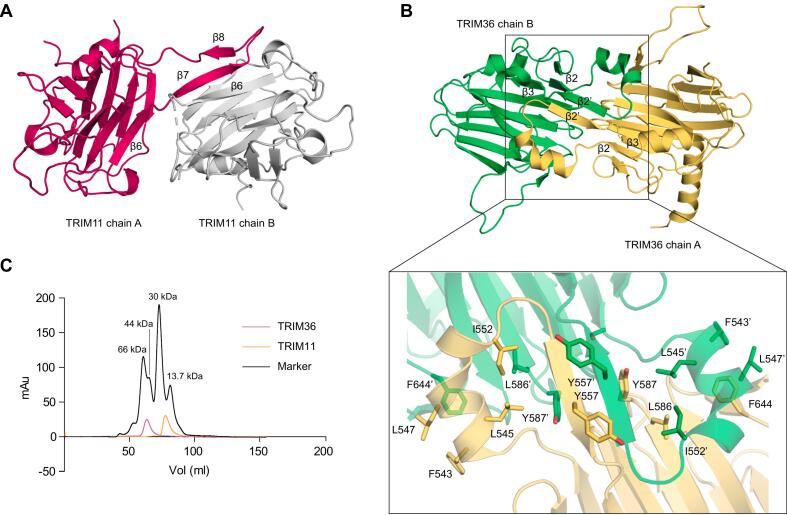 Figure 4
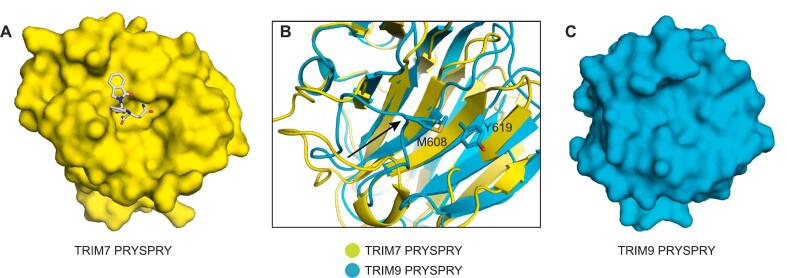 Figure 5
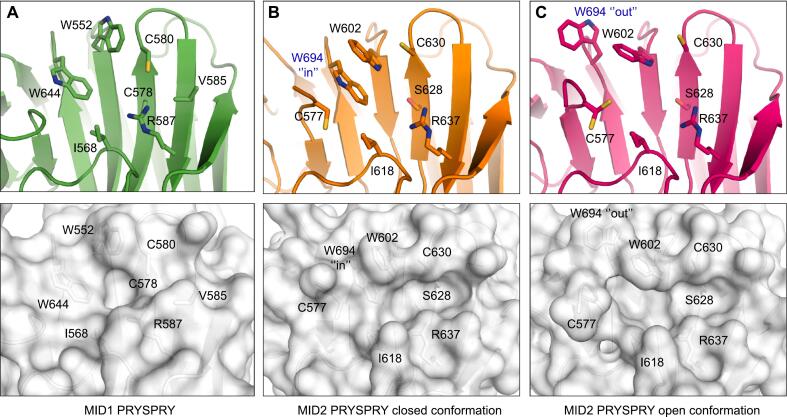 Figure 6
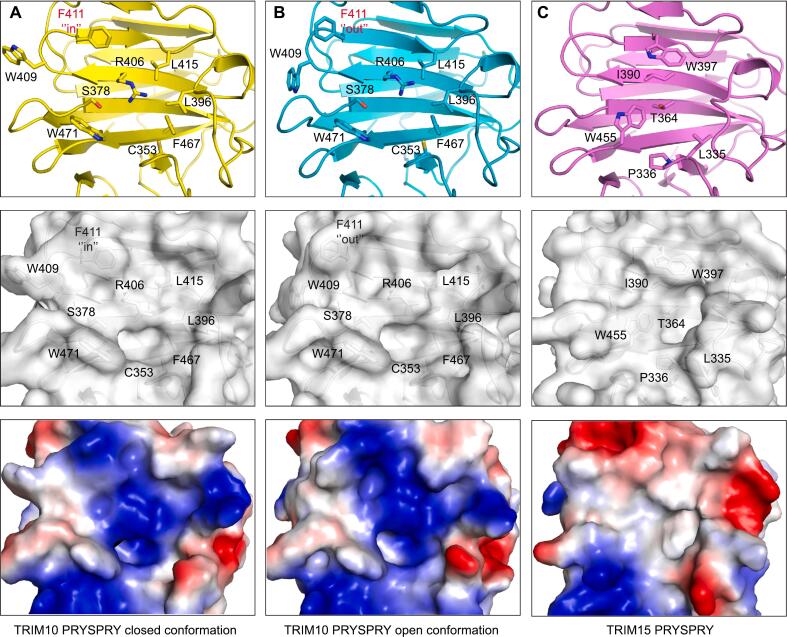 Figure 7
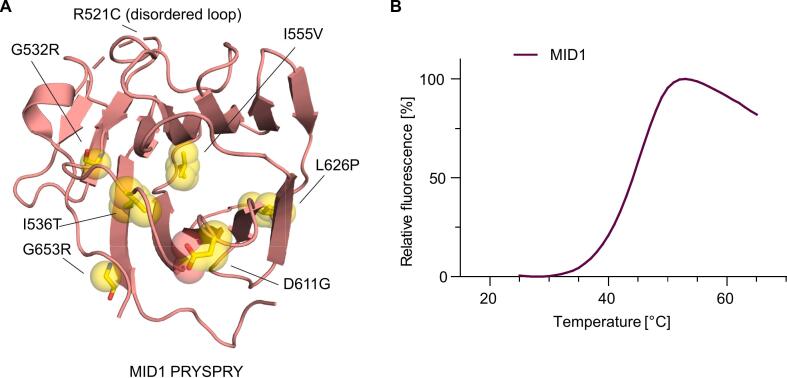 Figure 8
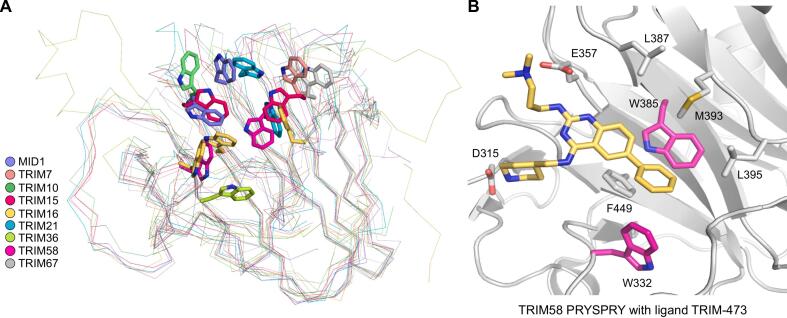 Figure 9
Peer Reviews
No public reviews on file for this paper yet. If you reviewed it on a platform where reviews are public (OpenReview, ICLR, NeurIPS, ICML), you can paste yours below so the community can read it here.
Videos
No videos yet. Explain this paper in a talk, walkthrough, or lecture? Add one.
Taxonomy
Topicsinterferon and immune responses · Ubiquitin and proteasome pathways · RNA modifications and cancer