Spatial confinement alters morphology, spreading dynamics, and mechanics of adherent platelets
Johanna G. Rodríguez, Jan Seifert, Vincent Gidlund, Carmela Rianna, Tilman E. Schäffer

TL;DR
This study shows that spatial confinement changes how platelets spread and behave mechanically, affecting their structure and elasticity.
Contribution
The novelty lies in using microcontact printing to mimic confined environments and revealing subcellular changes in platelet mechanics.
Findings
Confined platelets exhibit altered morphology and spreading dynamics compared to unconfined ones.
Spatial confinement leads to reorganization of the actin cytoskeleton in platelets.
Platelets in confined spaces develop regions with increased elastic modulus at the edges of fibrinogen lines.
Abstract
Platelets are small blood cells involved in hemostasis and wound healing. After activation, platelets interact with their surrounding environment and respond to biochemical and mechanical stimuli by mechanosensitive and haptotactic mechanisms. We used microcontact printing (μCP) to mimic the physiological conditions and limited space in small blood vessels in vitro. With μCP, we created 4-μm-wide fibrinogen lines to provide a spatially confined spreading space for platelets. We then let platelets adhere and spread on these lines while imaging them with optical microscopy and scanning ion conductance microscopy (SICM). Confined platelets showed significantly altered morphology, spreading dynamics, and mechanics compared with control platelets. Altered mechanical properties of confined platelets revealed reorganization of the actin cytoskeleton and the formation of regions of increased…
Genes, proteins, chemicals, diseases, species, mutations and cell lines named across the full text — each resolved to its canonical identifier and authoritative record.
Click any figure to enlarge with its caption.
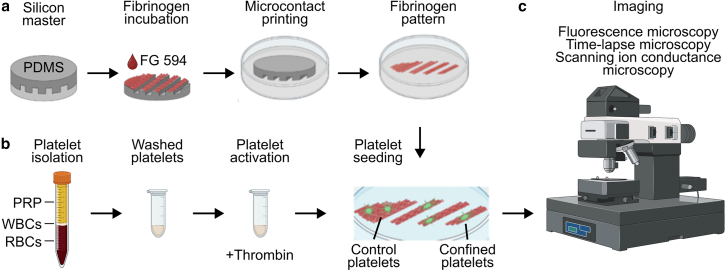 Figure 1
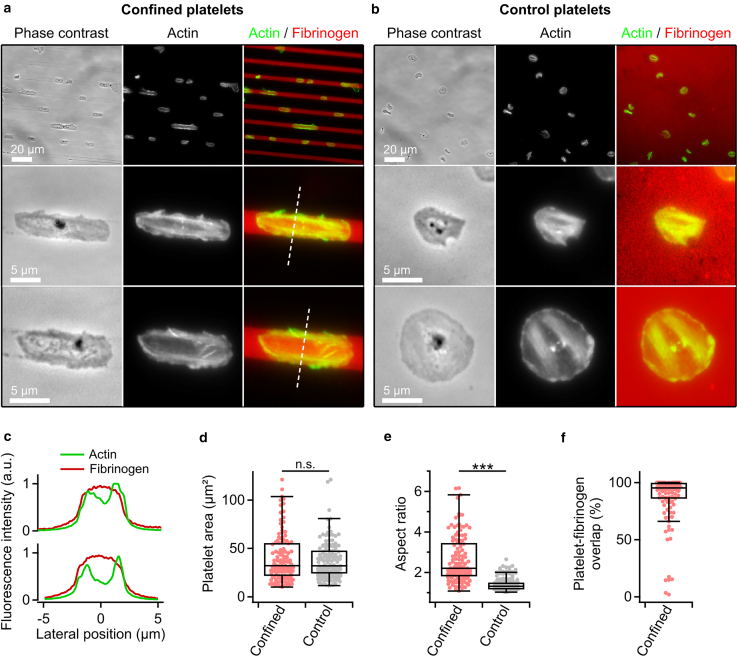 Figure 2
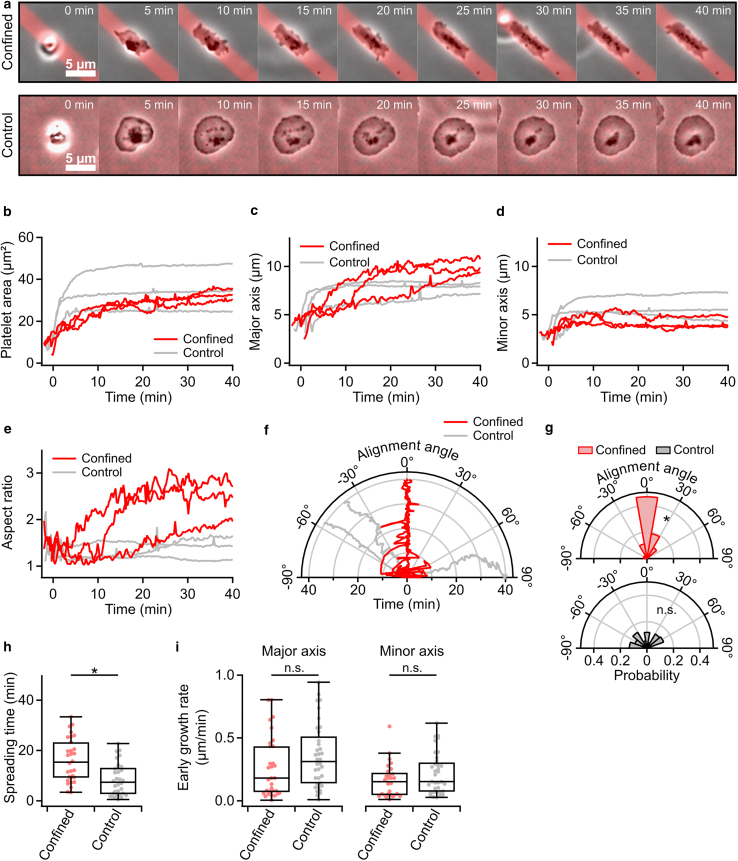 Figure 3
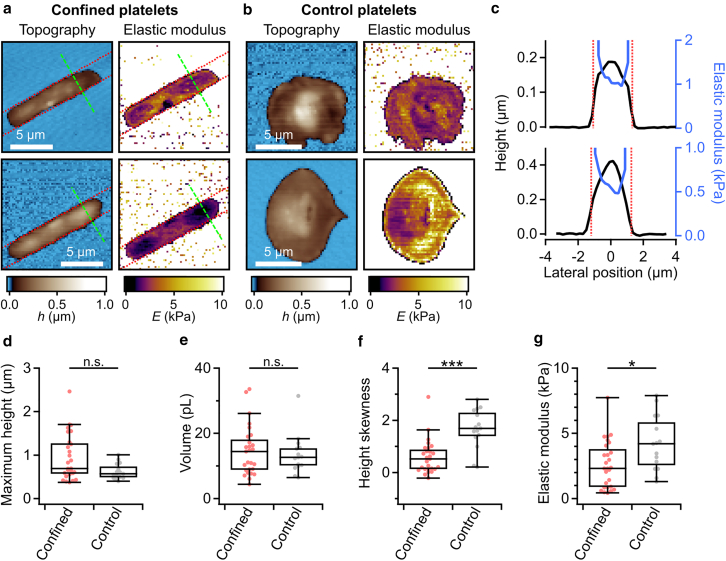 Figure 4
Peer Reviews
No public reviews on file for this paper yet. If you reviewed it on a platform where reviews are public (OpenReview, ICLR, NeurIPS, ICML), you can paste yours below so the community can read it here.
Videos
No videos yet. Explain this paper in a talk, walkthrough, or lecture? Add one.
Taxonomy
TopicsBlood properties and coagulation · Microfluidic and Bio-sensing Technologies · Characterization and Applications of Magnetic Nanoparticles