L1, a 3,3′-diindolylmethane-derivative, induced ER stress-mediated apoptosis and suppressed growth through the FLI1/AKT pathway in erythroleukemia HEL cells
Yi Kuang, Yong Jian, Dinghuan Wang, Lihao Bai, Kunlin Yu, Chunlin Wang, Wuling Liu, Sheng Liu, Wan Li, Yaacov Ben-David, Xiao Xiao

TL;DR
A new DIM derivative called L1 was found to kill leukemia cells by causing stress in their internal structures and blocking a key cell growth pathway.
Contribution
L1 is a novel DIM derivative that induces ER stress-mediated apoptosis and suppresses growth via the FLI1/AKT pathway in HEL cells.
Findings
L1 significantly inhibited HEL cell growth with an IC50 of 1.15 µM and induced G2/M arrest and apoptosis.
L1 activates ER stress via upregulation of GRP78, XBP1, and DDIT3, and binds to HSP70 proteins.
L1 suppresses FLI1/AKT signaling, reducing downstream gene expression and cell proliferation.
Abstract
3,3′-Diindolylmethane (DIM) is a major phytochemical product derived from ingestion of cruciferous vegetables. As an effective cancer chemopreventive agent, DIM has been used in preclinical and clinical trials. Recently, our group synthesized and modified a novel DIM derivative, L1, and demonstrated its significant antileukemic activities. MTT assay was used to confirm the inhibition rates and IC50 value of L1 in erythroleukemia HEL cells. Flow cytometry analysis was used to reveal cell cycle arrest and apoptosis. RNAseq data with KEGG pathway enrichment analysis was performed to predict the anticancer mechanism of L1. RT-qPCR and Western blotting were carried out to verify the mechanism in the ER stress-mediated apoptosis and FLI1/AKT pathway. FLI1 knockdown in HEL cells was performed to confirm the mechanism of L1 in the FLI1/AKT pathway. AutoDocking analysis and PPI analysis via the…
Genes, proteins, chemicals, diseases, species, mutations and cell lines named across the full text — each resolved to its canonical identifier and authoritative record.
Click any figure to enlarge with its caption.
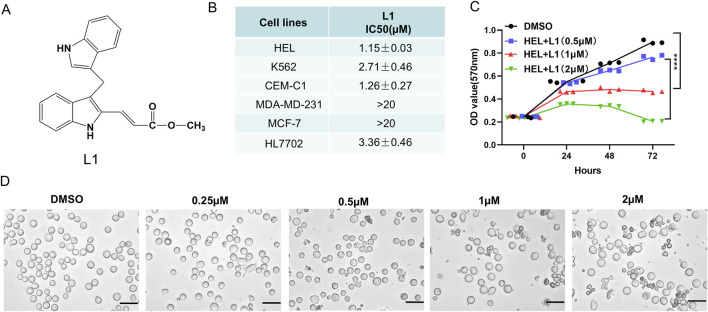 Figure 1
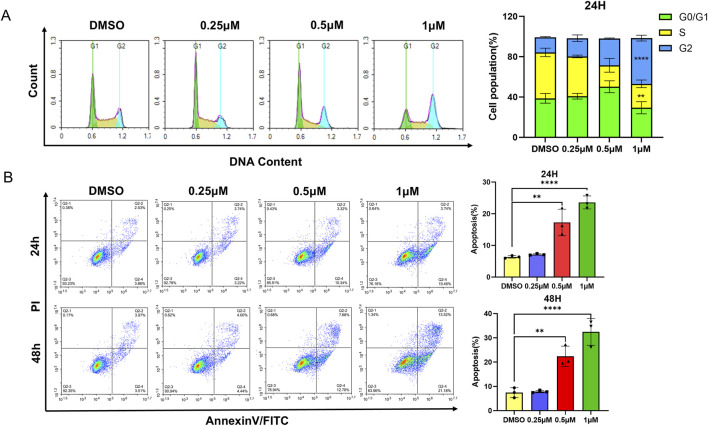 Figure 2
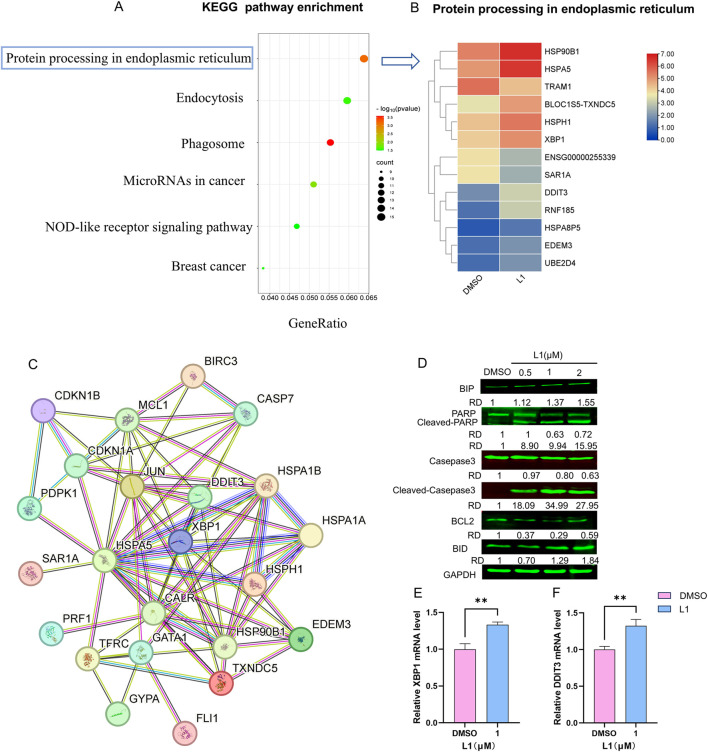 Figure 3
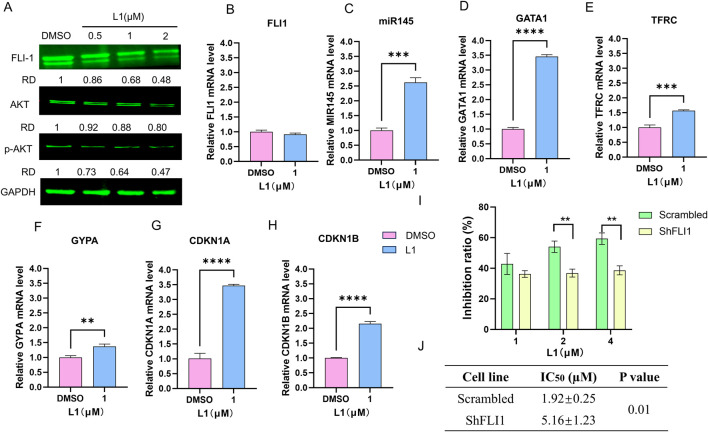 Figure 4
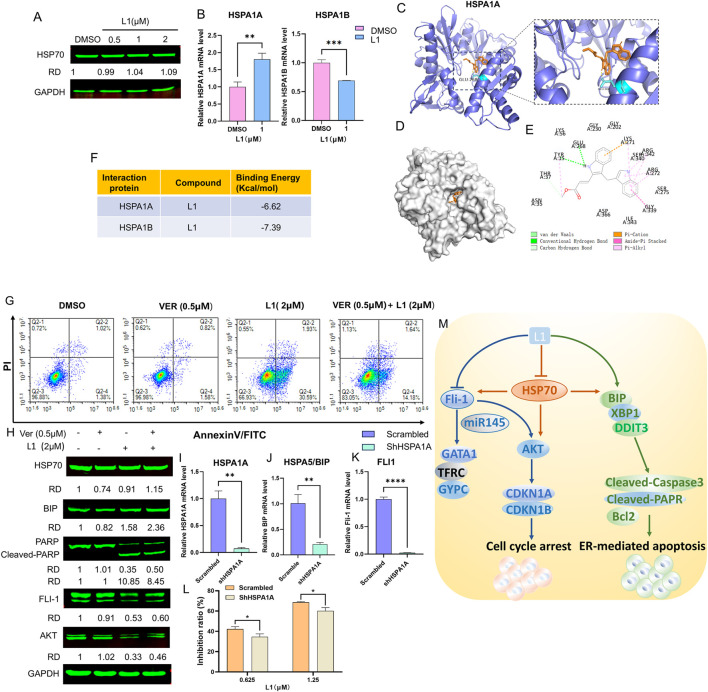 Figure 5
Peer Reviews
No public reviews on file for this paper yet. If you reviewed it on a platform where reviews are public (OpenReview, ICLR, NeurIPS, ICML), you can paste yours below so the community can read it here.
Videos
No videos yet. Explain this paper in a talk, walkthrough, or lecture? Add one.
Taxonomy
TopicsEndoplasmic Reticulum Stress and Disease · Cell death mechanisms and regulation · Autophagy in Disease and Therapy