Bruxism Decoded: A Case Report Revealing the Invisible Signs
Marta Canas Miranda, Raquel Monteiro, Catarina Afonso, Sofia Ferreira de Almeida

TL;DR
This case report highlights how bruxism, or teeth grinding, can cause unexplained symptoms like headaches and fatigue, and emphasizes the importance of early diagnosis and multidisciplinary treatment.
Contribution
The paper presents a novel case demonstrating the clinical significance of undiagnosed bruxism and its successful multidisciplinary management.
Findings
The patient's symptoms were linked to bruxism despite not reporting it directly.
Multidisciplinary treatment including dentistry, psychology, and medication improved clinical outcomes.
Early diagnosis and intervention are crucial to prevent symptom dispersion.
Abstract
Bruxism is characterized by involuntary movements involving teeth grinding or clenching. It is perceived as a parafunctional activity, and it can lead to instability and various consequences such as dental wear, musculoskeletal pain, masseter hypertrophy, persistent fatigue, and tension headaches. According to the time of occurrence, it can be classified as awake bruxism and/or sleep bruxism. This case report describes a 19-year-old woman, who presented to her family doctor with shoulder pain, headaches, and persistent tiredness despite apparent adequate sleep. She reported no other symptoms and denied any trauma or physical exertion. Her past medical history included anxiety disorder, treated with a selective serotonin reuptake inhibitor (SSRI), and irregular follow-ups with psychology and psychiatry throughout the years. The only relevant findings on the physical examination were…
Genes, proteins, chemicals, diseases, species, mutations and cell lines named across the full text — each resolved to its canonical identifier and authoritative record.
Click any figure to enlarge with its caption.
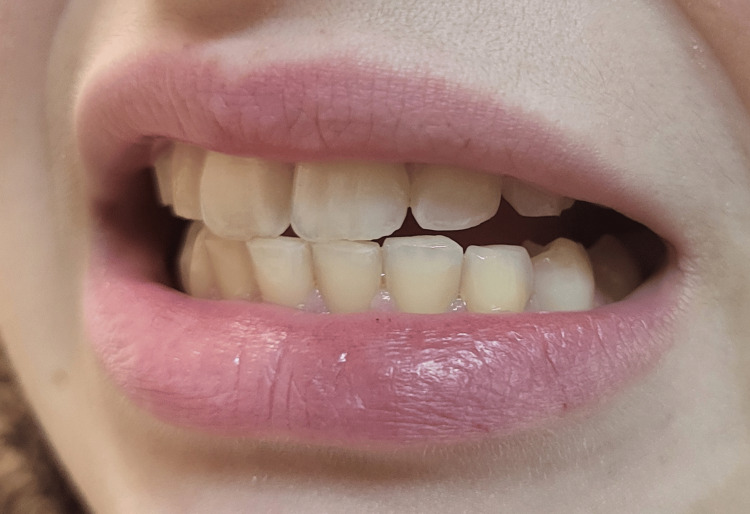 Figure 1
Peer Reviews
No public reviews on file for this paper yet. If you reviewed it on a platform where reviews are public (OpenReview, ICLR, NeurIPS, ICML), you can paste yours below so the community can read it here.
Videos
No videos yet. Explain this paper in a talk, walkthrough, or lecture? Add one.
Taxonomy
TopicsTemporomandibular Joint Disorders · Oropharyngeal Anatomy and Pathologies · Orthodontics and Dentofacial Orthopedics