IVUS-guided wiring using the deep vein as a landmark (IDEAL) technique for treating chronic total occlusions in peripheral artery disease
Yohei Ueno, Mitsuo Sobajima, Teruhiko Imamura, Hiroshi Onoda, Ryuichi Ushijima, Hiroshi Ueno, Koichiro Kinugawa

TL;DR
A new technique called IDEAL uses the deep vein as a landmark to improve IVUS-guided wiring for treating complex artery blockages in peripheral artery disease.
Contribution
The IDEAL technique introduces a novel method for correcting IVUS image rotation using the deep vein as an anatomical landmark.
Findings
The IDEAL technique successfully corrected IVUS rotational orientation during a complex EVT procedure.
Using the deep vein as a landmark allowed accurate guidewire redirection into the intraplaque lumen.
The technique provides rapid anatomical orientation during IVUS-guided wiring.
Abstract
Endovascular therapy (EVT) is a well-established revascularization strategy for patients with peripheral artery disease. However, achieving optimal wire crossing in complex chronic total occlusion lesions remains technically challenging. Intravascular ultrasound (IVUS)-guided wiring facilitates safer and more effective procedures. However, aligning IVUS findings with fluoroscopic imaging is challenging due to catheter rotation. We report a novel technique—termed the IDEAL technique—that leverages the deep vein as an anatomical landmark to correct IVUS rotational orientation. A 76-year-old female presented with chronic limb-threatening ischemia in the right toe. Contrast-enhanced computed tomography revealed a chronic total occlusion in the right superficial femoral artery. EVT was performed via the right common femoral artery. IVUS revealed that the first guidewire had entered the…
Genes, proteins, chemicals, diseases, species, mutations and cell lines named across the full text — each resolved to its canonical identifier and authoritative record.
Click any figure to enlarge with its caption.
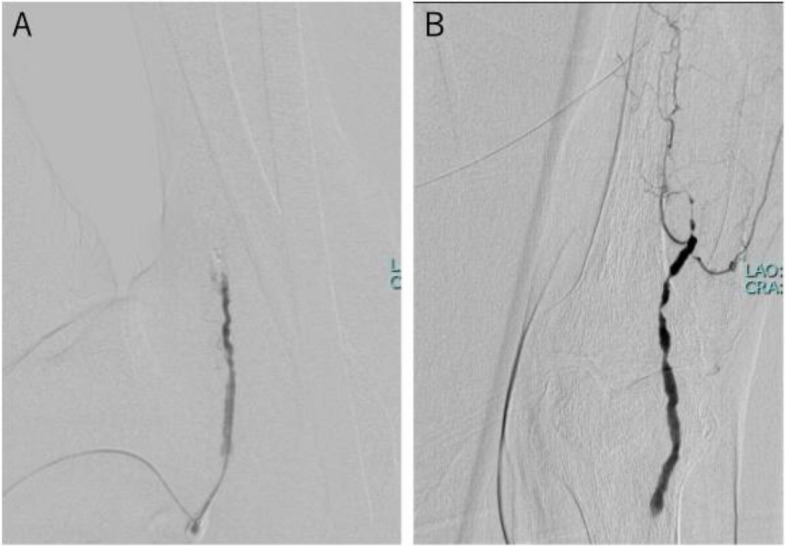 Figure 1
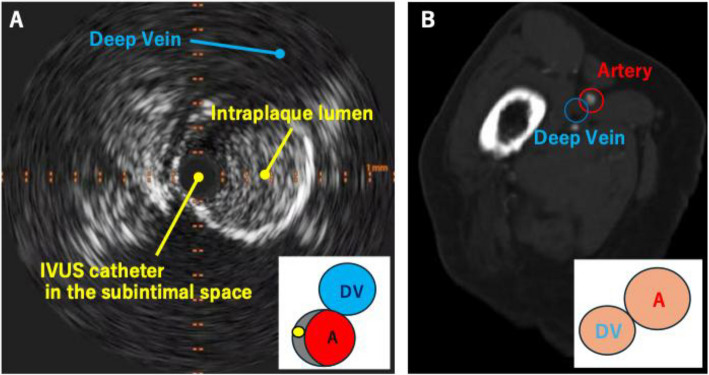 Figure 2
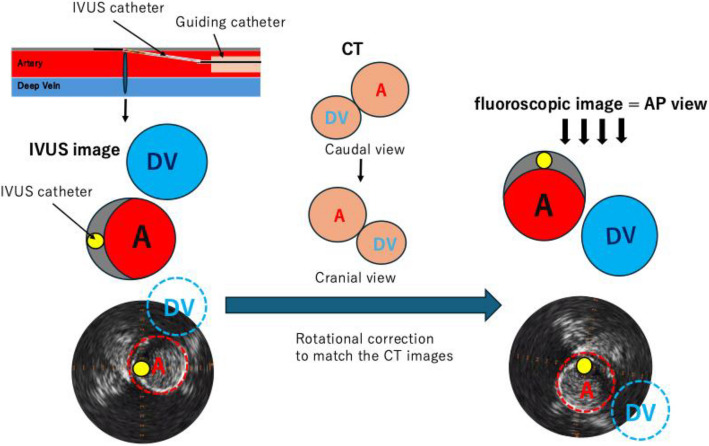 Figure 3
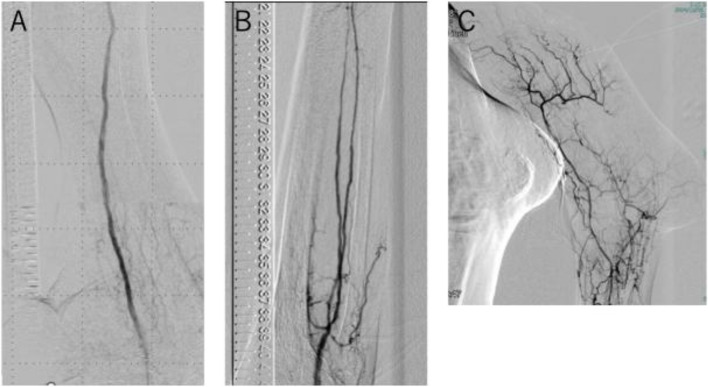 Figure 4
Peer Reviews
No public reviews on file for this paper yet. If you reviewed it on a platform where reviews are public (OpenReview, ICLR, NeurIPS, ICML), you can paste yours below so the community can read it here.
Videos
No videos yet. Explain this paper in a talk, walkthrough, or lecture? Add one.
Taxonomy
TopicsPeripheral Artery Disease Management · Coronary Interventions and Diagnostics · Cerebrovascular and Carotid Artery Diseases