A decision-space model explains context-specific decision-making
Dirk W. Beck, Cory N. Heaton, Luis D. Davila, Lara I. Rakocevic, Sabrina M. Drammis, Danil Tyulmankov, Atanu Giri, Shreeya Umashankar Beck, Qingyang Zhang, Michael Pokojovy, Kenichiro Negishi, Alexis A. Salcido, Neftali F. Reyes, Andrea Y. Macias, Serina A. Batson, Paulina Vara

TL;DR
This paper introduces a model explaining how the brain's striosomes create a flexible decision-making space influenced by context and internal state, shedding light on individual differences and neuropsychiatric disorders.
Contribution
The paper introduces a novel computational model of striosome and matrix interactions in context-dependent decision-making.
Findings
Striosomes construct a context-dependent mathematical space for decision-making.
Striosome and matrix neurons increase synchrony during difficult tasks due to higher space dimensionality.
The model unifies theories on reward prediction error and striatal pathways under one framework.
Abstract
Optimal decision-making requires consideration of internal and external contexts. Biased decision-making is a transdiagnostic symptom of neuropsychiatric disorders. We created a computational model demonstrating how the striosome compartment of the striatum constructs a context-dependent mathematical space for decision-making computations, and how the matrix compartment uses this space to define action value. The model explains multiple experimental results and unifies other theories like reward prediction error, roles of the direct versus indirect pathways, and roles of the striosome versus matrix, under one framework. We also found, through new analyses, that striosome and matrix neurons increase their synchrony during difficult tasks, caused by a necessary increase in dimensionality of the space. The model makes testable predictions about individual differences in disorder…
Genes, proteins, chemicals, diseases, species, mutations and cell lines named across the full text — each resolved to its canonical identifier and authoritative record.
Click any figure to enlarge with its caption.
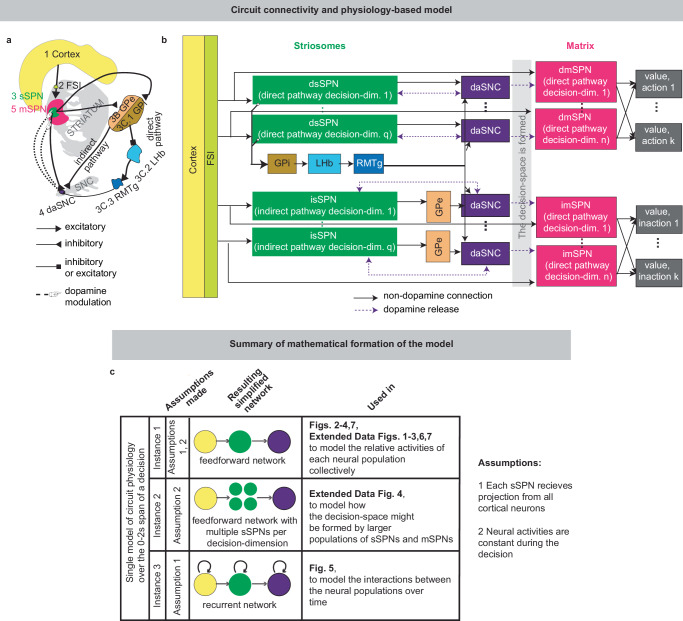 Figure 1
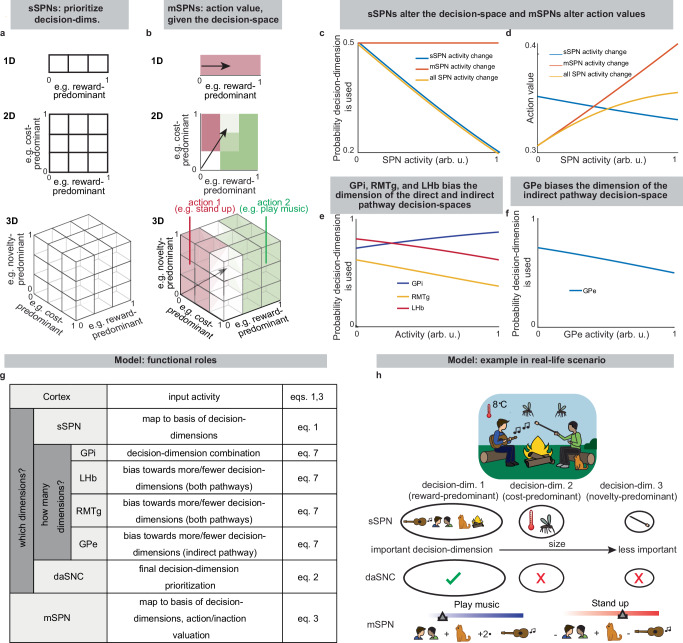 Figure 2
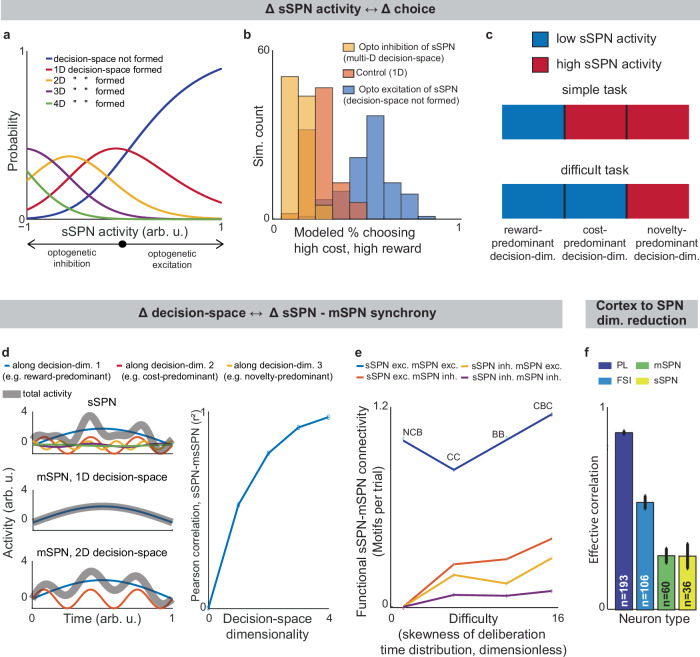 Figure 3
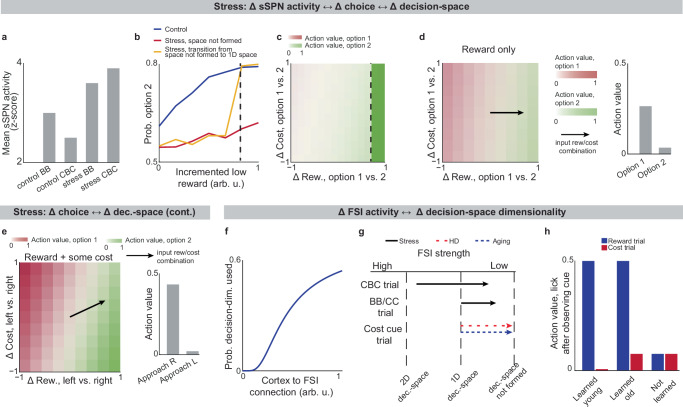 Figure 4
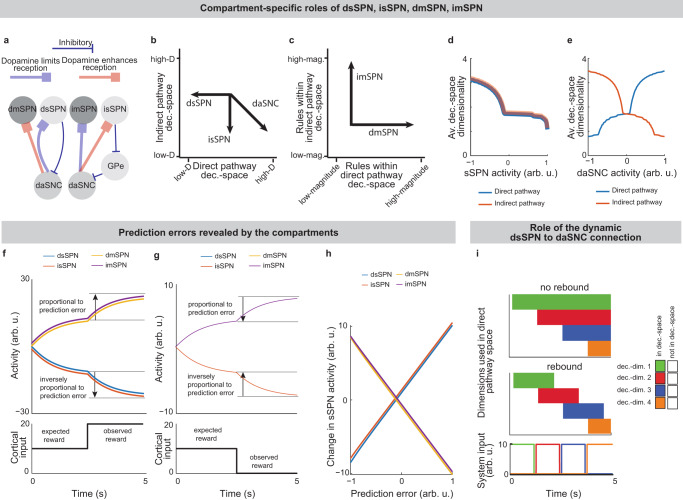 Figure 5
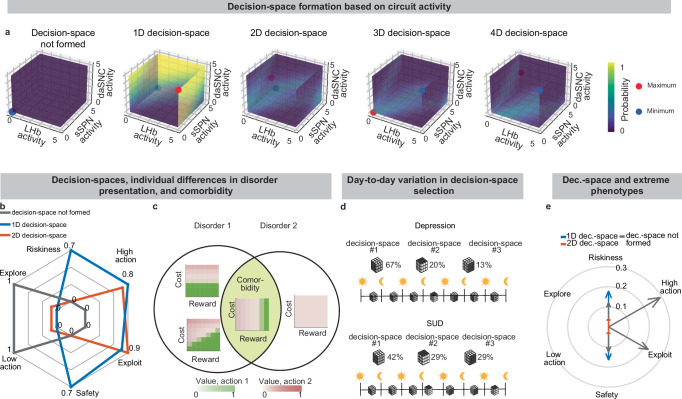 Figure 6
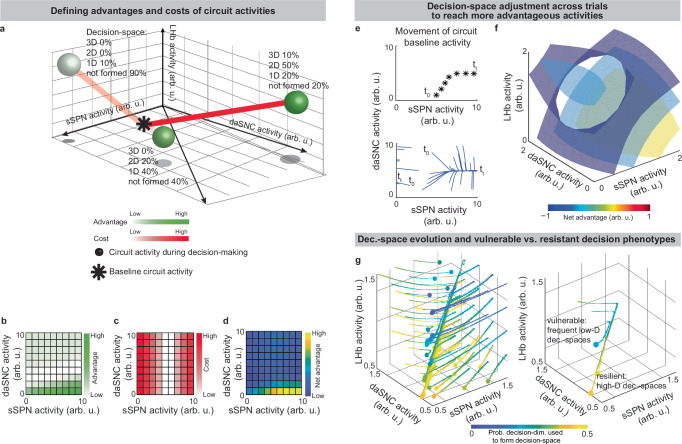 Figure 7
Peer Reviews
No public reviews on file for this paper yet. If you reviewed it on a platform where reviews are public (OpenReview, ICLR, NeurIPS, ICML), you can paste yours below so the community can read it here.
Videos
No videos yet. Explain this paper in a talk, walkthrough, or lecture? Add one.
Taxonomy
TopicsNeural and Behavioral Psychology Studies · Neurotransmitter Receptor Influence on Behavior · Functional Brain Connectivity Studies