Reserve of global constructive work for early diagnosis of myocardial ischemia and risk stratification in chronic coronary syndrome
Ruohan Zhao, Jing Zhang, Yu Xie, Yuting Tan, Benling Qi, Lijuan Bai, Jingjing Wu, Min Cheng, Xiang Wang, Qing Lv, Jing Wang, Mingxing Xie

TL;DR
This study explores using non-invasive myocardial work to detect and assess risk of heart disease in patients with chronic coronary syndrome.
Contribution
The study introduces a new model combining global constructive work reserve and hemoglobin for improved ischemia detection in chronic coronary syndrome.
Findings
Global constructive work reserve (△GCW) was independently correlated with coronary flow velocity reserve (CFVR) in detecting ischemia.
A model using △GCW and hemoglobin achieved high accuracy (C-index of 0.844) in predicting ischemia in chronic coronary syndrome patients.
△GCW provided higher sensitivity and added value in diagnosing ischemia compared to other methods.
Abstract
In chronic coronary syndrome (CCS), assessing myocardial ischemia is difficult due to its variable severity. Myocardial mechanical parameters are helpful in ischemia detection. This study investigates the use of non-invasive myocardial work (MW) for ischemia detection and risk assessment in CCS patients. The study included 115 patients (70 men, mean age 61 years) with suspected or diagnosed CCS in the derivation cohort and 62 patients in the validation cohort. All patients underwent regadenoson stress echocardiography, with early ischemia indicated by coronary flow velocity reserve (CFVR) <2.5. The patients were categorized based on CFVR, and logistic regression was used to assess the association between myocardial work (MW) and ischemia. Model performance was evaluated for accuracy, prediction, and practicality. The risk stratification thresholds were set by sensitivity and…
Genes, proteins, chemicals, diseases, species, mutations and cell lines named across the full text — each resolved to its canonical identifier and authoritative record.
Click any figure to enlarge with its caption.
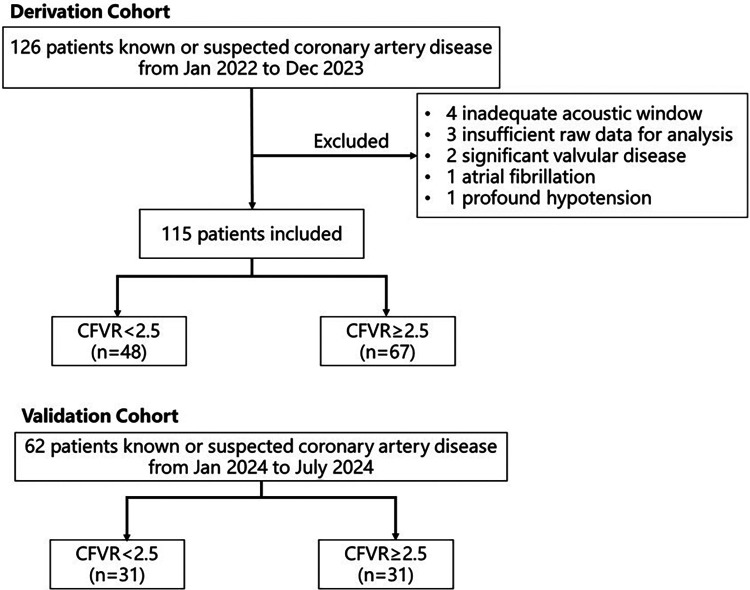 Figure 1
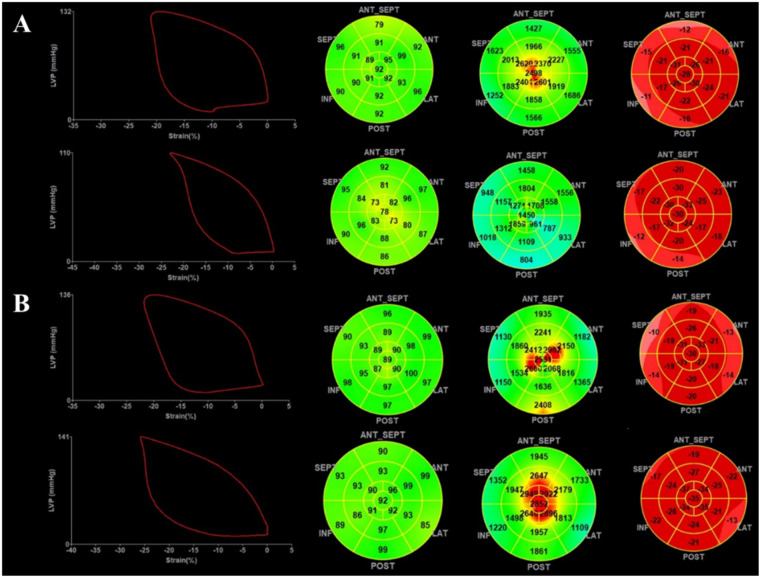 Figure 2
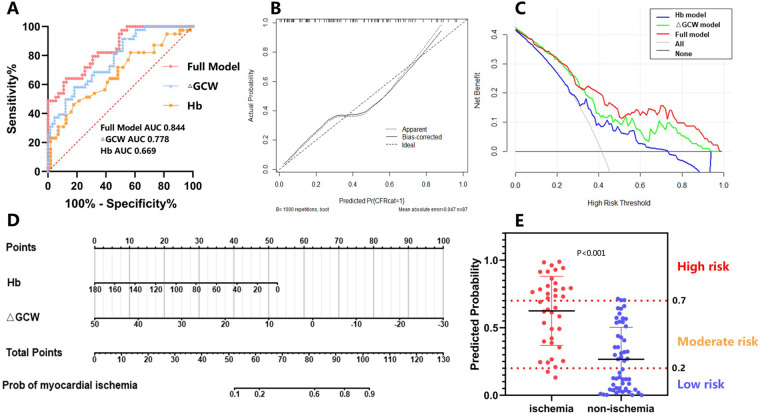 Figure 3
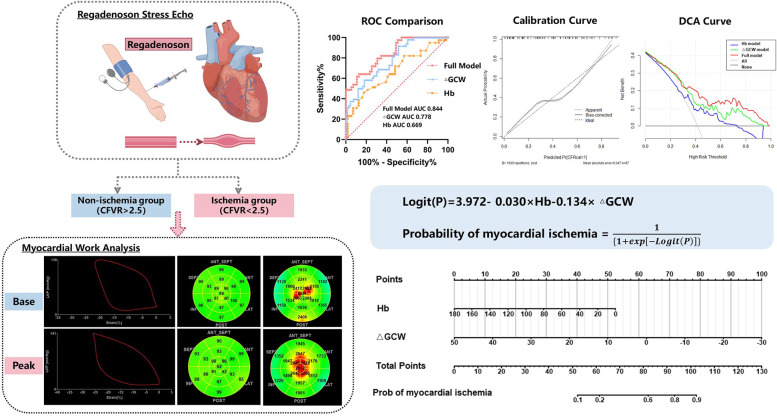 Figure 4
Peer Reviews
No public reviews on file for this paper yet. If you reviewed it on a platform where reviews are public (OpenReview, ICLR, NeurIPS, ICML), you can paste yours below so the community can read it here.
Videos
No videos yet. Explain this paper in a talk, walkthrough, or lecture? Add one.
Taxonomy
TopicsCardiac Imaging and Diagnostics · Cardiovascular Function and Risk Factors · Acute Myocardial Infarction Research